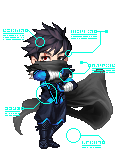


XXXXXXWelcomeXXXXXX
"To the wonderful world of Shigehara Togashi"
HOLY HAKAISHIN HIROTO

Ⅰ. The BasicsXXXXX
╯Name: Shigehara Togashi
╯Nickname(s): Shige, Shiggy, Daddy, Old Man, Ishgar's Strongest Mage, Chaian's Savior, War Slayer, World's Strongest Swordsman
╯Birth Date: December 3rd
╯Age: 35
╯Gender: Male
╯Race: Human
╯Relationship Status: Married
Ⅱ. AppearanceXXXXX
╯Height: 6'8"
╯Weight: 194 lbs
╯Tattoos: N/A
╯Scars: Has several scars indicating to blade-to-blade combat and torture
╯Predominant Features: Strong face, height, natural scowling face
Ⅲ. PersonalityXXXXX
╯Sexuality: Heterosexual
╯Alignment ---Allegiance: His Family
╯Occupation: Mage
╯Secrets: The things he's done during the Chaian Civil War
╯Personality: Shigehara can be regarded as a difficult to read kind of person, primarily due to his quiet nature and alienated sense of disposition he was, making him a very unsociable person. A man of few words, Shigehara chooses to use his own actions to justify his decisions and opinions, often doing things without telling others, giving him the appearance of what appears to be an insubordinate soldier, but rather does so with the intention of helping others based on his own experience and impression on a situation. Having spent most of his childhood growing up as a child soldier, being forced to learn how to kill and endure pain ever since he could start walking, Shigehara learned the the most basic rules of dominance, implanting a "survival of the fittest" mentality into him, making him a natural survivor and warrior; as a result, Shigehara always acts and thinks like a hunter on the prowl, always keeping his guard up in all instances while allowing himself to be guided by his hunting instincts whenever it's time to move or fight. Given his history as an experienced warrior, Shigehara is highly desensitized to the acts of violence and even murder, primarily as a result of having been exposed to life-threatening situations in a constant manner when he was only a boy. This gives him a naturally composed perspective in regards to anything he faces, regardless of the severity of the circumstances or just how hopeless it may seem. His strongest point is found in his intense sense of determination to succeed and getting the job done no matter what it takes, taking great pride in his success rate. As sly as he may be, Shigehara isn't the type of be caught with his pants down; rather than allowing himself to be surprised in the middle of battle, he is known to study up on his opponents and any other possible adversaries he may encounter, be it enemies or allies alike.
For that matter, he can be seen as a lone wolf, preferring to work alone rather than accept the help of others, viewing it as a sign of weakness to have to rely on others if he himself is unable to help himself. However, Shigehara has been known to this act as a facade, choosing to live in solitude rather than needlessly having to endanger others due to the addiction of battle he has gained in war and the extreme harm it can inflict. Despite this, Shigehara has been known to shown a great deal of concern when it comes to others, in particular his wife and child, demonstrating a great love for humanity and animals, which was taught to him by a variety of people in his life. Having been raised mainly by his loving parents after his time as a child soldier deemed his worthy to meet them, he was instilled with a great sense of moral values to which he follows full-heartedly, tethering it with his greater sense ideal justice to which he strives for. As such, Shigehara does refrain himself from doing anything that would jeopardize the lives of others, but doesn't care one way or another when it comes to those that break the rules or abuse their power by mistreating others.
As a Councilman and the 1st Wizard Saint, he takes his position very seriously, doing his best to live up to his responsibilities as someone who maintains the delicate balance between the dark and righteous forces of Ishgar, doing so as best he can. Much like a samurai, Shigehara has his own sense of honor and moral code closely tied with his pride in his membership in the Wizard Saints, pledging his allegiance to the just causes that he himself believes in rather than blindly follow others, choosing to live as his own man rather than be at someone else's beck and call. Honor-bound to protect others before himself, he considers himself a samurai first and a warrior second, with nothing being able to stand between him and his pride. However, his true strength isn't found in his skills or experience, but rather in the way his brain is wired to function, and the powerful beliefs that are tethered to it; a non believer in politics or a variety of other mentalities, Shigehara is not swayed to pick sides or be tempted with the idea or power or greed, having achieved a sense of spiritual enlightenment that freed him from the need or want of what others could offer him. Unfortunately, this cannot be said about the way he fights or interacts with his enemies. For the most part, Shigehara is a brutal fighter, barbaric but fast to take the lead, choosing to get in close and personal instead of taking the safer route to victory, desiring to win as quickly as possible even if it means using tactics that will traumatize his opponent, making them believe that being involved in Shigehara’s is an experience infinitely worse than hell. However he only truly does this to his opponents if it is a fight to the death or if they plan on doing something dastardly to his loved ones or his two beloved countries.
While most might not be able to tell, Shigehara is a completely different man when he is in the company of his wife and child. When his two favorite girls, and any future children, are in his presence, he acts as though the three of them are the only people in the whole world, giving them both lots of love, whether it’s holding Sebastian close or having his daughter on his lap. It is true that he did once have a wife before Sebastian, it is clear that he has moved on from her and is living in the present, loving his two most valuable treasures with everything he has.
╯Skills:
» Cooking
» Fathering
» Tea Brewing
╯Likes:
Sebastian and Oda
» Making his wife and child proud
» Spending time with his wife and child
» Honing his skills as a Swordsman
» Chaian
» Fiore
» Peace
» Seb's cooking
» Sparing
» Dango
╯Dislikes:
» Seb or Oda getting hurt
» Seeing Seb or Oda sad
» Spending time away from his Seb and Oda
» Anyone who would dare flirt with Oda
» A minority of his family
» Unnecessary killing or violence
» War
» Not being able to help someone
╯Fears:
» Losing Seb or Oda
» The Chaian Civil War starting back up
Ⅳ. Battle StatisticsXXXXX
╯Strengths:
» Master Swordsman
» Massive Magic Reserves
» Experienced Combatant
╯Weaknesses:
» Will doing whatever it takes to ensure his Wife’s and Daughter’s safety
» Self Sacrificing
» Long Range Combat
╯Magic Types : Sword Magic, Requip, Weapon Philosphy, Omyoujutsu, Amaterasu, Orient Solid Script, Paper Blizzard
╯Weapon(s): A pair of katanas (See faceclaim)
╯Fighting Style:
Iaido: Iaido (居合道 Iaidō?) is martial art style using the katana that emphasizes on being aware and capable of quickly drawing the sword and responding to a sudden attack. Iaido is associated with the smooth, controlled movements of drawing the sword from its scabbard, striking or cutting an opponent, removing blood from the blade, and then replacing the sword in the scabbard. Iaido encompasses hundreds of styles of swordsmanship, all of which subscribe to non-combative aims and purposes. A reflection of the morals of the classical warrior and to build a spiritually harmonious person possessed of high intellect, sensitivity, and resolute will. Iaido is for the most part performed solo, executing changed strategies against single or various fanciful rivals. Every katana starts and finishes with the sword sheathed. Not withstanding sword method, it obliges creative ability and fixation to keep up the inclination of a genuine battle. To appropriately perform the Iaido, one must learn the carriage and development, hold and swing. By practicing Iaido, Shigehara is able to sheathe and unsheathe his sword at incredible lightning speeds, unleashing his sword immediately before a moment's notice instinctively before an attack even has the chance of being thrown at him, and combined with his Sixth Sense, is a sure way for him to counter anything ahead of time. However, since he himself does not use a sheath, he merely imitates the action with his sword, instinctively applying the basic form without the need to carry one with him.
Iaijutsu: Considered his most favorite sword style in his arsenal of attacks, Iaijutsu (居合術?), is a combative quick-draw sword technique that focuses in unsheathing the sword at tremendous speeds. This art of drawing out a katana is as quickly as possible, allowing Kazuma to launch the first decisive blow upon unsheathing is sword. Iaijutsu is a combative sword-drawing art but not necessarily an aggressive art because iaijutsu is also a counterattack-oriented art, being used only when he blocks an enemies attack with his sword and sheaths it shortly afterwards, coming in close to unsheathe it and deliver the killing blow. Iaijutsu technique may be used aggressively to wage a premeditated surprise attack against an unsuspecting enemy, catching them off guard with the speed and and monumental force backing the slash from his sword. The formulation of iaijutsu as a component system using the quick draws to deal a single attack meant to end the battle immediately upon connecting, channeling all of Shigehara' strength into a single decisive blow containing all of his concentration and murderous intent. Well-known as the Quick Draw Stance (クイックドロースタンス, Kuikkudorōsutansu), Iaijutsu is the center of focusing solely on drawing and attacking in one move. The technique often includes multiple slashes, swiping the blade off, and the subsequent re-sheathing of the blade. Although usually associated with attacking, swordsmen can learn how to block weapons with a sheathed sword and dual wield the scabbard and blade for powerful combo attacks. Users of this style can often create Sword Beams, or just strike and re-sheathe so fast that it looks like a Sword Beam. Only two starting positions in the execution of a sword-drawing technique exist. The first technique is the low crouching posture named iai-goshi. The second is the standing posture named tachi-ai. The seated posture, tate-hiza, is not used in iaijutsu because it does not permit all-around mobility. Seiza, the formal kneeling-sitting posture, is not used because it is a "dead" posture which is regarded by the warrior as less comparatively efficient. It would be difficult for the swordsman using either of these two latter postures to go quickly into action in an emergency, as such, only a single stance can be taken at a time in order to use Shigehara' full use of his movement and foot-work to move at incredulous speeds.
Jōdan-No-Kamae: Referred to as the Stance of Fire (火災のスタンス, Kasai no sutansu), Jōdan is a martial art stance and is a one of the five basic kenjutsu postures. Jōdan-no-kamae means upper-level posture (lit. 'high/upper degree posture'). Jōdan-no-kamae is one of the five stances in kendo, the sword is raised above the head with the tip (kissaki) pointing back and the blade facing up, in readiness to strike. It is the most aggressive stance of the five, focusing primarily to attack and overwhelm the opponent by launching many powerfuly charged blows in rapid succession. There are commonly two types of jōdan-no-kamae, left (hidari) and right (migi), referring to which foot is out in front. As a more rare case, only one hand is used to hold the sword. Even rarer, the positions of the hands on the hilt of the sword may be reversed. In normal practice or competitions, left (hidari) jōdan-gamae is the most common. Its advantage is the reach of the strike, the intimidating posture and the speed of the strike. It allows Shigehara to strike and slash at his opponent even if they dodge or step back, closing the gap between himself and his opponent in order to get in close and strike with maximum force. It's disadvantage is the weak defense, since the throat, wrists and body are open. In order to protect the vulnerable area, a jōdan user must have a very fiery spirit to "scare off" the opponent, oftenly using intimidation in tandem with this style in order to inflict psychological damage with the purpose of debilitating their will. It is also more difficult to judge the striking distance (maai). Therefore, this stance is only used as the normal stance during practice or competition by experienced swordsman. The primary attribute of jōdan-no-kamae is always the weapon lifted above the head of the practitioner. One of the only significant variations is the relative position of the elbows. Some styles, such as aiki-ken, prefer the elbows to be as far inward as possible. Many others insist on the elbows being open. It is by it's very nature that the Jōdan-no-kamae style is often refered to as the Kamae of Heaven (天の構え ten-no-kamae) in Kazuma's hometown, but is given the official nickname of Kamae of Fire (火の構え hi-no-kamae) Earth Land. The reason it receives this nickname is the fact that this style shares it's characteristics with fire, being completely unpredictable and wild when in use, and when struck, leaves a burning sensation upon the area cut due to the intense heat generated in-between intense swings.
Chūdan-No-Kamae: Referred to as the Stance of Water (水のスタンス, Mizu no sutansu), Chūdan is one of the five major style in Kenjutsu and kendo. Chūdan-no-kamae translates to "middle-level posture." In most traditional schools of swordsmanship, and in the practice of kendo, chūdan-no-kamae is the most basic posture. It provides a balance between attacking and defensive techniques. This is the most basic stance in kendo which balances attack and defense. If correctly assumed, the trunk (do) and right wrist (migi-kote) are hidden from the opponent. The throat is visible, but the extended tip of the sword threatens a thrusting enemy with a likely counter-thrust. The head (men) is the only clearly open target, but this too is easily defended. If the kamae is not broken, the user can step into striking distance of the opponent whilst maintaining good defence. A beginner learns this stance first in order to learn the correct striking distance, issoku-itto-no-maai. The position that Shigehara takes when using this style In chūdan-no-kamae is rather simple, the left foot is slightly behind the right with the left heel slightly raised, both feet are parallel, the hips are straight forward, shoulders are relaxed, spine is perpendicular to the floor at all times. The center of gravity should be centered between both feet. The sword is held with both of his hands in front of the waist, with the tip of the weapon pointed at the opponent's throat. Traditional styles of kenjutsu, this is one of the basic stances taken when focusing on movement and footwork. Generally, when used, Shigehara has a much more grounded focus on proper cutting with power, stability, and focus channeled in every swing. In contrast to many other styles of sword play, where they focus and are taught in the practice to always opts for a middle ground, where chūdan-no-kamae is assumed with the body otherwise in it's most vulnerable spots and lowest defenses. The purpose is to reduce the possibility of a simultaneous strike, usually resulting in mutual death, which often occurs in a battle to the death. The reason as to why it is compared to water is because of the characteristics it shares with the element itself, moving without offering an ounce of resistance, moving with the opponents move in order to flow freely as water does, avoiding the full brunt of his enemies attack.
Gedan-No-Kamae: Geedan is one of the five stances in kendo. Gedan-no-kamae means "lower-level posture." This position is adopted when the sword is held out in front of the body pointing at the waist in kendo, or at the knee or sometimes the ankle in kenjutsu. It is considered a variant of chūdan-no-kamae and therefore appearing as a defensive posture, but instead it is used to deflect blows and create striking opportunities. This stance is used as a transition fromchūdan-no-kamae to a tsuki (thrust). It is called the Kamae of Earth (地の構え chi-no-kamae) in Yagyū Shinkage-ryū, the reason for this is because of the incredible level of defensive power that is found the the stance's form and position, using able use of Shigehara' legs, hip, and arm strength to stand his ground. In Fiore, people refer to this stance as "Fool's guard" (愚か者のガード, Orokamono no gādo); as it serves to bait the foolish with apparent weakness. Gedan-no-kamae is oftenly called by Shigehara as "wide iron gate" style of swordsmanship, as no one is able to pass through it's gates without permission from Shigehara. Iron gate refers to postures where the sword is held above the forward knee. Larger postures have the point down, while the narrow postures have a raised point. This stance has the highest level of defense among all the other five styles, by planting his feet firmly on the ground and closing in his posture, thus keeping his body tight and within blocking reach, deflecting and countering anything that comes his way with maximum force and dexterity when doing so, not losing an inch of space or moving from his spot.
Hassō-No-Kamae: Hassō, is one of the five stances in kendo. It is an advanced offensive stance, named for one's ability to respond to a situation in any direction. In hassō-no-kamae, the primary stance is comprised of the left foot being forward, and the sword being held pointing upright with the hilt in front of the right shoulder. The blade should slope slightly to the rear. When cutting, the sword is raised above the head, as in jōdan. This posture is also used in use of katanas and long swords, using the their immense length to the user's advantage. Hassō is called In-No-Kamae (陰の構え shadow stance?) in Ittō-ryū and Katori Shintō-ryū, hassō (八相?) in Shinkage-ryū, and occasionally moku-no-kamae(木の構え stance of wood), because of the stance's resemblance to a tree. By using full use of both hands to swing from upper oriented swings, Shigehara uses the full weight of his body and arm strength to swing his sword with with incredible force. Thanks to using the full length of the blade by using the farthest extremes of the handle, the range and distance between Shigehara and his target can be easily traversed in little time, closing the gap of distance between him and the enemy with a simple swing, stepping in and getting in range with but a single footstep.
Waki-Gamae: Waki-gamae is an advanced style in kendo and martial arts involving Japanese sword. Waki-gamae is a stance involving the swordsman hiding the length of ones own blade behind their body only exposing the pommel to the opponent. This stance is common when there was no standard length of sword and was often used as a deterrent to any opponents who did not know the range of the sword being hidden and could be used as a sort of bluff technique. It also serves to conceal the orientation of the blade to one's opponent, as to give him no hint about your own intention for the next attack. Waki-gamae is also known as the Kamae of Metal (金の構 kin-no-kamae?) in the five elements classification and the Light Stance (陽の構 yō-no-kamae?) in the sword teachings. The main posture used is where the sword is held to the outside of the knee, can be pointed up (stretta/narrow), point down (larga/wide), or point back (distesa/outstretched). In the traditional system, this is known as Guardia Contra Armi Inhastate (Guard Against Polearms). Used by Shigehara to use deception in order to throw off his opponents perception on the length of his sword, sneak attacks are a constant when he uses his body to conceal the blade.
Zenkutsu Dachi: Front stance, sometimes also called forward leaning stance or forward stance, is a stance used in various martial arts and sword styles. Although the specifics of the stance vary by style, overall it is visually similar to a lunge, with the forward leg bent at the knee, and the rear leg straight, while the hips and shoulders remain squarely facing forward. The purpose of the stance is to teach musculo-skeletal alignment that adds as much mass of the earth to a strike as possible. The stance allows a great deal of power generation forward, but very little in any other direction. In martial arts, the front stance (前屈立ち zenkutsu-dachi) is primarily practiced in karate and its variants. Some variations include the version practiced by Shotokan, where students generally place their feet at a longer depth, while Isshin-ryūstudents place their feet shoulder width, but with much shallower length. Other variations are also practiced. The front stance is normally used when moving forwards while back stance is used when moving backwards. When applied in battle, Shigehara can move and dodge around attacks by swiftly altering his footwork work and direction, changing the course in which his body is heading in between actions.
Khadgavidya [Sword fighting]: Nakula and Sahadeva are said to be skilled swordsmen in Mahabharata. Sword-fighting is one of the common Indian fighting arts. Varieties include the curved single-edge sword, the straight double-edge sword, the two-handed longsword, the gauntlet-sword, and the urumi or flexible sword. Techniques differ from one state to another but all make extensive use of circular movements, often circling the weapon around the user's head. The flexible nature and light weight of Indian swords allows for speed but provides little defensive ability, so that the swordsman must instead rely on body maneuvers to dodge attacks. Entire systems exist focusing on drawing the sword out of the opponent's body. Stances and forms traditionally made up the early training before students progress to free sparring with sticks to simulate swords in an exercise called gatka, although this term is more often used in English when referring to the Panjabi-Sikh fighting style. A common way to practice precision-cutting is to slice cloves or lemons, eventually doing so while blindfolded. Pairing two swords of equal length, though considered impractical in some parts of the world, is common and was considered highly advantageous in South Asia.
Fierce Tree Style Martial Arts: A fast paced, flexible style of martial arts focuses on neutralizing an attack early on or using the users momentum and predicted trajectory to dodge said attack for a counter. It emphasizes a majority of throwing techniques and joint manipulations is of great importance when delivering an effective block or counter. Also of particular importance is the timing of a defensive technique, either to blend or to neutralize an attack's effectiveness and to use the force of the attacker's movement against him. This means Shigehara must have a fast body and mind in order to read an opponents intentions and movements in order to effectively block.
Ⅴ. LifestyleXXXXX
╯Bio:
» Born as the 7th child to Katanori and Matame Togashi.
» At the age of 5, Grandfather had begun his training which included many exercises and training techniques that could kill him.
» At the age of 12, Katanori and Matame died in battle by the hands of their own son Nobutada.
» At the age of 15 Shigehara was thrown into his first battle, the Skirmish of Aohuā, ending up beheading over 50 soldiers.
» Second battle had Shigehara kill one of his friends who had been brainwashed by his uncle.
» At the age of 18, Shigehara had captured Qídoru Keep, then is forced to kill its lord and his 10 month old son. Begins to rebel, faking fatalities left and right.
» At the age of 23 Shigehara has left Chaian along with his third oldest brother, no longer being able to face war, their destination Fiore.
» At the age of 25 Shigehara and Takeyasu join Dragon Dreams and is bewitched by the Guild Master, a immigrant from Chaian who came to Fiore around the age of 1.
» Meets his future wife and mother to his daughter, Sebastian Alexandria Vinicianus not long after becoming Ace. Sebastian becomes his student.
» Shigehara becomes the Guild Master's fiance and becomes best friends with her Brother.
» Takeyasu kills Shigehara's fiance, frames him for the murder, best friend tries to kill Shigehara, Shigehara flees.
» Shigehara becomes an outlaw and in the process Dragon Dreams is disbanded due to the negative feedback from the Magic Council and Fiorians.
» Shigehara goes back to Chaian to kill his Brother, but then decides to stop the war.
» Singlehandedly knocks out every soldier and general in both armies and kidnaps his uncle and grandfather.
» Forces the two to sign a treat and stop the 200 year long Civil War.
» Shigehara is sung as a cultural hero. Older brother, second oldest brother, and third oldest brother are all salty. Takeyasu is thrown in prison for life with his Grandfather and Uncle. Nobutada becomes a mountain bandit, Naritoshi travels the world.
» Oldest Sister and Husband become royalty, their son becomes King of Chaian.
» Magic Council awards Shigehara by having a trial on if he was guilty or not. Shigehara isn't Guilty, is thrown into the Wizard Saints as the fourth.
» Shigehara and Sebastian are reunited, they fight, they exchange feelings, they kiss, Sebastian is healed, they have some of that forbidden fruit.
» Shigehara marries Sebastian, Oda is born nine months after.
» Shigehara is happy Husband and Daddy.
╯Goals --- Motives: To ensure his Wife, Daughter, and any future children have a future filled with happiness
╯Guild Mark: N/A
╯Relationships:
» Yasunori Togashi | Grandfather
A man who was loved by some War Deity, not for his prowess in combat, but for his ability to conquer it with his mind. Yasunori is a man who had raised Shigehara and 4 of his other siblings to become brutal warriors from the day they started walking. This of course lead Shigehara to despise his Grandfather largely, seeing him as a man who is simply trying to keep a war going that should have ended long ago. Shigehara believes heavily that the only reason why his Grandfather has continued this civil war was because of Pride as for generations the Togashi Family has lead a Civil War among themselves over who would rule Chaian. After defeating and capturing his Grandfather, Shigehara had both him and his uncle locked up in the most secure prison in Chaian for life.
» Moromasa Togashi | Uncle
A man that could be described as the devil, Moromasa Togashi was a man who enjoyed killing and seeing others in pain, so much so that he would often have the scenes of of horrible death painted so that he may reminisce on the sight of death and blood. Shige often see's his uncle as a man who did not deserve birth as his main reasoning behind keeping the Civil War going was merely because he wanted to paint Chaian red, to put it through so much trauma that it would become even stronger and then it would conquer the world.
» Katanori Togashi | Father
Manliness and Honor incarnate, Katanori was a Father Shigehara looked up to and who he earned most of his morals from along with his Mother. Katanori was a man who would only fight when he was attacked first, he would not kill unless it was absolutely necessary, whenever he ate or drank he would thank nature for its sacrifice to keep him alive, he was indeed a man his children looked up to, in both philosophy and combat.
» Matame Togashi | Mother
A kind and gentle soul that one would not expect to excel so well on the battlefield. Matame Togashi was a swordswoman of epic proportions, he cuts supposedly being so strong that that trees she cut would have smooth cut marks rather than rigid ones. She was a woman who cared deeply for her Husband and children, dreading the fact that her Husband had to go to war and someday her children would too if her Father-in-law deemed them "worthy" enough for the grace of battle. Shigehara greatly loved his Mother, she was always there to make him smile whenever he had cried after, doing so especially after his grandfather's training. Shigehara saw her as the best Mother any child could ask for, but his wife has quickly shown that she is deserving of sharing this spot with his Mother.
» Nobutada Togashi | Oldest Brother
Even though they are brothers, Nobutada is someone Shige would not hesitate to kill on sight. The oldest son of Katanori and Matame Togashi, Nobutada was a child of controversy mainly because of how violent he was as a child. He would often torture animals and kids younger than him, but thanks to his Uncle and Grandfather he would not be in any trouble and was allowed to do whatever he wanted. Due to this many people believed Matame had an affair with Katanori’s brother and that Nobutada was Moromasa’s child. This was later proven to be false, but Nobutada saw his uncle as his Father nonetheless. After being defeated in battle by Shigehara, Nobutada had retreated into the mountains of Chaian and formed a bandit group which plans on one day taking over Chaian.
» Tsutami Togashi | Oldest Sister
Tsutami, much like her mother, was kind and gentle, but even more so as she became physically ill whenever she was around weapons and thus could not participate in the Civil War. Ever since their Mother’s and Father’s death, Tsutami has always been the one to act like the Mother for her younger siblings, making them happy whenever they would cry, feed them when they were hungry, and be there for them whenever they needed her, even if they would not admit it. She has been grateful to Shigehara for stopping the 200 year long Civil War that had taken so many lives, even moreso as he persisted that she, her husband, and son be the ruling family, her son being on the throne.
» Naritoshi Togashi | Second Oldest Brother
Naritoshi was a brother Shigehara idolized, always following his around wherever he went and mimicked him, this was especially so whenever Naritoshi was honing his swordsmanship. Shigehara describes Naritoshi’s swordplay as elegant as a swan but as deadly as a hawk. Beautifully he would seemingly glide across the battlefield, killing many enemy soldiers in the blink of an eye. However Naritoshi was arrogant, believing his swordplay was unrivaled, that was until Shigehara had stopped the war and defeated Naritoshi. Ever since their relationship has been rather bitter.
» Yasu Togashi | Second Oldest Sister
A tomboy to say the least, Yasu was a woman who would without a doubt be a delinquent if she was in school and as such did not follow orders often. However she most definitely had a soft spot for her siblings, aside from Nobutada who had taken her eye in a fit of rage. The relationship between her and Shigehara is rather based off of respect as he had defeated her in combat as he stopped the war. She was not sout over the defeat like Naritoshi, rather she was proud of Shigehara for maturing so much and rising above his siblings.
» Takeyasu Togashi | Third Oldest Brother
A fox, a deceiver, a trickster, a backstabber, greed incarnate, these are the words that many would use to describe Takeyasu, especially Shigehara. He was always the kind to lick the boots of whoever was on the top of the food chain, acting as their “most loyal subject” and would give or do mostly anything to make them believe such, only to assassinate them and make the other subjects believe that their leader had been killed by the enemy and intrusted leadership to him. He had no need for honor or love, they were merely unnecessary roadblocks to one’s true calling to him. It is because of these that Shigehara does not care for his third oldest brother, especially since he had framed Shigehara for murder.
» Maki Togashi | Third Oldest Sister
Maki was a woman who upheld bushido to its highest degree, following the code daily and never betraying its expectations. She is a no-nonsense Samurai, often scolding her siblings or fellow warriors should they ever slack off if they were supposed to be doing something. Luckily Shigehara was her “ideal sibling” as he too believed in such things and only relaxed when it was permitted. Even after the war Maki still sees Shigehara in the same light.
» Ujiteru Togashi | Youngest Brother
Ujiteru, a warrior to be feared on the battlefield due to his strength and prowess in battle. He had inherited his Father’s strength and fighting style and was often used as a shock trooper in sieges so to speak. Despite this, Ujiteru was was a lazy child, always sleeping whenever he got the chance. However he would always give his all when it came to tasks, but this was not because he wanted to show that he wasn't worthless, but instead he did it so that he could take a nap and eat his precious rice crackers as soon as possible. Ujiteru saw Shigehara as an idol, striving to become as strong as his without obtaining a position like his as he does not want to be subjected to too much work.
» Ishino Togashi | Youngest Sister
"An Idol within a country that does not know what Idols are yet." That is how Shigehara describes his youngest sister Ishino. As the youngest and the physically weakest, she was to not be sent to war and was thus spared from its cruelty. This was perhaps the one good thing Shigehara's Grandfather had done for his family, though perhaps it was out of his pride that he permitted this. The relationship between Shigehara and Ishino is a typical one for a young sibling and their older one, the younger sibling looking up to the older one while the older sibling is protective of their younger.
» Sebastian Alexandria Vinicianus-Togashi | Wife
Sebastian, in terms that can only be stated in order to not make this a several hour long explanation, is without a doubt the woman of Shigehara's dreams. She, a fiery yet loving spirit, who had once been Shigehara's student had become the love of his life. Never before would he think such a thing to happen and yet it did. To Shigehara, Sebastian is someone he could trust his entire existence to, every molecule in his being could be given to her and he would trust her to keep them safe. His love for her increased tenfold after they had gotten married and had Oda. There isn't anything he would do to keep his wife and child happy and safe.
» Oda Vinicianus-Togashi | Daughter
Cuteness and joy personified, that is how Shigehara describes his precious little girl. The nine months, the nine hard months with a pregnant Sebastian was all completely worth it when their bubbly ball of joy came into the world. Ever since that day Shigehara has been protective of his little girl, but has also made sure she is taught the correct morals and what is good and what is wrong. He also wants Oda to be proud of who she is so that if someone tries to belittle her for her choices, she'll have the pride to know that they're words are nothing.
» Takeda Vinicianus | Ally/Nuisance
Description
» Pema Lotus | Ally
Description
» Caiu Villes | Ally
Description
╯Theme:
Main Theme: Wind
Battle Theme: Fang
Emotional Theme: World of Scattering Flowers
╯Extra: