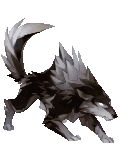
To enter the contest, please fill out the form below. Essentially, this will be a personality / idea contest for the leadership, with the victor also taking over the pack itself. Remember, this leader must be a seer!
Due to the potential for overlapping ideas (and to avoid any accusations or hard feelings about copying, whether intentional or not), please do not post here. PM your entries to Contest Entries instead!
[b]Name:[/b] [b]Personality:[/b] As long or short as you desire! [b]History:[/b] [b] Anything else?[/b] Future plot ideas? Things of this nature!
The winner will receive: - Pack ownership - Pack leader (note that though they are a seer, they will not count against you in your 1 per year quest limit!) - Five semi-customs - Access to additional wolves for future plots - Banner template
This ends August 31st at 8 PM EST.
Read on to find out more!
Posted: Wed Aug 27, 2014 7:08 pm
The Spiritwalkers are a group of animals, primarily wolves, who believe that their spirits are earthbound. In leading a good life, they are reborn as a crow. When their avian body dies, their spirits are finally able to fly high enough to reach the afterlife. Predictably, they revere the birds among them and often act as servants to garner favor from them.
They share some overlapping beliefs with the Sunlords and call them friends, but otherwise keep to themselves and the crows, preferring to live a peaceful life and build upon their own community.
Stereotype: Spiritwalkers are hailed for their friendly reception of guests and strangers, more so than any other native Tolas pack. Many mistakenly simplify their beliefs as saying they believe only birds have souls. Their extreme dedication to their religion is praised by some as a part of the tight-knit community and looked down upon by others as cult-like.
Appearance: Few native Tolas packs have the assortment of colors and designs as the Spiritwalkers do. Their bloodlines are so diverse and plentiful that wolves who look near identical may in fact be only distantly related.
HISTORY:
Age and History: The Spiritwalkers are one of the youngest native Tolas packs, but just barely so. They have dwelt here for as long as verbal history can recount, longer than any living creature has walked the lands. From the start, they have been more or less defined by their beliefs and most importantly the sense of community that these help foster. Crime has always been and is still today a rarity.
Often forgotten or neglected in history lessons is the pack of their forefathers, which took more of a neutral stance on the spiritual world. Things changed after their most beloved alpha, Bao, the third to ever rule, was lost abruptly to a sickness spreading throughout Tolas. As the pack was facing its darkest hour, a crow appeared bearing a striking resemblance to their lost leader. From this, rumors of his rebirth became hope, and that hope eventually became a concrete faith.
During the time of war between the Timekeepers and the Sunlords, the animals of the Spiritwalkers retreated farther back from their original territory in order to avoid becoming entangled in such vicious conflict. Due to their high population of crows, they were able to keep an eye on things from above. Not without opposition, many of them would welcome Sunlord refugees fleeing the war (mostly mothers with their pups), into their own families. Through these displaced wolves they learned of the Sunlords' own religion.
In the Spiritwalkers' eyes, the harsh winter that ensued after the war — which cost countless Sunlord lives — lent credibility to the Sunlords' claim they provide guidance and inspiration for the sun. The Spiritwalkers soon adopted some of these beliefs and maintain them still today.
LANGUAGES & NAMES
Yakoshi (Native): A language of brevity, Yakoshi often relies on specific order in which words are said rather than the words themselves. This language is incredibly difficult to learn as an adult, but with practice, it can be nearly mastered. Yakoshi is the native tongue of the Spiritwalkers and the one they will speak amongst themselves most often.
Telkish / Common (Common): The universal language to Tolas as a whole (as well as to Telk), this is both known as "Common language" and "Telkish language," though until recently, Tolas animals were unsure of the latter name's origins. Most every group speaks this and the Spiritwalkers are no exception; however, they typically view the language as clunky, cluttered, and unpleasant to the ears compared to their own.
Sharanjin (Extremely Rare): Very, very few wolves in the Spiritwalkers speak Sharanjin, but there are more than they lead the Sunlords to believe, as to know or teach Sharanjin to a non-Sunlord wolf is an extreme offense to them. The Spiritwalkers learned it primarily as a result of the war, during which time they took in Sunlord refugees. As this has long passed, it has mostly fallen into disuse but for descendants of pure Sunlord refugee families and is mostly a dead language in their society.
The Spiritwalkers are so concerned with starting a war over this, any wolf caught speaking Sharanjin will be sent to the Mountain Guard on a temporary sentence in order to preserve peaceful ties with the Sunlords. Aware of this, most parents have stopped teaching their offspring Sharanjin generations ago.
Yakoshi is inspired by the Korean, Chinese, and Japanese language. They name their young (both the crows and wolves) things like Hayato, Min-sun, and Ru for males; Asuka, Bit-na, Nuo for females. Many names are considered unisex. Because their language is only inspired by real world languages, OOC name meanings do not apply / are not known to them from an IC perspective.
Family names are very common, so while visiting the Spiritwalkers it's very likely you'll encounter situations where three wolves are named Asuka, Asuka, and Asuka — grandmother, mother, and daughter.
RANKS:
Spiritspeaker Spiritspeakers are the pack's alpha, chosen not by birthright or physical strength, but more by religious authority and seer prowess. They serve as leaders in times of crisis, judges at trials, spiritual guides for the youth, and other such tasks. The most important and frequent part of their job is to look into the past of the deceased and determine whether or not their life was worthy enough for them to be reborn as a crow or to seek out "new" stars when a crow has passed. (OOC, stars are obviously not created, but instead the wolves assume an indicated star is new.)
Spiritspeakers don't usually have a family of their own, as they simply don't have the time or energy, but it is still permissible for them to do so. They are male or female. (OOC, because they are seers, they remain on seer lines as opposed to be transferred to alpha lines.)
Spiritseer Spiritseer is the closet thing the Spiritwalkers know to an heir/heiress. There is only one of them at any given time and they are selected through a series of judgements and trials (see Rituals). When the Spiritspeaker dies or steps down, they immediately take on their rank and duties. Like the Spiritspeaker, they are always seers. (OOC, they will eventual default to seer lines.)
Guardian: Guardians have many functions within the pack and there are only four of them at any given time. They are priests/priestesses, well-versed in the religion and history of the pack. They are the jury in trials to decide a wolf's guilt or innocence. They are revered as the wisest, most spiritual, and often most generous, though there have been some corrupt wolves sprinkled throughout. They obtain this rank by being appointed by the Spiritspeaker and keep it for the rest of their life or until retirement. (OOC, they will most likely be on beta lines.)
Retainer: Retainers are the wolves most familiar with the crows. They act as both ambassadors and servants for them and tend to know every murder (flock) by name. There is no shame in this subservient conduct. On the contrary, Retainers are heroes among the Spiritwalkers and many pups will say they wish to be one when they grow up. There's usually an average of five, but no more than ten. They are selected by the Spiritspeaker with help from the Guardians and maintain their rank until they retire, die, or are for some reason demoted. (OOC, they are usually on gamma lines.)
Tracker: Trackers are hunters/huntresses who managed to persuade a crow to assist them during hunts on a semi-permanent to permanent basis. This a partnership that commands mutual respect and should not be take for granted by the wolf, as the crows can avoid them entirely if they so desire. A Tracker is very admired by their community, especially the hunters. ( OOC, they are usually on gamma lines.)
Healer: Healers are the shaman of the group, and as the name suggests, they spend most of their efforts healing those injured in hunts or plagued by illness. (OOC, these are on shaman lines.)
Hunters/Huntresses: Hunters and huntresses make up the bulk of the Spiritwalker ranks. They work in shifts, often only once or twice a week as there are enough wolves to permit this. Any wolf can become this rank and they take orders from the Trackers. (OOC, they are usually on gamma lines.)
Potentials Potentials are those in training to become a Spiritspeaker. They have no other duties for as long as this continues. They are usually pups or adolescents.
RITUALS:
Bao's Judgements: Bao's Judgements — also rarely known as Judgement Trials, Tree Trials, and a few other monikers — is an event that usually occurs once in a wolf's lifetime, if that. When a Spiritspeaker retires or dies, the Spiritseer is promoted. Sometimes, the Spiritseer themselves will die or abandon their responsibilities (though this has happened once in all of history). In either instance, the Spiritseer position is left vacant, and this is to be remedied immediately, for they are to the Spiritspeaker what a prince is to a king. Almost. Unlike princes (or princesses), Spiritseers are not selected based on their bloodline.
From the day the position is open to the end of the following season, each and every litter of pups born are taken to very particular copse of trees, gathered together near the borders of the pack to the west. Passed down from generation to generation is the story of Bao's spirit, but a detail that is known by only a select few is just which tree Nuo-ra purportedly saw him land on before he flew away to join his fellow spirit in the stars.
Puppies are able to walk, speak, and answer the question asked of them, but only barely. Most wolves, later in life, can't remember this experience because of just how young they were. For a pup to remember it would similar to a human toddler remembering their first trip to the doctor. The parents, on the other hand, form lasting memories of their pups being ushered off onto this field trip. This is the first time they are apart from them, and some pups don't handle it as well as others.
Once they reach their destination, pups are brought one by one to the trees and asked, "Which of these do you like the most?" as they are far too young to grasp the more complex version of this question. It is believed that pups who indicate Bao's chosen tree as their favored one have been born with greater potential than the others.
At the end of the following season, all the pups who answered "correctly" (some of which will be bordering adolescence at this point, depending on when they were born) are brought back together and undergo a form of training known as Spiritspeaking (read on for more).
If desperate, the Spiritwalkers will beseech their allies, the Sunlords, to obtain specific timeline information from the Timekeepers. But usually, they follow this:
Spring: First exceptionally hot day, indicating it is now Summer. Summer: First fully "discolored" leaf is sighted, indicating it is now Fall. Fall: First heavy rainfall, indicating it is now Winter. Winter: Flowers are prevalent, indicating it is now Spring.
Since some things (such as which day is "exceptionally" hot) are a matter of opinion, the pack looks to the Spiritspeaker. He or she determines and announces the official end / start of a season.
There has never been a time in which both the Spiritspeaker and Spiritseer died, retired, or abandoned their duties in sync with one another, and so there has always been someone to make these decisions.
Spiritspeaking: Spiritspeaking is the form of training that chosen pups / adolescents undergo after choosing correctly in their Judgements (see above). This consists of staying close to dying animals or recently dead animals in order to practice prompting visions about their life, honing in on any crimes or misdeeds.
To the Spiritwalkers, passing their Judgements is proof enough that these youngsters have all the seer potential they need. In reality, most of them by nature alone have no potential and will never become seers. OOC, only pups/adolescents who rolled for "Gifted" seer potential in the rolling thread actually have it, and regardless of how much promise they show. Their visions — if indeed they are "Gifted" and have them at all — will be flickering, unstable, and at risk of fading away forever until they are fully grown.
Participants, called Potentials, can drop out of the training at anytime. Historically, most Potentials (around 70% on average) do just that. The hours are brutal, allowing little time for socializing or play, and the work can be taxing both physically and mentally. Potentials are also not permitted to see their family or friends outside the training. In this way, it is very much like real world bootcamp.
The usual schedule is as follows:
Phase One: All participants start at this level and do so at the same time. This lasts for five sunsets.
For the first three days, animals are brought to Potentials already dead. For the last two, they are brought to them only half-dead. In both cases, these are always prey — creatures both pups and adolescents have seen dead before during dinner time — and afterwards they are used as a food source and eaten.
Phase Two: Phase Two is the time the majority of dropouts take their leave. It lasts for seven sunsets. By now, many are feeling too homesick to stay. Others leave when they are brought their first dead or dying wolf. Many elderly and/or terminally ill wolves have volunteered for this job in the past.
It can be mentally draining for Potentials, at times even traumatizing, especially to the pups among them. These are not the prey beasts Mom and Dad have always brought home, but their neighbors, friends, perhaps even their own family.
Like with the prey animals, they are asked to try and prompt visions about the life of the deceased or the dying and relay to their mentors these discoveries. As their terminally ill packmates are able to say whether or not these are accurate, this is the point where many Potentials are believed to have "lost" their abilities and so they are sent home. OOC, this is the point where only those with actual seer abilities stand a chance, either because they were "Gifted" or because they have practiced so much (and have the appropriate personality) they are now "Disciplined." Characters can also attempt to lie their way into the next step, but this would be difficult.
Phase Three: Phase Three is the final step in choosing the next Spiritseer. By now, most wolves have left or been sent home. Potentials are narrowed down to no more than four at this point, and from here on out, something of an election is held. Crows are sought out for the wisdom and, at the end of ten more sunrises, asked to choose their favored Potential.
This is done by placing each wolf in front of a tree and having crows land on the tree behind the wolf they feel best suited. The wolf with the most crows in their favor is victorious, and from that point on, they are the Spiritseer.
Trials: Trials are meant to decide the guilt or innocence of an accused wolf and determine whether or not they will be sent to the Mountain Guard, and if so, for how long. Trials are not necessarily a right. In the event a wolf's guilt is obvious (or appears to be), their sentence will be determined and they will be sent away without all the fuss.
In trials, the Spiritspeaker acts as the judge figure and one could liken the Guardians to a jury.
RELIGION / STIGMAS / CRIMES & LAWS
The Spiritwalkers first became known as such in the wake of the plague that spread far and wide across Tolas decades ago. They call this sickness Death of Many Names, and with little warning, it claimed the life of their most beloved leader in history, Bao. The pack was fractured by his loss, equally troubled by those vying for leadership and those too despondent about the situation to do anything at all.
Survivors of the highly contagious illness were faced with another equally debilitating threat: Starvation.
Herds of deer, warrens of rabbits, the population of every kind of animal within their territory had suffered — and, it seemed, even outside of it. Food was scarce on a good day, absent entirely all others. They had lost several to the hunger within a week's time and more were starting to fall.
Then, as the story goes, there appeared a crow with a striking resemblance to the late Bao. A puppy named Nuo-ra allegedly followed this bird to a land still verdant. A land with prey. It is told that as Nuo-ra stared in awe at the bounty before him, the crow flew from the tree where it had perched and high into the night sky where it became a star.
The precise details of how these specific beliefs formed are unknown, but most Spiritwalkers believe with all their hearts that the stars are the spirits of deceased animals, so far up in the sky only a bird can reach it. They do not believe all birds are reborn spirits, but rather just crows. Many will say this is due to the alpha being reborn as one; however, those well-versed in history will be able to tell you it was also prompted by knowledge the two-leggers are known to have crows among them.
In reality, these crows are tamed pets, adored for their intelligence and ability to use tools. The Spiritwalkers instead see this as proof the crows are able to assimilate with every kind of animal because they were every kind of animal, and that the two-leggers know of their importance too.
During and after the war of Timekeeper versus Sunlord, the Spiritwalkers remained neutral beyond housing many Sunlord refugees fleeing the conflict to protect their family. They learned of their beliefs through these wolves, and when a harsh winter followed the immense loss of life suffered by the surrendering Sunlords, they came to accept the claim that Sunlord wolves are keepers of the sun, and so to some extent, the weather.
They do not believe the Sunlords heed the word of the moon and stars properly, though, and when the two packs gather together this is likely to be the subject of debate at least once. The Spiritwalkers themselves are uncertain of the moon, though they do address it as female. Some say She is a mother of all that watches over the lost souls. Some say She is the first shaman to ever live and die. No one knows for certain. But the stars, without a doubt, are the spirits of all creatures once lived, now watching over the world at night, when it is most at rest and they will not disturb the living.
Secularism: Those embracing the faith of the Spiritwalkers are likely to be of the opinion there is no more loving, devoted group in all the world. Help is offered readily and without judgement, the word "family" includes everyone, and they are known to keep their "do unto others" attitude close to their hearts. Yet for those who start to question things a little too often — or worse, out themselves as a nonbeliever — the Spiritwalker territory can be a stifling environment full of hesitant glances and frequent interventions to try and "show them the way" of things.
Usually, they are not so much hostile toward these kinds of wolves as they are startled by them. To have your offspring denounce their faith is to have them denounce their home, and this will subject their family to gossip and criticism from which they may never fully recover even if the relative in question leaves.
Due to this, combined with the fact they have minimal outside influences to sway them away from their faith to start with, most Spiritwalkers are genuine believers and those who are not most often pretend for the sake of their family and their own livelihood.
Hunting Birds: Although crows in specific are revered, the Spiritwalkers frown upon violence toward birds as a matter of culture. To kill and eat a bird is similar to eating a dog or cat in many modern day societies (such as North America). If a wolf is eating a bird, they are very much aware of just what they're doing and there's likely a reason for it, be it on a dare or to prove themselves rebellious or "tough" in the eyes of other pack members. Even birds found dead are usually either buried or left alone.
Timekeepers: To bring home a Timekeeper or even socialize with one will get you some funny looks. See the "Other Groups" post for more information.
Murder, Rape, etc. Many of the crimes the Spiritwalkers penalize align with most civilized modern day societies. Sexual assault, murder, and sometimes scheming or repeat offenders of physical confrontation. There are incidents of innocent wolves being sent away, though these are rare, especially when one considers crime itself is uncommon within this mannerly pack.
Speaking Sharanjin: To their allies the Sunlords, outsiders speaking Sharanjin causes quite the fuss. The Spiritwalkers are so concerned with this, they fear it would be taken as a declaration of war, or at the least that the Sunlords would demand the execution of the wolf in question. The official law says that anyone caught speaking Sharanjin will be temporarily sent to the Mountain Guard. Some have gotten away with it... Others, well, they now know the Mountain Guard bears by name.
Killing Crows: It comes as no surprise killing a crow is a heinous crime indeed. As crows are the spirits of other animals, you have essentially destroyed someone's soul before they were ready to depart to the final afterlife. Views on what happens next vary, but it is most widely accepted that the soul of the offender is then cursed, never to live beyond their current life. As this includes accidental deaths, wolves know to be very careful around the crows.
Territory: Spiritwalker territory is comfortably placed on the edge of a formation of hills. The hills themselves are loosely wooded with oaks, some water-loving pines, and the smooth-barked manzanita. These are rarely so close together that wolf passage is restricted, but areas that receive more water may become overgrown. In soils where trees have not taken root, grasses and the occasional brush smatter the hillside. Seasonal creeks can be found nested in the draws of these hills, turning from dry beds to wide creeks during the winter and spring months. At the base of the hills, cool springwater bubbles up directly from the ground. These springs are not large, and cannot be swum in, but they provide crystal clear drinking water year round. Westward of these hills, the land is dominated by both perennial bunchgrass and annual grasses (such as poverty grass). As it is mostly flat, this area is subject to becoming marshy in the winter. This quasi-flooding keeps soils rich and the land plentiful for birds, prey-beasts, and wolves.
Weather
Fall: The beginning of fall is relatively warm, but still often a relief from the summer. Most days are clear and rainclouds may rumble over, but refuse to produce any water. Nights are cooled by a breeze drifting through the pass in the Jotunfjell mountain range. This time of year trees drop their bounty: oaks produce acorns and pinecones are abundant in pine-species. Leaves begin to turn colors, producing an array of yellows, reds, oranges and browns. Towards the end of fall, the thin clouds start to turn to light showers. Days are often more cloudy than not and temperatures gradually cool.
Winter: Winters here are mild compared to other Tolas locations. A good year produces an ample amount of rain in the winter-time. Rainy days typically outnumber sunny days, though there are many days of sun in the grasslands. Snow will often dust the top of the hills, but will reach the lowlands only once every few years. However, winter may produce several nights of freezing even without the snow. This can occasionally ruin food sources for crows or kill the unsuspecting lone wolf. Almost every winter day can be considered nippy, though only a wolf spoiled by great weather would dare complain. Tiny buds of green grass begin to grow during this season, though their nutritional quality is exceedingly poor.
Spring: With temperatures much like fall, spring oscillates between cold, overcast, or rainy days to warming, sunny days with scattered clouds. Rainbows are commonplace after rainstorms. Grass begins to grow tall, thick, and green. Towards the end of spring, when the days are predominately sunny, these grasses reach their maximum heights and are sweet and rich. Herbivores can get stomach aches from eating too much. However, their full bellies make it a good time for hunting wolves.
Summer: The once green annual grasses begin to die. Streams and creeks fed by the rains begin to dry, and the grasslands often turn to a rich golden sea. For many wolves, this is an agitating time as plant species will leave their seeds hanging in their fur. Hours must be spent picking these out, or risk one burrowing under the skin, causing an infection and further issues. These harmful seeds are the most uncommon in the flatlands since perennial grasses make up most of the plant species. The downside is that little to no shade exists in these grasses, and summer lends to strings of days that are as hot as in the desert. Days this hot do not cool off at night. These days are present throughout the summer, but are the most common towards the end. They rarely come in more than strings of three or four. The true danger in this area lies in the rare thundercloud which escapes the mountains. These thunderheads are devoid of rain, but produce strikes of lightning that can start fires. Most typically, these are small, localized fires that burn small patches, rarely enter trees, and are of little danger to animals who are willing to move. Positively, this allows bunch grasses to regrow anew and many species of tree to grow that require fire to sprout. On the flip side, areas that have not burned for many years can cause massive fires which crown (reach tree-tops). Many animals of many species lose their lives in crowning fires.
Water Sources: Seasonal creeks (during winter and spring), freshwater springs (year-round)
Food Sources (Listed most eaten to least): Deer, rabbits or hare, pronghon antelope, beaver (during winter/spring when they build dams in seasonal creeks), opossum, elk (when it can be found), fish (found in some small ponds) boar (rarely hunted; aggressive and dangerous and responsible for many premature deaths)
OTHER GROUPS:
The Sunlords: The Spiritwalkers remain on amiable terms with the Sunlords since the war. They believe the Sunlords' presence keeps the sun in the sky (due to the inclement weather following aforementioned war), but the two packs have a strong disagreement on the origins of the moon and stars. This can spark heated cultural debates. In general, they remain friendly neighbors but make no strong effort to visit one another. Should a Spiritwalker be found on the Sunlords' territory, they would be openly welcomed and allowed to stay longer than an ordinary guest; likewise, the Spiritwalkers are usually always courteous to their visitors from the Sunlords, whether from hospitality or their penchant for manners.
The Timekeepers: The Timekeepers are not looked upon fondly by the Spiritwalkers whatsoever, and this is at least partially due to influence from the Sunlords. They see them as slavers, bullies, and blasphemous. Spiritwalker pups and fledglings will often play games in which a Timekeeper serves as the villain role and many doe-eyed adolescent love stories involve Timekeeper males (exaggerated and inaccurately portrayed) succumbing to the charm of a Spiritwalker female and changing his ways.
The Mountain Guard: The Spiritwalkers have little crime, but one could make the argument this is because they are so quick to send offenders away to the Mountain Guard. Aside from prisoner delivery and paying their "tax," the Spiritwalkers rarely make contact with the Mountain Guard. There are varying opinions on whether the rumors they're officially allied with the Timekeepers are true.