




.::. Battle Royale .::.


IMDb profile
Battle Royale is a novel written by Japanese author Koushun Takami. It was first published in Japan in April 1999, and it is one of Japan's best-selling and most controversial novels. It later formed the basis for a popular movie (which spawned a sequel), and has been adapted as a manga series (released in 15 volumes, which were later adapted into English by Keith Giffen and published by TOKYOPOP).
An English translation of the novel was published in the United States by Viz in 2004, and will be available in the United Kingdom from July 6 2006, published by Orbit Books [1].
Plot overview
Spoiler warning: Plot and/or ending details follow.
Battle Royale takes place in an alternate timeline or future (The book specifies the year as 1997, suggesting an alternate present) where Japan is a police state known as the Republic of Greater East Asia. Once a year, randomly selected classes of middle-school students are forced to take arms against one another until only one student in each class remains. The program was created, supposedly, as a form of military research, though the outcome of each battle is publicized on local television. Late in the book, character Shogo Kawada discovers that the program is not an experiment at all, but a means of terrorizing the population. After seeing such atrocities, the people will become paranoid and divided, preventing an organized rebellion.
Under the guise of a "study trip", the students are corralled onto a bus and gassed, only to awaken on an evacuated island or isolated area with metal collars around their necks. After being briefed about their role in the program, the students are issued bags that carry bread, water, a map, a compass, a flashlight, a watch and a weapon or a tool and sent out one by one, with two minutes separating each departure. While most of the students receive guns and knives, some students acquire useless items like boomerangs and dartboards. In some cases, instead of a weapon the student receives a tool; Hiroki Sugimura finds a radar that tracks nearby students and Toshinori Oda receives a bulletproof vest.
To make sure that the students obey the rules and kill each other, the metal collars around their necks track their positions, and will explode if they enter a "Forbidden Zone" or attempt to remove the collars. The Forbidden Zones are randomly chosen areas of the map that increase in number from hour to hour, re-sculpting and shrinking the battlefield and forcing the students to move around. The collars also transmit sound back to the organizers of the game, allowing them to hear the students' conversations, root out escape plans, and log their activities.
The students are also given a time limit. If twenty-four hours pass without a single death, then all of the collars will be detonated simultaneously and there will be no winner. It is later mentioned by Shogo Kawada that only 0.5% of Programs end in this fashion.
In the end, only four students are remaining: Shuya Nanahara, Noriko Nakagawa, Shogo Kawada, and antagonist Kazuo Kiriyama. There is a car chase and shootout between the three main characters and Kazuo. They win, but two of their group must die before the game can end. Several plot twists ensue before the book ends with two of the three alive and on the run.
Spoiler warning: Plot and/or ending details follow.
Heroes
Shuya Nanahara (spelled "Shuuya" in the TOKYOPOP English adaptation of the manga) is the main hero. He has witnessed a good deal of troubling events throughout his life, though precisely what he has seen differs according to different versions of the story. He is willing to trust others, not wanting to take part in the Battle Royale program. He tries to rally fellow students in an attempt to escape, but fails. Consequently, he narrowly escapes death at the hands of his classmates on several occasions.
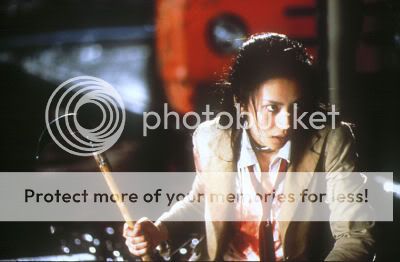
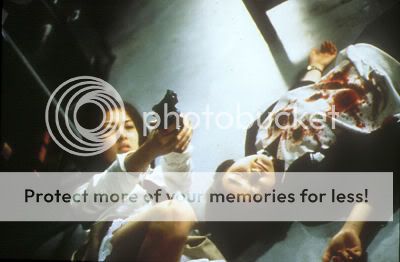
Noriko Nakagawa is the story's main female character and Shuya's first companion. Her portrayal changes in different versions of the story. She is shot in the upper arm in the film, the lower leg in the book and manga, and also gets ill. She manages to keep Shuya sane, although she does not know it, and she also is the only other survivor along with Shuya.
Shogo Kawada, portrayed as a loner within the class ranks, is a transfer student in all versions of the story. In the book and manga, he was put in class B about two months before the program takes place. In the film, however, he is added to the story very early on, being introduced after the rest of the class wakes up from being gassed on the class trip. He was the winner of a previous program in all versions but just how long ago before his second time varies from a year to 3 years. His father was also a doctor, meaning that he can help both Shuya and Noriko. Most importantly, he says that he knows a way to escape from the island and the entire Battle Royale program. But Noriko and Shuya are frequently forced to ask themselves if he can really be trusted.
Other characters and their reactions
Spoiler warning: Plot and/or ending details follow.
The specifics of the events described below differ from book to movie to manga.
Passive students
Spoiler warning: Plot and/or ending details follow.
All of the students react to the program differently. Some students take their own lives, others hide in the shadows and attempt to locate their friends, and a few attempt to escape from the program.
Sakura Ogawa and Kazuhiko Yamamoto, known as "the most intimate couple" in the class, leap to their deaths before the other students can kill them. In the novel & manga, Yukie Utsumi witnesses it first hand.
Best friends Yukiko Kitano and Yumiko Kusaka attempt to rally their fellow classmates together using a megaphone to reach everyone alive on the island. However, their use of the megaphone gives away their position, and Kazuo Kiriyama, one of several students who quickly adapts to the situation (see below), comes and kills them from behind.
Yukie Utsumi and five fellow classmates Haruka Tanizawa, Yuka Nakagawa, Satomi Noda, Chisato Matsui and Yuko Sakaki hide within the confines of the lighthouse. Their main goal is to hide from the students and allow the ones who are more "into it" to kill each other; then they will wait until their time expires. Their plan ultimately fails when Yuko Sakaki accidentally poisons one of the girls, which sparks a chain reaction of paranoia that ends in the deaths of all six girls.
Shinji Mimura uses his intellect to invent an escape plan. His first plan is to hack into the government's computer and disable their collars and then bomb the school. He is successful in hacking the computer, wiping out all data and disabling the collars, he then attempts to bomb the school, which fails after a slight disruption that results in Shinji killing a fellow classmate. In the ensuing confusion, Kazuo shows up and kills both Shinji and his friend and accomplice, Yutaka Seto.
Hiroki Sugimura receives a tracking device as his weapon. Sugimura saves Shuya from Kazuo Kiriyama and leaves him at the lighthouse. In the novel and manga, he is a black belt in Kung Fu and spends most of the program time looking for Kayoko Kotohiki. In the film and novel, she shoots him before he can tell her he is a friend; in the manga she goes with him but they are soon killed by Kazuo Kiriyama. He is highly regarded by the others and is one of the three people who it is said that, if they were to team up, they could escape. The other two are Shuya and Shinji. His role is truncated in the film version, compared to the novel where he has separate encounters with Shuya's trio, Kiriyama, Kaori Minami, Toshinori Oda and Mitsuko Souma as well as post-mortem encounters with the Lighthouse girls, Shinji Mimura and Megumi Eto. Hiroki fought Kazuo Kiriyama hand to hand equally and won, shooting Kazuo with a pistol 7 times. Kazuo lives because he was wearing a bulletproof vest he took from Toshiniri Oda.
Takako Chigusa, the fastest runner in the class, is attacked by Kazushi Niida, who wants to rape her. She kills him with her ice pick out of self defence before getting shot by Mitsuko Souma.
Kayoko Kotohiki does not kill anybody and spends most of the time hiding around the island. Hiroki Sugimura looks for her for quite a while. In both the film and novel, she shoots Hiroki fatally before he can tell her he is a friend. She is killed very shortly after by Mitsuko Souma. In the Manga, she goes with Sugimura but they are soon after killed off by Kazuo Kiriyama.
Yutaka Seto, the class clown and a good friend of Shinji Mimura, helps him gather the materials for the bomb plan. In all versions he is killed by Kazuo Kiryama who soon after kills an injured Mimura; although in the film, his character seems juxtaposed with Iijima, as Iijima frequently laughs at inopportune moments.
Yoji Kuramoto and Yoshimi Yahagi (a member of the delinquent girls along with Hirono Shimizu and Mitsuko Souma) were a couple. In the novel and manga, they meet up and have a dispute (Yoji claiming he never loved her) and then reconcile, only to both be killed shortly afterward by Mitsuko. In the movie, they simply commit suicide together, hanging themselves in a manner that parallels the suicides of Ogawa and Yamamoto.
Close friends Tadakatsu Hatagami and Yuuichirou Takiguchi hide together and plan to keep away from others in all versions. Where exactly they hide varies between versions. Both are seduced and killed by Mitsuko Souma. In the novel, Mitsuko shares an understanding with Yuuichirou before she kills him, sharing a brief, romantic kiss with him seconds after she kills him and saying "You were pretty cool. You even made me a little happy. I won't forget you."
Yoshitoki Kuninobu, a very close friend to Shuya, is killed by the teacher. The reason for his death varies from version to version.
Fumiyo Fujiyoshi is killed by the teacher along with Kuninobu. Fujiyoshi is killed for whispering during the training video by having a knife hurled into her forehead.
Sho Tsokioka, the sole homosexual in the class and a member of Kiriyama's street gang. His father owns a gay bar and he often entertains at it. He views himself as if he is a woman inside and he is incredibly narcissistic. He devises a plan to follow Kiriyama around the island until Kazuo kills everyone off. Once Kiriyama has done this, Sho plans to kill him and become the winner of the Battle Royale. He purposely doesn't show up at the alloted meeting place with the other Kiriyama street gang members. He instead witnesses Kiryama's deception from a distance and decides to trail Kiriyama until the end of the game. His ability to follow someone unnoticed, as a well as his initial wisdom against meeting Kiriyama are attributed to street-smart nature he developed hanging around his father's bar. He is eventually tricked by Kiriyama into lingering in a danger zone. In the film, he is just part of a gang of kids who are easily killed by Kiriyama.
Keita Iijima is a loner who was once a friend of Shinji Mimura. One day when going to the movies with Shinji, Keita decided to stop at a bookstore. Shinji agreed to this because he also wanted to go. On their way out, Keita left his purchase behind and returned to retrieve it, and local gang members began harrassing Shinji. Initially trying to ignore them, Shinji ended up in a fight with them which he won. During the fight he saw Keita hesitate within the bookstore when he saw the fight outside. Shinji has been unfriendly with Keita ever since. When Keita wishes to join Yutaka Seto and Shinji, Shinji turns him down. Shinji points a gun at Keita and tells him to leave. Shinji fires the gun in an attempt to scare him off but accidentally hits and kills him. This begins a chain of events which leads to the ultimate failure of Mimura's plan in the novel and manga. In the film, Iijima helps Mimura and Yutaka from the beginning and all three are killed by Kazuo Kiriyama.
Mayumi Tendo, a fairly quiet girl, is the first student to be killed by another student in game time. She leaves the school only to be shot through the neck seconds later. Her dead body is the first thing Shuya (the next person out) sees. In the film, she dies before his eyes.
Izumi Kanai is captured by members of Kazuo Kiriyama's street gang Ryuhei Sasagawa and Hiroshi Kuronaga in the manga version. She is taken to Kiriyama so they can "kick things off with a pink party," and is killed soon after. In the film, she is shot with the rest of the gang by Kiriyama. In the novel, her dead body is discovered along with Kuronaga and Sasagawa by Mitsuru Numai. Kiriyama claims that Izumi just happened to be there (she was not abducted and brought there as in the novel).
Megumi Eto is one of the first to be killed. Megumi hides in a house, but is discovered by Mitsuko Souma. Mitsuko deceives Megumi into believing she is a friend, then slits Megumi's throat with her kama.
Reactive students
Spoiler warning: Plot and/or ending details follow.
Though most of the students remain passive and refuse to kill, other students relish the opportunity to wreak havoc upon their classmates.
Due to a freak accident sustained during an operation when he was an infant, Kazuo Kiriyama was born a sociopath with the mind of a genius and also the inability to feel emotion. He quickly becomes the main antagonist and succeeds in killing eleven of his fellow classmates, ultimately to be killed by Shogo Kawada. In the movie, he is a "transfer student" who signed up separately to participate in the game, and was included to provide an additional threat to the other students. Ironically, he starts out with the weakest weapon, the paper fan (in the novel, his original weapon is a knife). After killing other students, he gains more weaponry.
After being raped when she was a child and forced to sell her body for her mother’s gain, Mitsuko Souma became a hollow shell. She deceives students with fake tears, a beautiful face, and a sexual nature, only to kill them shortly afterwards. She manages to kill seven students before Kazuo finally kills her.
Yoshio Akamatsu is the first student out of the schoolhouse where they are briefed. He runs off, but later comes back and climbs onto the roof of the school in order to try and assassinate others. He is the first student to kill somebody - girl 14, Mayumi Tendo. He shoots her from behind in the neck with a crossbow and then once more in the thigh (possibly post-mortem). Later he attempts to kill Shuya Nanahara but fails. Nanahara knocks Yoshio unconscious, and he is then finished off by Kazushi Niida.
Mitsuru Numai, along with Ryuhei Sasagawa, Hiroshi Kuronaga and Sho Tsokioka, are members of Kiriyama's street gang. Mitsuru has the utmost devotion to Kiriyama, seeing himself as the "loyal advisor" to the the king, Kiriyama. He is deceived by Kiriyama, meeting him along with the other street gang members (minus Tsokioka) at a certain point on the island (specified before the game by Kiriyama), thinking their alliance would formulate a plan, only to discover Ryuhei's and Hiroshi's dead bodies and being dispatched by Kiriyama shortly after. In the film, as Kiriyama didn't know them before the game, Mitsuru is merely the leader of a group of students who corner Kiriyama and are easily killed by him.
After killing Yoshio Akamatsu with his own weapon, the tenebrous Kazushi Niida comes upon Takako Chigusa. Aside from desiring to rape Takako Chigusa, he attempts to shoot her when she runs from him. A vicious fight ensues that ends with Kazushi being impaled in the mouth with Takako's ice pick.
Being little more than an ugly rich kid with high views of himself, Toshinori Oda sets out to kill everyone to preserve his talents with the violin. Toshinori hates the students in his class calling them the "vulgar masses". He hates Shuya because Shuya is good looking and he plays rock music, which Toshinori has a great distain for. Although he kills Hirono Shimizu in the novel and manga, Kazuo Kiriyama, whom Toshinori states that he despises because he is handsome, quickly kills him. In a bit of dark humor, we find out that, several years prior, Kazuo attained a level of skill with the violin that far surpassed Toshinori’s, and when he grew tired of playing and decided his violin playing was finished, he threw the violin away. (Oda's storyline does not appear in the film version, where he's little more than fodder for Kiriyama). His method of killing usually involved feigning death when shot in the vest and then rising to kill his opponent, a trick later used by Kiriyama against both Sugimura and Kawada.
Tatasumichi Oki, a new student in the class, goes mad and tries to kill Shuya and Noriko with various weapons. In the book and film he uses an axe and in the manga a machete, but after a fall with Shuya his weapon ends up stuck in his head.
Kyouichi Motobuchi, the male class representative, goes mad after witnessing Shuya kill Tatsumichi Oki. He truly believes that it was not an accident and that Shuya was really playing the game. After mumbling math equations he tells Shuya he will kill him and everyone else so he can win this game. He says he will go to a fine school and study extremely hard. He is killed by Shogo Kawada before he can shoot Shuya. His weapon, a Smith&Wesson M19 revolver, is taken by Shogo and is later given to Shuya. In the manga he is trying to win for his father who is a government official, but he is shot by Shogo Kawada with a shotgun.
Kaori Minami and Mizuho Inada, described as best friends, have different deaths in different versions. In the movie, Kaori and Mizuho are shown dead with weapons still in them, prompting the assumption that they killed each other in some type of altercation. In the novel, they never see each other on the island. Kaori Minami goes mad after a misunderstanding in a surprise altercation with Sugimura (in the manga she goes mad after shooting a cat) and attempts a killing spree. She gets in a shootout with Hirono, whom she attacked without provocation, and is killed due to Nanahara's attempt to stop the shootout. Meanwhile, Mizuho Inada ends up the last person alive other than Kiriyama and the main trio, and tries, unsuccessfully, to kill Kiriyama. In the manga, Kaori's fate is the same as in the novel, but Mizuho is paranoic schizophrenic and obsessed with Dungeons and Dragons. This means that fear results in delusions, which are usually subject to what is on her mind at the time. She tries to kill Shuya when he finds her, believing herself to be her roleplay character; a warrior princess. Later, while Mizuho is worshipping a cross, Kiriyama turns up and shoots her in the head.
Hirono Shimizu is one of Mitsuko's gang, along with Yoshimi Yahagi. In the film, she corners Mitsuko and tries to punish her for murdering Megumi and for stealing her boyfriend. She is the only one in the film who is not decieved by Mitsuko's innocent act. She pushes Mitsuko to the ground and shouts at her to apologize to Megumi. She is ready to kill Mitsuko when Mitsuko uses Megumi's weapon, the stun gun, on her. Hirono falls to the ground and Mitsuko steals her gun and shoots her to death. In the novel and manga, although part of Mitsuko's delinquent gang, she only uses her weapons in order to defend herself. She gets in a shootout with Kaori Minami, which she wins but not without injury. She is attacked by Oda, whom she promptly shoots (not knowing of his bulletproof vest), and is then strangled after he "rises from the dead." In the manga, he kills her by pushing her into a well, in which she subsequently drowns.
Character List
Males
1. Yoshio Akamatsu
2. Keita Iijima
3. Tatsumichi Oki
4. Toshinori Oda
5. Shogo Kawada
6. Kazuo Kiriyama
7. Yoshitoki Kuninobu
8. Yoji Kuramoto
9. Hiroshi Kuronaga
10.Ryuhei Sasagawa
11.Hiroki Sugimura
12.Yutaka Seto
13.Yuichiro Takiguchi
14. Sho Tsukioka
15.Shuya Nanahara
16.Kazushi Niida
17.Mitsuru Numai
18.Tadakatsu Hatagami
19.Shinji Mimura
20.Kyoichi Motobuchi
21.Kazuhiko Yamamoto
Females
1. Mizuho Inada
2. Yukie Utsumi
3. Megumi Eto
4. Sakura Ogawa
5. Izumi Kanai
6. Yukiko Kitano
7. Yumiko Kusaka
8. Kayoko Kotohiki
9. Yuko Sakaki
10.Hirono Shimizu
11.Mitsuko Souma
12.Haruka Tanizawa
13.Takako Chigusa
14.Mayumi Tendo
15.Noriko Nakagawa
16.Yuka Nakagawa
17.Satomi Noda
18.Fumiyo Fujiyoshi
19.Chisato Matsui
20.Kaori Minami
21.Yoshimi Yahagi
Parallels
The story has some parallels to the story The Most Dangerous Game, as well as the William Golding novel Lord of the Flies and the Stephen King novels The Long Walk, Rage, and The Running Man, which was also made into a movie. Takami is an admirer of King, and named the students' hometown and school Shiroiwa, which translates to "Castle Rock", the name of a town frequently used by King as a setting for his stories. King, in turn, had borrowed the name from a location in Golding's novel. There are similarities to the film Series 7: The Contenders which is a parody of American reality TV. (One might also find weak similarities to Robert A. Heinlein's novel Tunnel in the Sky.)
Manga
A serialized manga adaptation of Battle Royale, written by Takami and Masayuki Taguchi, was published in Japan by Akita Publishing.
The manga follows the plot of the novel fairly closely, but also expands on the backstory of each of the students. It is also far more sexually graphic than the novel and film versions, and is also noted for its intense, gory violence. The name of the main character is transliterated as Shuuya in this version (rather than "Shuya" as it is spelled in the novel). Also, the manga changes the time that the story is set in by almost 10 years, using the term "In the near future" but on Shogo Kawada's profile it references the program 2005 season; he says his last program was a year ago leading to the assumption that the manga sets the story in 2006.
The manga revolves around seven main characters, including the righteous Shuuya Nanahara, the gentle and caring Noriko Nakagawa, the hardened veteran Shogo Kawada, the genius Shinji Mimura, the kind-hearted kung-fu master Hiroki Sugimura, the troubled Mitsuko Souma, and the cold, merciless Kazuo Kiriyama. As of January 2006, all 15 volumes have been released in Japan. In the US and UK all 15 of the volumes have been released as of April 2006.
TOKYOPOP Version
An English-language adaptation of the publication, published in multi-volume format by TOKYOPOP, was extensively rewritten by Keith Giffen, whose script does not completely follow the original comic.[1]
The major difference between the Japanese and TOKYOPOP version is that Giffen rewrote the BR program as a Reality TV show program, rather than keeping it in tune with the BR Act, which leaves plotholes through the panels of the manga, especially in Volume #15. This can be partially attributted to the fact that when TOKYOPOP had released Volume #1, the Japanese Battle Royale was up to Volume #9 at that point, thereby not giving TOKYOPOP or Giffen ample material to prove that their rewrite would backfire.
According to TOKYOPOP editor Mark Paniccia, in the Newsarama article:
For adapting the work, Giffen was given a tight Japanese-to-English translation of the story, but his assignment was by no means just to tweak a translation. "I told him to do what he felt he had to do," Paniccia said. "I told him to Giffenize it."
To which Giffen responds:
"It's a good story that Takami is telling," Giffen said. "What I do is go in and make bad scenes that much worse. I loved Battle Royale the movie, and also love the manga. I just wanted to do it right. I wanted to do justice to it, and I knew I couldn't get away with doing a straight translation, because it would be horrifyingly bad.
The rewrite is questionable, given past fan reactions to other rewrites done by TOKYOPOP, especially with another manga, Initial D.
In April 2006, Tim Beedle, a former associate editor of Battle Royale, stated on the TOKYOPOP Messageboard the reasoning behind the decision to have a more literal adaptation:
"Prior to starting work on the first volume of Battle Royale, its editor (Mark Paniccia, who has since left TOKYOPOP) made a decision to hire Keith Giffen, a well-known American comic book writer, to provide a much looser adaptation than usual. He made this decision for a variety of reasons, but two seemed to be more prominent than the rest. First, due to BR's extreme content and M rating, it was going to be a tough sell. (Some of the large chains refuse to carry M-rated books.) Hiring a known writer could help compensate for this by driving sales. Second, more than any other book we were publishing at the time, BR had the potential to find a crossover audience in the direct market among American comic book readers, who often are adverse to trying manga."[2]
Film
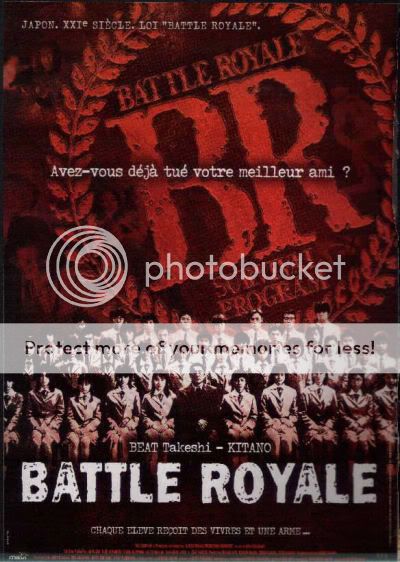
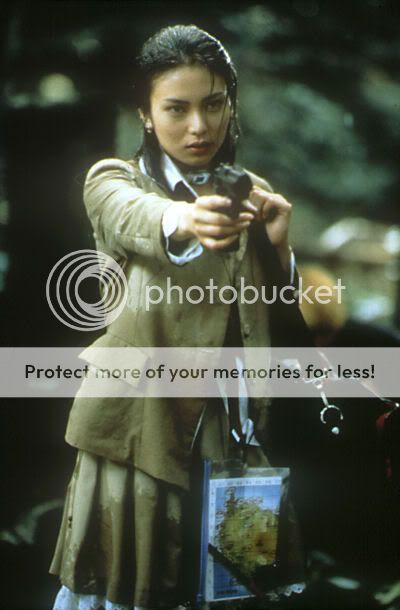
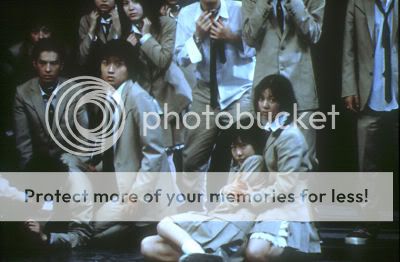
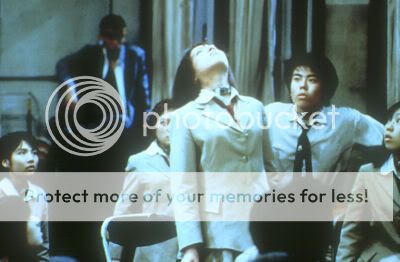
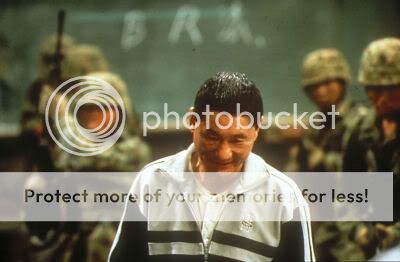
A film based on the novel was released in Japan on December 16, 2000, and like the book, the film aroused much controversy. Directed by Kinji Fukasaku, the movie follows the plot of the novel with a few differences. Among them, the character of the program administrator is greatly changed. Shogo Kawada and Kazuo Kiriyama are transfer students in the movie, Kiriyama playing the game voluntarily. Various students start with different weapons and die in different manners. The "victory" deadline is changed from the book; in the movie, the students are given 3 days to "win". If 2 or more remain alive after that time, all the collars will be detonated. The precise manner in which the "winning" students escape the program is changed in the movie. In the movie, they escape the island on a boat and are later seen in mainland Japan, attempting to continue their life incognito. Also, in the movie, Japan is not a police state, but, before the year 2000, suffers a major social and economic upheaval, causing students to skip class and be violent. It is to combat this that the government passes the "Battle Royale Act", which stipulates that every year, one 9th grade class is to be put on an island and forced to kill one another.
Also, the teacher in the film was the class's 7th grade teacher who got attacked by Shuya's close friend Yoshitoki with a knife, he also has an unhealthy obsession with Norikio, who also likes him as a friend before the program. This version of the teacher is unique to the film.
A sequel, Battle Royale 2, followed. The music soundtrack for both movies was composed by Masamichi Amano, and features pieces of real classical music with some original composition.
Status of distribution in North America
Despite rumors to the contrary, the film is not banned within the USA or North America. Rather, there has never been a distribution agreement due to the controversial nature of the film and reportedly unreasonable distribution terms specified by Toei, specifically the price of distribution being somewhere between 1-2 million dollars and that it must be a wide release on the order of Crouching Tiger, Hidden Dragon (This, incidently is not the first of Toei's controversial moves in regards to it's properites and the western market). These two stipulations put it outside of the range of most smaller movie distributors, and the larger distributors would not handle the film. Therefore, technically the film is not banned, but neither does a local distributor for it exist. It has been exhibited at film festivals in North America. Nonetheless, "bootleg" copies of the film imported from China and Hong Kong have widespread availability on the continent, and a "special edition DVD" of film was carried to a limited extent by retailers such as HMV in Canada and Tower Records in the United States; the legal status of this edition is not clear. Also, the film's UK distributor, Tartan Films, has released an all-region NTSC DVD version of the film that is available in North America from specialty outlets. One widely available Hong Kong import is a special edition that contains both films, although it lacks English subtitling.
Battle Royale is now available to rent using the Online DVD rental service Netflix as well as Battle Royale 2. [2]
Issues regarding translation
There are some minor issues in subtitling in the movie. Perhaps the most apparent to most people is that the subtitles are often grainy and difficult to see on some editions of the film, particularly VHS and VCD versions. The situation is slightly better on some DVD copies, where the subtitles are programmed in rather than burned in, although the translations on the Special Edition DVDs varies greatly, for instance between the UK Tartan release and the Korean Starmax release. One place where the subtitles lose some of their meaning is the lighthouse scene, where the breakdown of civility is conveyed using features (concerning levels of politeness) of the Japanese language.
Main Cast
Beat Takeshi - Kitano
Tatsuya Fujiwara - Shuya Nanahara (Boy #15)
Aki Maeda - Noriko Nakagawa (Girl #15)
Taro Yamamoto - Shogo Kawada (Boy #5)
Masanobu Ando - Kazuo Kiriyama(Boy #6)
Kou Shibasaki - Mitsuko Souma (Girl #11)
Chiaki Kuriyama - Takako Chigusa (Girl #13)
Credited Cast
Takeshi Kitano .... Kitano (as Beat Takeshi)
Tatsuya Fujiwara .... Shuya Nanahara - Boys #15
Aki Maeda .... Noriko Nakagawa - Girls #15
Taro Yamamoto .... Shougo Kawada - Boys #5
Masanobu Ando .... Kazuo Kiriyama - Boys #6
Kou Shibasaki .... Mitsuko Souma - Girls #11
Chiaki Kuriyama .... Takako Chigusa - Girls #13
Takashi Tsukamoto .... Shinji Mimura - Boys #19
Sousuke Takaoka .... Hiroki Sugimura - Boys #11
Eri Ishikawa .... Yukie Utsumi - Girls #2
Takako Baba .... Yoshimi Yahagi - Girls #21
Kanako Fukaura .... Bus conductress (Basugaido)
Shirou Gou .... Ryuhei Sasagawa - Boys #10
Satomi Hanamura .... Yuka Nakagawa - Girls #16
Shigeki Hirokawa .... Shou Tsukioka - Boys #14
Hirohito Honda .... Kazushi Niida - Boys #16
Hitomi Hyuga .... Yuko Sakaki - Girls #9
Sayaka Ikeda .... Megumi Etou - Girls #3
Aki Inoue .... Fumiyo Fujiyoshi - Girls #18
Satomi Ishii .... Haruka Tanizawa - Girls #12
Ai Iwamura .... Mai (Smiling Winner)
Kotaru Kamijou .... Jô Kitô, Basketball player of Class 3-A (in Special Version)
Sayaka Kamiya .... Satomi Noda - Girls #17
Asami Kanai .... Chisato Matsui - Girls #19
Yukari Kanasawa .... Yukiko Kitano - Girls #6 (as Yukari Kanasawa)
Reiko Kataoka .... Mitsuko's mother (in Special Version)
Misao Kato .... Yumiko Kusaka - Girls #7
Tsuyako Kinoshita .... Mizuho Inada - Girls #1
Yukihiro Kotani .... Yoshitoki Kuninobu - Boys #7
Shin Kusaka .... Yoshio Akamatsu - Boys #1
Ai Maeda .... Shiori, Kitano's doughter (voice)
Tetsu Masuda .... Home-room teacher of Class 3-A (in Special Version)
Yuuki Masuda .... Hiroshi Kuronaga - Boys #9
Kiyoyuki Matsumoto .... Shinichirô Tanaka, Basketball player of Class 3-A (in Special Version)
Ren Matsuzawa .... Keita Iijima - Boys #2
Tamaki Mihara .... Izumi Kanai - Girls #5
Takayo Mimura .... Kayoko Kotohiki - Girls #8
Minami .... Keiko
Yûko Miyamura .... Training Video Girl (Oneesan)
Anna Nagata .... Hirono Shimizu - Girls #10
Junichi Naitou .... Yuichiro Takiguchi - Boys #13
Ken Nakaide .... Hayashida, Home-room teacher of Class 3-B
Gouki Nishimura .... Tatsumichi Ohki - Boys #3
Ryou Nitta .... Kyouichi Motobuchi - Boys #20
Ayana Noguchi .... Mitsuko's friend (in Special Version)
Haruka Nomiyama .... Mayumi Tendou - Girls #14
Osamu Ohnishi .... Youji Kuramoto - Boys #8
Nanami Oota .... Mitsuko's friend (in Special Version)
Gou Ryugawa .... Lieutenant Anjo
Mikiya Sanada .... Soldier
Yasuomi Sano .... Kazuhiko Yamamoto - Boys #21
Mai Sekiguchi .... Kaori Minami - Girls #20
Hirobumi Seki .... Kôsuke Okiyama, Basketball player of Class 3-A (in Special Version)
Yousuke Shibata .... Mitsuru Numai - Boys #17
Yutaka Shimada .... Yutaka Seto - Boys #12
Tomomi Shimaki .... Sakura Ogawa - Girls #4
Taro Suwa .... Middle-aged man (in Special Version)
Takashi Taniguchi .... Nanahara's father
Suzuka Tonegawa .... Young Mitsuko (in Special Version)
Shigehiro Yamaguchi .... Toshimori Oda - Boys #4
Michiko Yamamura .... Reporter
Satoshi Yokomichi .... Tadakatsu Hatagami - Boys #18
Kazutoshi Yokoyama .... Basketball referee (in Special Version)
INFORMATION FROM: http://answers.com