General Information
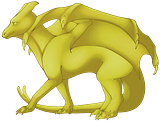
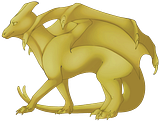
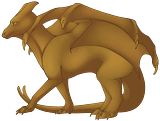
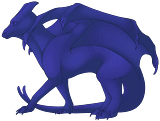
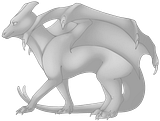
Dragons are described as carnivorous, oviparous, warm-blooded creatures. Like all of Pern's native large fauna, they have six limbs - four feet and two wings. Their blood, referred to as ichor, is copper-based and green in color, they have multifaceted eyes that change color depending on the dragon's mood. Their head and general body type is described by McCaffrey as being similar in shape to those of horses. On their heads they have small headknobs, similar to those of giraffes, and no visible ears. Unlike the dragons of Terran legend, they have a smooth hide rather than scales; the texture of their skin is described as being reminiscent of suede with a spicy, sweet scent when clean. They are described as having forked tail ends with a defecation opening between the forks; however, most artistic renderings depict their tails as having spade-shaped tips. The dragons usually get from one place to another by going through a teleportation process known as 'going between'.
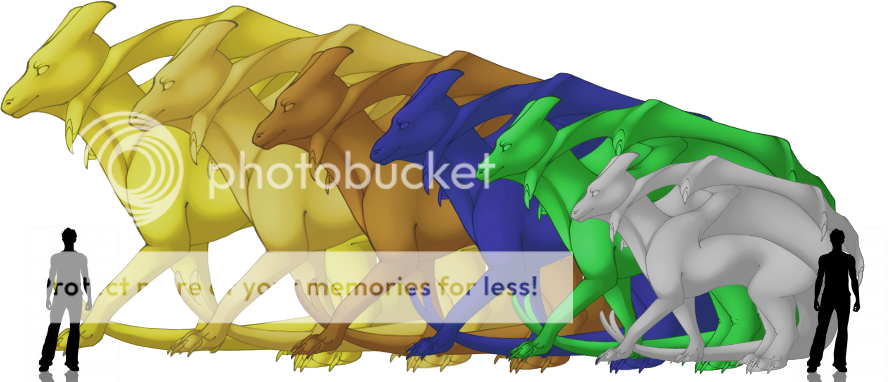
Kitti Ping designed the dragons to gradually increase in size with each generation until they reached pre-programmed final dimensions. The dragons of the first Hatchings were not much bigger than horses. By the Sixth Pass (1500 years later) they had reached their programmed size and remained at that size until a single isolated dragon population suffered severe inbreeding, resulting in much larger beasts. In the 9th Pass, when the most of the novels have so far been set, the largest Pernese dragon on record, Ramoth, hatched. According to the novel All the Weyrs of Pern these dragons were roughly three times the size of the largest first-generation dragons. Ramoth's great size is often attributed to mutation and the genetic isolation of Benden Weyr for over 400 years (or Turns). Ramoth, at full length, was forty-five feet. In All the Weyrs of Pern, AIVAS, an artificial intelligence still in operation after all this time, notes that all of the primary Benden dragons, Ramoth, Mnementh and Canth, are notably larger than Kitti Ping's specified end-size of the dragon species. Newly hatched dragons are the size of very large dogs or small ponies, and reach their full size after eighteen months. Because young dragons grow so fast, their riders must regularly apply oil to their hides to prevent the skin from cracking or drying out.
Dragons, like their fire lizard ancestors, can breathe fire by chewing a phosphine-bearing rock, called "firestone" in the novels, which reacts with an acid in a special "second stomach" organ. This forms a volatile gas that can be exhaled at will and ignites upon contact with air. The flame is used to burn Thread from the sky before it reaches the ground. However, the chewed firestone must be expelled from the body after it is used up, for the dragons cannot digest it. This is done by regurgitation. If a dragon does not do so (usually because of inexperience), the need becomes so great that they will expel it involuntarily.
A favorite activity of dragons is sunning themselves. They will find a high place to perch that is exposed to sunlight and often spread their wings to catch as much sunlight as possible. A favorite place is even better if a vertical surface is nearby to reflect more light and solar heat. They appear to do this especially after going between.
Serrat SpecificsIn the past 600 turns, dragons have not changed much from the great beasts recorded at the beginning of the 9th Pass. The re-introduction of the Old-timer dragons and reviving of bloodlines have stalled the increase in size and in general has made for healthier beasts all around.
It must be noted however that in Serrat Weyrhold and the Western Continent specifically, a lack of genetic diversity has once again affected the dragon population. Small mutations have been noticed among hatchlings born this century. These mutations are small, and do not negatively affect a dragon's natural abilities. Instead they appear to be in response to the unique environment of the Western Continent. It is unknown as of yet if these are isolated cases or the beginnings of a new evolutionary change.
Recorded Mutations- Most noticeable and most common upon hatching, is a webbing between the toes of the hind feet.
- Many of the younger dragons, in particular greens and blues, have been seen diving off the shores of Serrat for a previously unheard of length of time. It is believed that they are able to draw deeper breaths to sustain themselves underwater though healers have yet to figure out the exact mechanics.
These dragons can dive at least twice as long as their larger brethren, and almost three times as long as those across the rest of Pern.
- An unfortunate accident between a weyrling and a wild wherrie also revealed the possibility that dragons, at least of these later clutches, may have developed an immunity to the natural venom present in the native species. It is unknown exactly how many dragons may carry this trait as it is generally looked down upon to 'test' for it.




 Reply
Reply