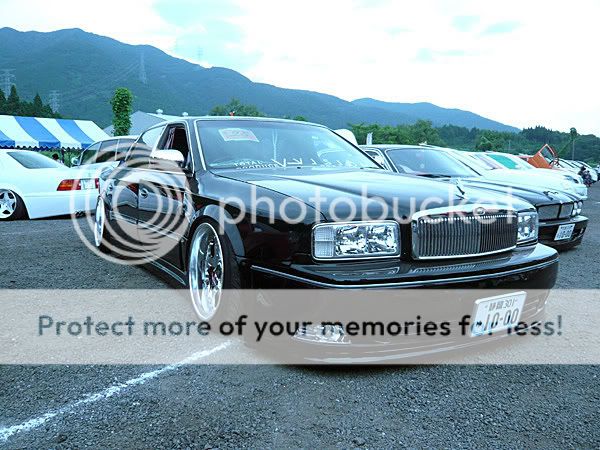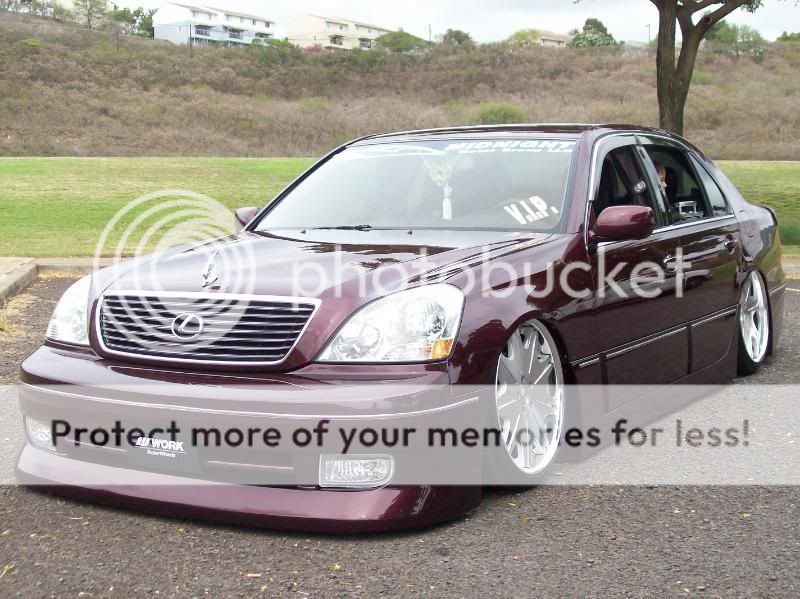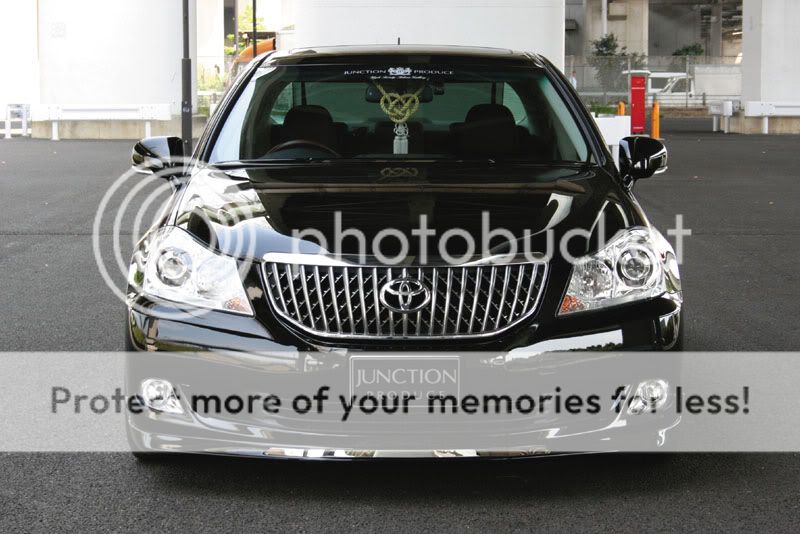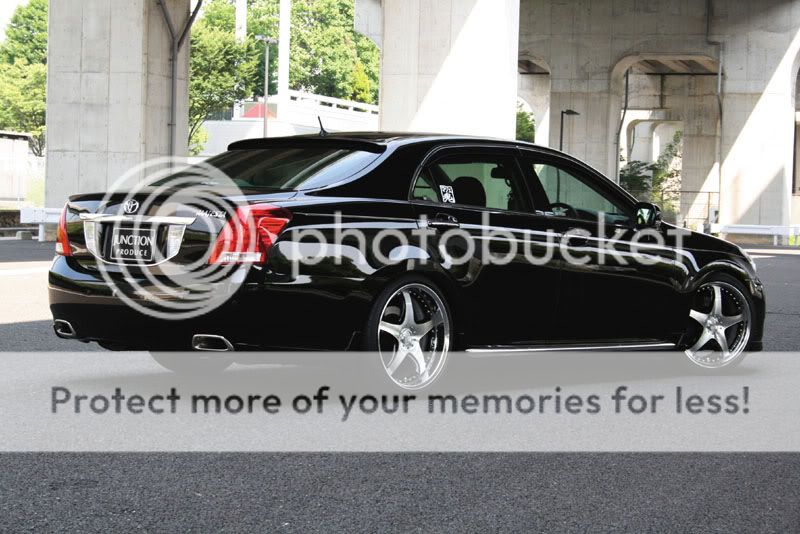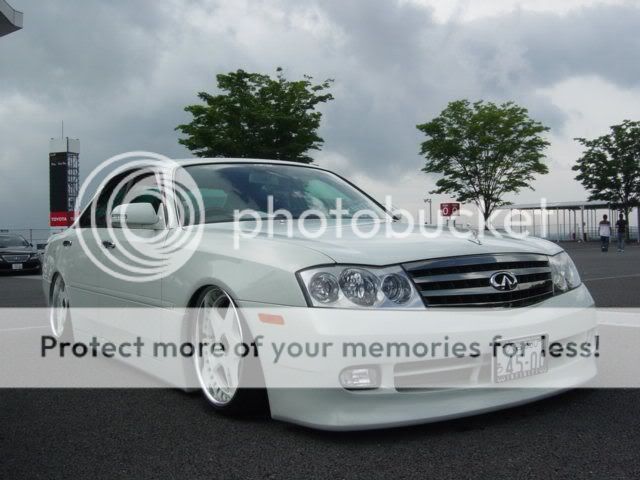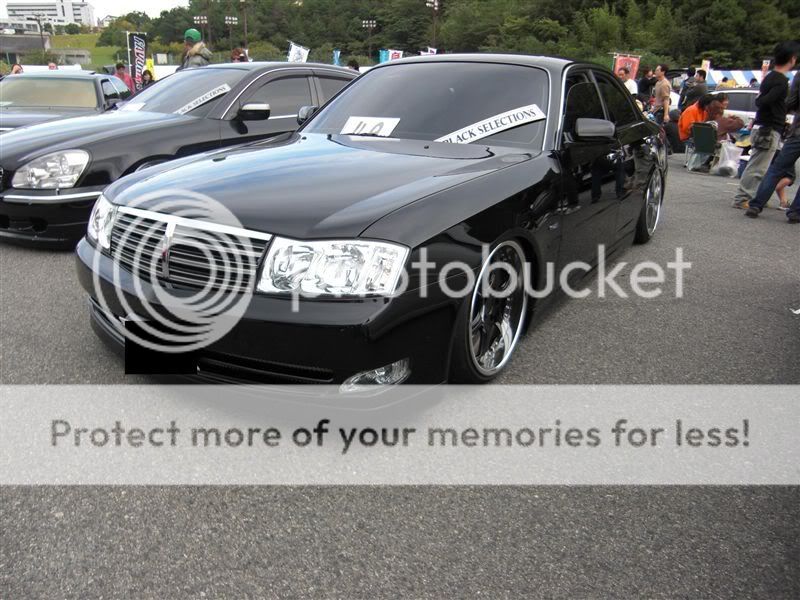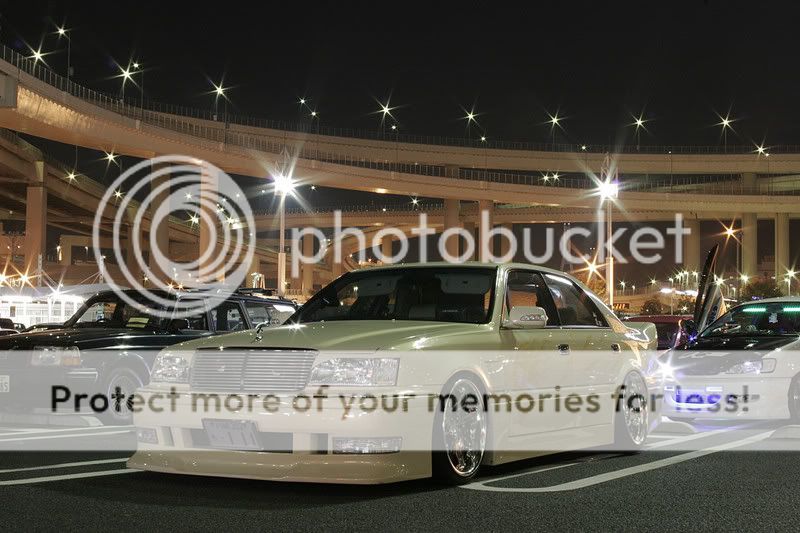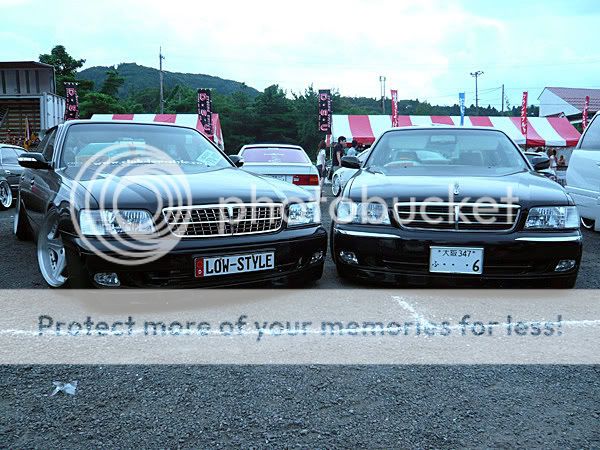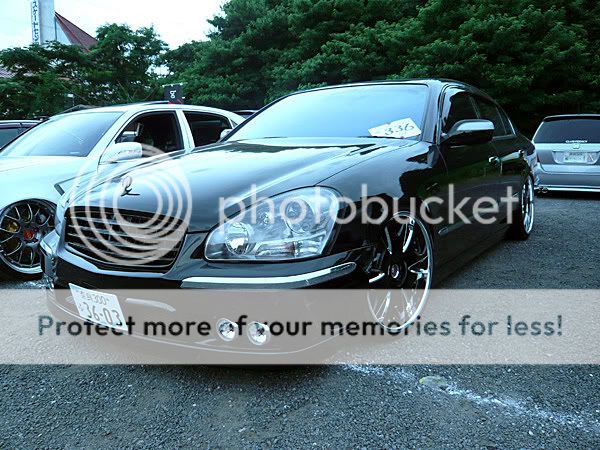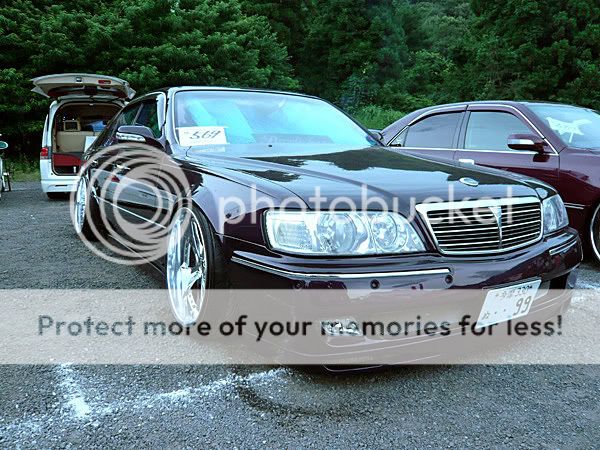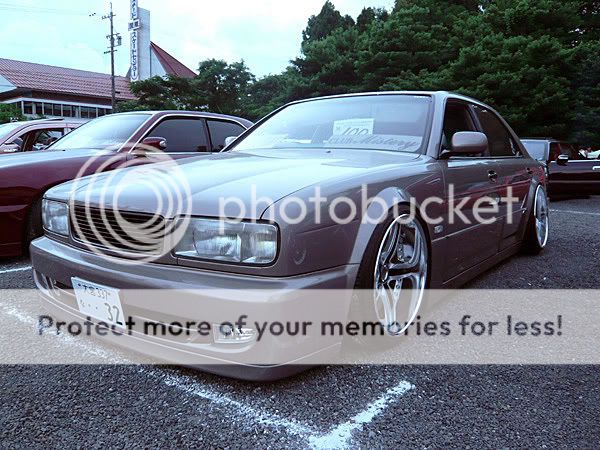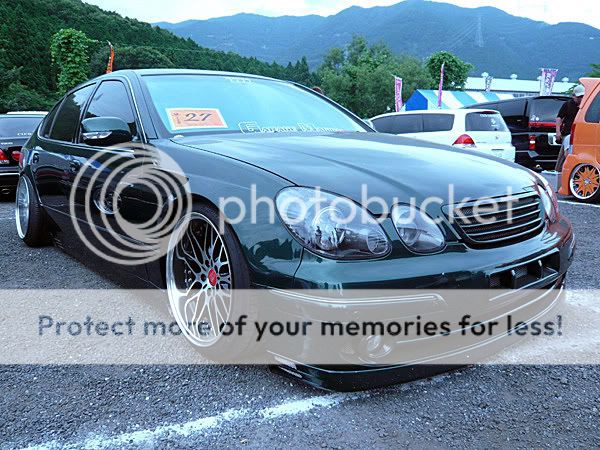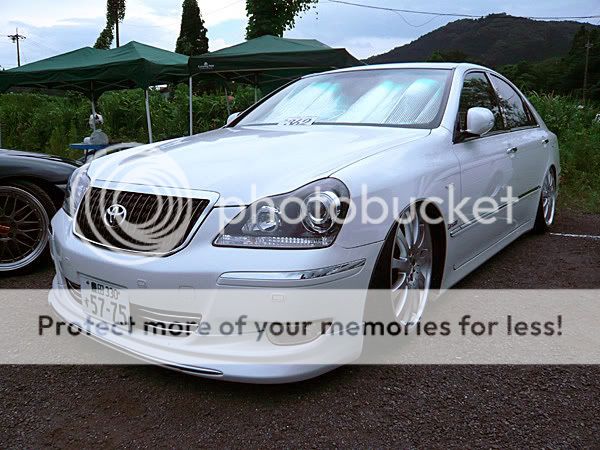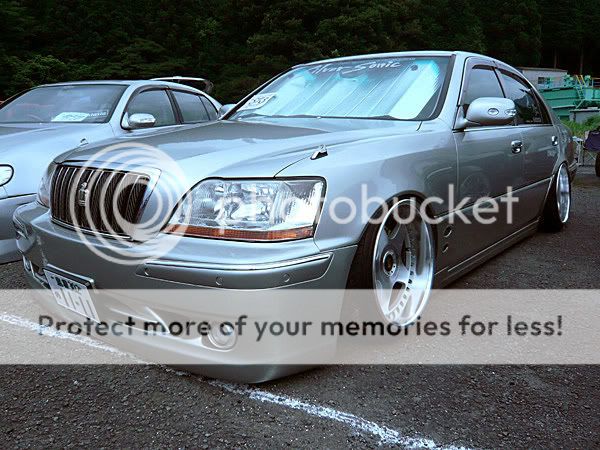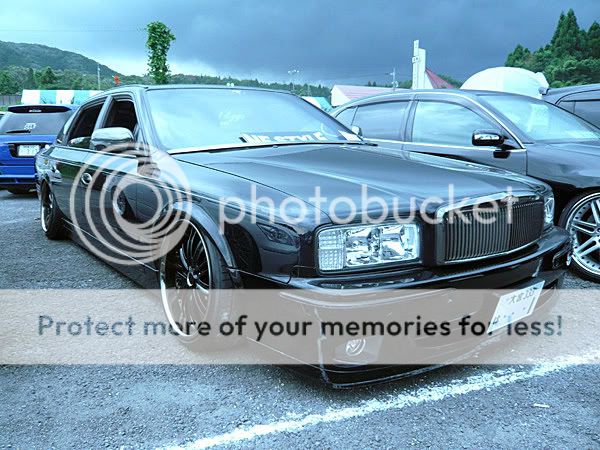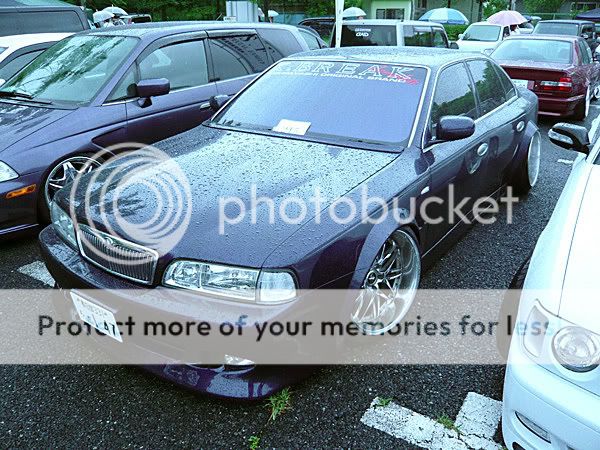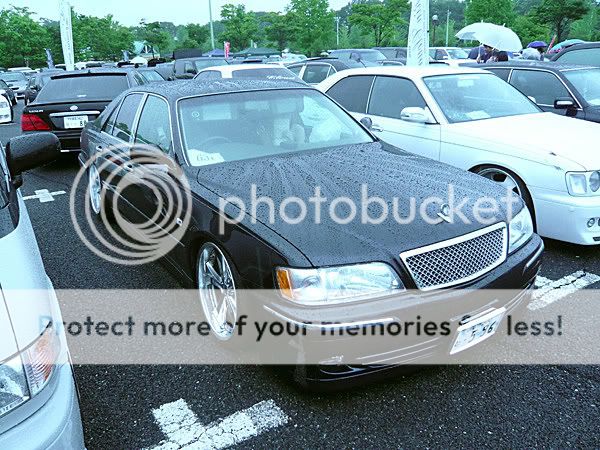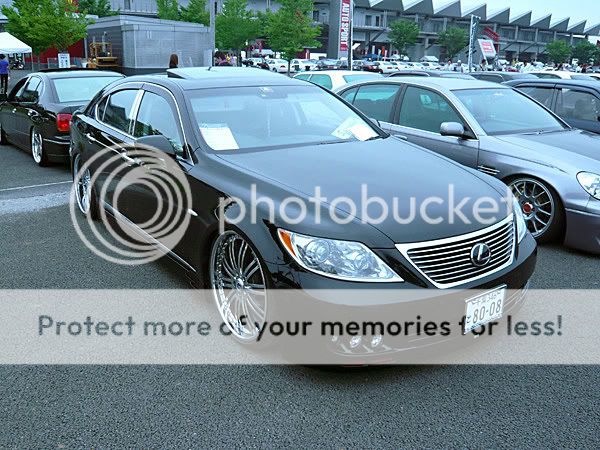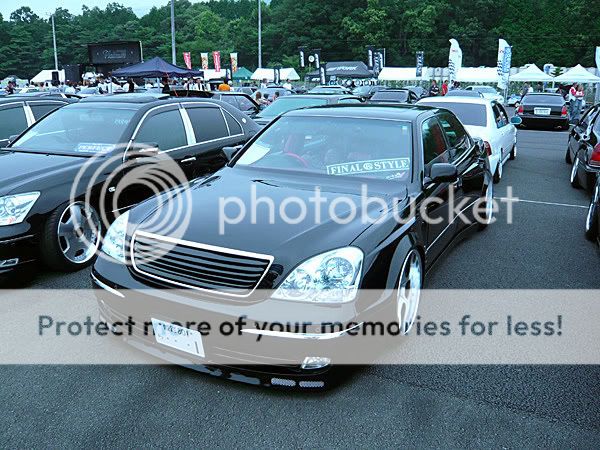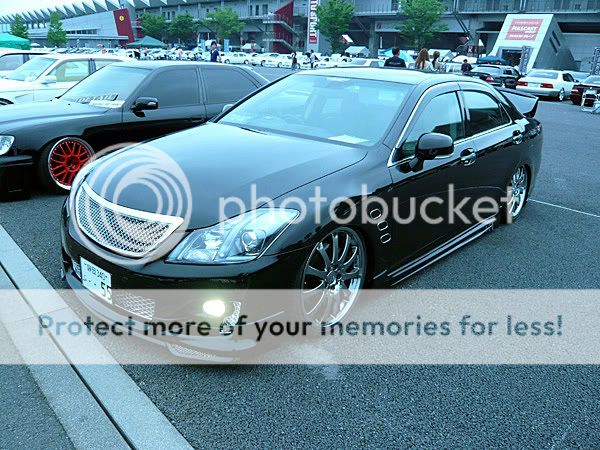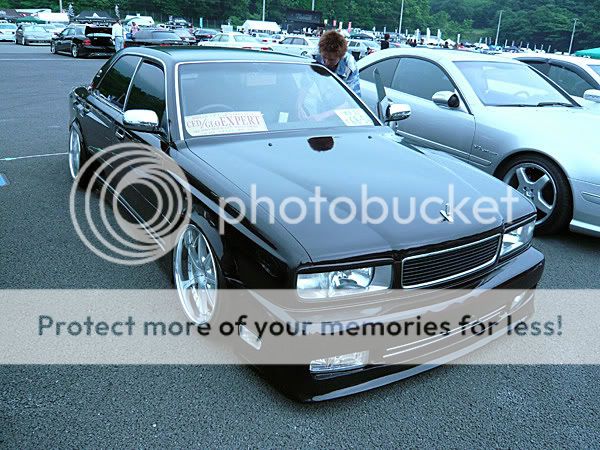


With that said, Here's a brief segment on VIP tuning, all thrown into one giant post instead of minis, because I simply prefer typing in paragraphs. 3nodding
So let's start.
First, What is Bippu?
Bippu is NOTHING. There is no such word in Japanese that is BIPPU. It was coined because that's how Japanese people pronounce "VIP" instead of saying it the american way as "VEE EYE PEE", it's sounded phonetically as "VEE POO", but since there's no V sound in Jp just like there is no L, the V is a B and L is a R. Hence "Bippu". However, it does NOT define the actual STYLE.
but since every person insisting they know about VIP style claims "bippu", it just flat out stuck.
In the US, it's somewhat accepted. In Japan, we laugh at our mistake being accepted. good sportsmanship ftw. :'D
Next up, what exactly MAKES a car VIP?
As many of you may know, VIP started out with Yakuza needing a way to travel without drawing insane amounts of attention like in euro vehicles like benzes and beamers. Spotting those cars automatically means 'yakuza' or 'high roller', either way, attracting a LOT of unwanted attention.
they wanted to travel around as covertly as possible without losing much of the luxurious amenities, such as Jaguar's rear tables hooked up to the back of the front seats, or other companies' air suspensions integrated into the cars.
That's basically how the black luxury curtains, custom wood or leather tables, mother-of-pearl dashclocks, reupholstered interior seats, and various seat cushions and japanese-culture garnishes came into play.
So where did the subtle bodykits, insanely lowered stance, sometimes near-double-digit-negative-camber, and all these other goodies come into play?
That's more or less due to the Bosozoku and Chinpira, basically street thugs, who were tired of getting busted by cops for tuning their heavily built machines with loud paintjobs and exhausts to match. They wanted to still race and modify their vehicles, but to do so in a way they'd still look like a salaryman than a drifter or street racer.
Now, for those thinking their 2-door coupes or their k-cars are VIP: That will NEVER be the case.
This is where I go into the difference between being VIP/VIPstyle versus VIP-INSPIRED.
Now, since i'm still a n00b here, allow me to instead post a mag article that interviewed the head of Junction Produce, one of the ORIGINAL car modification companies that catered solely to the expansion of VIP:
Quote:
Standing in the middle of a convention hall outside of Philadelphia, Takahiro Taketomi looks a bit like Bogey. His eyes are stern and focused and ringed by the charcoal hue of lost sleep. His short black hair is neat and smoothed and shines. He doesn’t smile. In fact, he speaks with a grimace and like he is always about to light a cigarette.
Taketomi is one of the self-proclaimed founders of VIP style, the next great Japanese micro-trend to surface in America. “Bippu style,” as it is colorfully known in Japan, starts with a high-power luxury sedan. The car is slammed on ultra-thin tires and trimmed with boxy body kits. At first glance, a VIP style car might look like any tuner sedan on its way to Hot Import Nights, but there are specific details that set it apart.
A VIP style car might have a billet grille or metallic trim lines or polished wood inside. Window curtains are big. So are aftermarket emblems and hood ornaments. The look is a bit like Scarface Goes to Japan. And legend has it VIP style has roots in the yakuza (organized crime in Japan). True or not, Taketomi makes a strong case on its behalf.
Through a translator, Taketomi tells us he built his first VIP style car, a Nissan Cedric, in 1993. Three years later he founded Junction Produce, which specializes in products for VIP style cars. Today it is one of the best-known marques in VIP tuning and has its brand on everything from body kits to wheels to cuff links and bracelets. Junction Produce is also the first company of its kind to make a big push into the United States.
According to Taketomi, true VIP style tuning is limited to only 10 Nissan and Toyota models: Nissan President, Cima, Gloria, Cedric and Fuga; Toyota Celsior, Century, Aristo, Crown and Majesta. That’s it. Since most of those models come with powerful turbocharged engines in Japan, VIP style cars are rarely tuned for performance. More important is that they’re slammed as low as they can go on the widest wheels possible. Most of the other tuning parts somehow assist in this goal.
VIP stylers use air suspensions to raise their cars to install the wheels and tires and then lower the car on top. Tires are stretched beyond their limits to fit on oversized wheels. Extreme offsets are used so the wheel lips kiss the fenders. And it’s not unusual to see 245/30R tires on 19x10.5-inch wheels—the tuning equivalent of Fat Albert wearing the shorts of his enunciation-challenged friend Mushmouth.
Kelvin Tohar of Falken Tires, which is helping to spread the word in America, says, “It’s not the safest thing to do and Falken doesn’t recommend you do it for daily driving, but it’s the style.” Falken has partnered with Junction Produce to hawk its line of FR452 tires. In exchange Falken promotes Junction Produce at tuner shows and SEMA events, like the International Auto Salon, where we met Taketomi.
Tohar, who has his own VIP style Lexus GS 300 that he calls by its Japanese moniker Aristo, tells me elegance is the underlying statement. “At car shows, most [owners] won’t raise their hoods because it disrupts the flow of the car,” he says. “Even the Junction Produce exhaust is more of an aesthetic.”
Elegance is the word that’s repeated like a mantra by VIP style owners and companies. But it’s a strange sort of elegance. VIP style companies like Junction Produce, Wald and Auto Couture have logos that look vaguely Oxford Street but are more a Japanese version of mafia royalty, without any ironic subtext, like you’d imagine the parts delivered in purple velvet bags, à la Crown Royal.
And the parts aren’t cheap. Outfitting a car VIP style can run up to $20,000 and beyond. But as Tony Montana says in Scarface, “You gotta make the money first. Then when you get the money, you get the power. Then when you get the power, then you get the women.”
Taketomi is one of the self-proclaimed founders of VIP style, the next great Japanese micro-trend to surface in America. “Bippu style,” as it is colorfully known in Japan, starts with a high-power luxury sedan. The car is slammed on ultra-thin tires and trimmed with boxy body kits. At first glance, a VIP style car might look like any tuner sedan on its way to Hot Import Nights, but there are specific details that set it apart.
A VIP style car might have a billet grille or metallic trim lines or polished wood inside. Window curtains are big. So are aftermarket emblems and hood ornaments. The look is a bit like Scarface Goes to Japan. And legend has it VIP style has roots in the yakuza (organized crime in Japan). True or not, Taketomi makes a strong case on its behalf.
Through a translator, Taketomi tells us he built his first VIP style car, a Nissan Cedric, in 1993. Three years later he founded Junction Produce, which specializes in products for VIP style cars. Today it is one of the best-known marques in VIP tuning and has its brand on everything from body kits to wheels to cuff links and bracelets. Junction Produce is also the first company of its kind to make a big push into the United States.
According to Taketomi, true VIP style tuning is limited to only 10 Nissan and Toyota models: Nissan President, Cima, Gloria, Cedric and Fuga; Toyota Celsior, Century, Aristo, Crown and Majesta. That’s it. Since most of those models come with powerful turbocharged engines in Japan, VIP style cars are rarely tuned for performance. More important is that they’re slammed as low as they can go on the widest wheels possible. Most of the other tuning parts somehow assist in this goal.
VIP stylers use air suspensions to raise their cars to install the wheels and tires and then lower the car on top. Tires are stretched beyond their limits to fit on oversized wheels. Extreme offsets are used so the wheel lips kiss the fenders. And it’s not unusual to see 245/30R tires on 19x10.5-inch wheels—the tuning equivalent of Fat Albert wearing the shorts of his enunciation-challenged friend Mushmouth.
Kelvin Tohar of Falken Tires, which is helping to spread the word in America, says, “It’s not the safest thing to do and Falken doesn’t recommend you do it for daily driving, but it’s the style.” Falken has partnered with Junction Produce to hawk its line of FR452 tires. In exchange Falken promotes Junction Produce at tuner shows and SEMA events, like the International Auto Salon, where we met Taketomi.
Tohar, who has his own VIP style Lexus GS 300 that he calls by its Japanese moniker Aristo, tells me elegance is the underlying statement. “At car shows, most [owners] won’t raise their hoods because it disrupts the flow of the car,” he says. “Even the Junction Produce exhaust is more of an aesthetic.”
Elegance is the word that’s repeated like a mantra by VIP style owners and companies. But it’s a strange sort of elegance. VIP style companies like Junction Produce, Wald and Auto Couture have logos that look vaguely Oxford Street but are more a Japanese version of mafia royalty, without any ironic subtext, like you’d imagine the parts delivered in purple velvet bags, à la Crown Royal.
And the parts aren’t cheap. Outfitting a car VIP style can run up to $20,000 and beyond. But as Tony Montana says in Scarface, “You gotta make the money first. Then when you get the money, you get the power. Then when you get the power, then you get the women.”
There are now several cars that're being given bodykits to accomodate to the VIP-inspired look, meaning a lowered-stance yet near-stock bodykit/widebody.
some of the cars receiving this treatment are: G35/350Z/G37/SC430/SC300/300ZX Z32/GTR/FD3S/S13/etc. However, they're more considered the 'sports' series, and have recently been considered solely 'vip inspired' or more specifically 'Lux'/'Luxe' styled. K-cars and Minivans have their own 'vanning' scene and amazingly, k-cars are being more adopted into vip-inspired category than anything else.
In conclusion (for those too lazy to read above), vip can be summarized into these points:
1. Vip is limited to only 10 Japanese sedans
2. the current 'bippu' is a mashing of yakuza wanting to be more discrete and street racers who wanted a more 'sleeper' vehicle
3. rims, a tsuna knot with fusa knot, a random bodykit, and black/white/silver paint does NOT make you VIP. AT ALL.
4. vip-inspired sports sedans or sportscars are exactly that. INSPIRED.
5. There's a budget vip platform car for everyone.
Think that there isn't one that fits your budget?
$1,000-$4,000 range:
1990-1996 Q45
1990-1994 LS400
$4,000-$7,000 range:
1997-1998 Q45
1993-1997 GS300
1995-1997 LS400
$8,000-$10,000 range:
1999-2001 Q45
1998-2000 GS300/400
1998-2000 LS400
$11,000-$20,000 range:
2002-2003 Q45
2001-2003 LS430
2001-2005 GS300/430
2003-2004 M45
However, don't forget that you're taking a car that no matter how old, used to be insanely expensive when it was new, and it is still probably pretty old. Therefore, oem replacement parts WILL be expensive.
Also, most tastefully done and vip-car-show worthy interiors have a good $5,000+ invested in them. Just interior. Add in aggressive offset rims, tires, authentic vip-company bodykits, and a quality sound system, and you've multiplied that number by four or five times.
Now that I've said all that, let's take a look at some cars on the next post. mrgreen