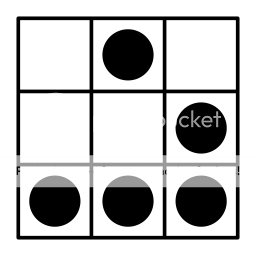
First off, hackers originated from MIT (as most of you should know). The term "hack" was a slang term used at the time to describe a prank or practical joke. It would soon evolve to mean any sort of reconstructing or reprogramming done to a program by anyone but the creator. It is also thanks to hackers that computers are what they are today. There was once a time that professors all around the world believed that a computer could not beat a human in a game of chess. But hackers proved them wrong. It is also thanks to hackers that we have such operating systems as Windows, Snowleopard, and Linux. It's a direct result of "bumming" which was a method used by hackers to drastically simplify any command/program to work more efficiently and be more user-friendly.
Now lets go back and review some old Hawaiian philosophy. Back in the day, before the overthrow of the Hawaiian government, there were the Hawaiian islands. And in these islands was a relatively small group of communities that had no need of currency, had no racism, and had no classifications. There was a deep sense of community and sharing among each of the ahupua`as (sometimes even extending outside the ahupua`as) and there was no rich or poor. Everyone was equal and was only judged based on their skills. It didn't matter what race you were, what age, or even where you came from. Back then, things were all good.
Then came the Hawaiian Kingdom's overthrow in 1893. It was then that Western influence and philosophy was pushed upon the people of Hawaii. It was then that people became rich and poor. It was then that people became needy and starving. All because there were exclusions (based on wealth and background). The rich would not share their wealth with their neighbors and there was no feeling of community any longer; only family. This was very unlike past times where everyone was family. Now, only your "family" is family. Everyone else are strangers. There were people so infuriated by this that movements to restore Hawaii to the way things used to be were quickly made and live on to this day. These include such programs such as Kau Inoa and Punana Leo which seek not only to bring things back to how they were, but to establish Hawaiians as their own people once more.
Now we compare to hackers and their ethics. Despite the media's common portrayal as hackers being "bad people" who seek nothing more than to break into other peoples' computers and steal their information, hackers are actually more commonly people who take programs, take them apart, and put them back together in a much more efficient way. The original MIT hackers did just that. Hackers would push programs beyond what anyone thought was possible to do. It is through them that we have such programs as photoshop, Flash, The World Wide Web, and video games. Also despite popular belief, hacking is not so much a skill as much as it is an art. Much like painting and music, it does require a great deal of skill to master, but in the end what determines a good hacker is their creativity and artisticness. Every hacker has their own "signature" because in hacking, one problem can be solved in a variety of different ways. It is up to the hacker to determine how it will be done.
Now on to their philosophies. The elements of the Hacker Ethic were not openly debated and discussed, rather they were accepted and silently agreed upon. Hackers are strongly against making people pay for information and computers. It is the hackers' belief that the world should be more like a public library in which annuls of information can be accessed by anyone seeking to learn about it. Another aspect of hackers was that they have a deep sense of community and oneness. Just like how artists will get together at art conventions and discuss their techniques, hackers do the same online through forums. The only discernible difference between a hacker and an artist is that an artist will usually charge money for his works where hackers will distribute their works for free. Hackers are also very anti-authority and have a decentralized mindset. They seek to make it so that there are no boundaries to the access of information and that people should not have to pay for a bunch of ones and zeroes (computer programs) like the ones that we see all over today. Because of this mindset, good freeware such as 7-Zip, Google Docs, AVG, Avira, and Alice (programming language) exist. The hacker's ultimate goal is to make it so that all information is easily and readily accessible to anyone whether rich or poor and that all may come together as a community and help each other to bring each other's ideas efficiently to life.
Quotes/citations:
"Access to computers—and anything which might teach you something about the way the world works—should be unlimited and total. Always yield to the Hands-On Imperative!"
"Hackers believe that bureaucracies, whether corporate, government, or university, are flawed systems."
"Hackers felt that computers had enriched their lives, given their lives focus, and made their lives adventurous. Hackers regarded computers as Aladdin's lamps that they could control. They believed that everyone in society could benefit from experiencing such power and that if everyone could interact with computers in the way that hackers did, then the Hacker Ethic might spread through society and computers would improve the world. The hacker succeeded in turning dreams of endless possibilities into realities."
"Hackers believe that essential lessons can be learned about the systems—about the world—from taking things apart, seeing how they work, and using this knowledge to create new and more interesting things."-Steven Levy