Medicinal & Raw Materials:by JibikiName: Snakevine
Preferred Environment: Mostly found on rock, but any
hard surface will suffice as long is there is sufficient moisture in the air.
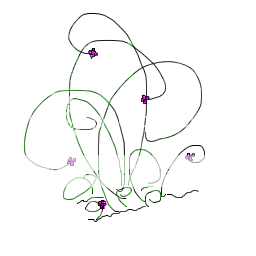
Physical Description: Amazingly, this plant is a charcoal black in color- this doesn't seem to affect its growth though (as modern science tells us, this means it absorbs nearly all wavelengths of light). It is extremely similar to the 'climbing' plants on earth- that is, whatever it touches it will grow around. If nothing is around, it will grow along the ground until it reaches something. Seeds are almost microscopic, so they are distributed mainly by the wind. Because of their size, they can find a resting place even in supposedly smooth rock, and grow around it. They can grow to be nearly 2 inches in width, but the only problem is that they are very slow in growing...This does help them, however. Because of their slow growth rate, they can survive periods of drought or famine, or rather a lack of nutrients. It draws its nutrients straight from the air, so it is of little threat to other plants. That is, unless it grows on another plant's leaves... Speaking of leaves, snakevine leaves look like
this. The leaves are about 3 inches in length, and serve for photosynthesis and respiration- much like earth plants.
Uses: The outside of the vine has a consistency near rubber, so if one has the time and patience to gather enough of it, high-quality gloves can be made. The inside is also very moist, so it can function similarly to a desert cactus (providing hydration to those in need). The fruits, rare though they may be, are somewhat bitter. For humans, the fruit functions similar to prunes...Only slightly less effective. Pure juice, on the other hand...
Other Notables: Fruits and flowers are both pale white. This helps to identify the vines when they wouldn't otherwise be noted (such as on dark mountainsides). The plant's name came from its similar appearance to a species of snake that quite often is found eating the fruit growing from the vines. The plant is also un-seasonal...That is, there is no set 'budding' or 'fruition' seasons for this plant. When it begins to grow, its cycle begins. Approximately 6 months after sprouting, the average vine will have grown large enough to sprout a flower and, 3 months later, a fruit. the process is repeated on every 6th month from when the plant sprouted. EX- [seeded] --6months-> [flower] --3months-> [fruit] --6months-> [next flower] --3months-> [next fruit] ---& etc.
Fruit and
Flower ((By the way- the seeds are so small that they simply curl up and die in any sort of acidic environment. Like stomachs. So no worries about that.))
by Jellybeans ToesName: Bluebrush
Preferred Environment: Marsh and grasslands
Physical Description: A large shrub, the bark forms curling ridges. It has dark blue and green foliage, which is neither leaves nor needles, but rather a fine fluff. Every few weeks it produces white blooms with brightly colored insides, available in nearly every color of the rainbow.
[x] [x] [x] [x]Uses: The sap can be used as an antibiotic and pain-killer. The wood is sturdy once dry, but must be machine-harvested due to it's density. The flowers last for several days after being picked and are thus good for decorative use.
Other Notables: There are both wild and domesticated varieties, thanks to many years of horticulture by various natives.
by MargeXX Name: Blue Crap Nifty Blue, Or Teronit as the locals know it.
Preferred Environment: Aquatic/Shoreline
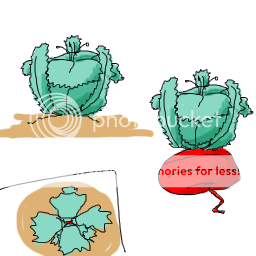
Physical Description: Reference Pic Nifty Blue is an oddly shaped plant. It's a short little thing standing at 7" from the ground to the tip of its mushroom like cap. It has a fairly wide stem, though the stem can easily be cut with any semi-sharp object. It has a pair of thin leaves that form almost teapot handle shapes. Although a name like Nifty Blue would lead you to expect the plant to have some sort of blue on it, it actually doesn't. The plant is most a light tan except for its mushroom-like cap which is dark brown with a yellow circle on its tip. The cap is quite tough and it takes a bit of force to crack it. Once you crack it, you'll find the blue that the plant was named for. The plant's insides are cobalt and their is a sticky blue liquid that runs through it. They can be very messy if stepped on(or fallen on) and the blue is difficult to wash out of clothing.
Uses: The blue liquid inside can be used as a substitue for paint, it dries a bright blue.
Other Notables: Best you be careful around these things as the fumes from the inside liquid can be dangerous. If you only break one plant, it won't be enough to do anything, but should you break about fifteen, the fumes will be enough to make you hallucinate for the next few days. The Nifty Blue plant grows in large clusters of twenty or more, so watch your step! Once the liquids dry, the plant becomes harmless.
by KittyintheraiynName: Tanglefrond
Preferred Environment: Rainforest, or moderate to mild amount of water can sustain the plant and its roots go very deep.
Physical Description: Tree Sketch! (this I can do) Clumps of strong thick vines reach to the sky and curl and uncurl as the vines age and grow, the colors range from yellow green to green yellow and pretty much any plant shade in between. The vines grow in clumps from hard woody stumps that grow deep underground and connect to other stumps by the roots, so that a huge foresty area of the plants could all be inter connected. The tallest vines can reach three stories into the sky and at the base be as thick around as a man's torso. Most specimens are considerably shorter and smaller.
Uses: The fronds are very strong and the plants are plentiful, so I'm sure lots of uses could be found, besides being food for the tree ticks and housing the Snidens.
Other Notables: Tree ticks and Snidens live here, among other things, I'm sure, I'm just not gonna get to close to find out unless the tree ticks are all dead!
by Tuatha DeName: Fox alder
Preferred Environment: Temperate forests. Fox alders are relatively picky about soil quality -- usually you'll either find dozens in a particular area they like, or none at all.
Physical Description: A striking tree, fox alder foliage is a rich autumn red year-round. The tree's bark is very dark brown, nearly black, but peels away easily in long strips to reveal the white wood beneath. The tree produces no fruit, but it does blossom every spring, in long hanging clusters. The flowers are large, fragrant, and completely jet-black.
Uses: Fox alder wood is incredibly strong for its weight, and durable -- if you need something lightweight that will still endure a great deal of punishment, fox alder is the tree for you.
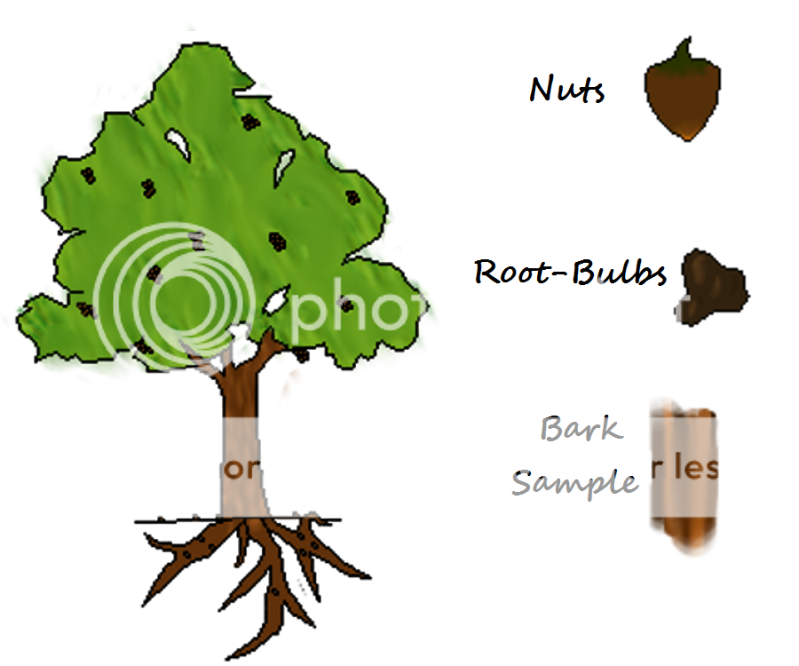
Other Notables: Named for its resemblance to the Earth tree, the alder, and its similarity in colors to the red fox.








 Reply
Reply

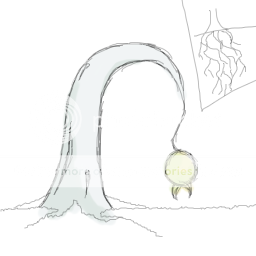
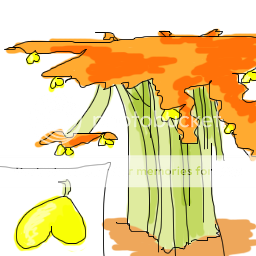 Tree-sized, but perhaps looking more like fruit-bearing celery?