|
|
|
|
|
|
|
|
|
 Posted: Fri Jan 30, 2009 6:36 am Posted: Fri Jan 30, 2009 6:36 am
February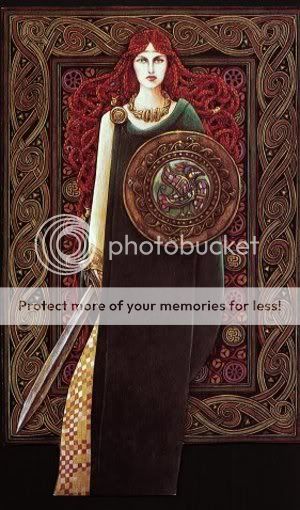
February, is also known as the Ice Moon, Storm moon, Horning Moon, Hunger moon, Wild Moon, Red & Cleasning moon, Quickening Mooon, Solmonath moon, Big Winter Moon.
Feb 1-3: The lesser Eleusinian mysteries in ancient greece; a celebration of the returning daughter: Demeter and Persephone, Ceres, and Proserpina.
Feb 1-2: Imbolc/Candlemas/Groundhogs day
Feb 7: Day of Selen and other Moon goddesses
Feb 9: The Chingay processsion, the singapore new year, which celebration of Kuan Yin and the promise of coming spring.
Feb 12: Festival of Diana, Divine Huntress in rome.
Feb 13-18: In rome, the Parentalia ad Feralia, a purification festival honoring the goddess Mania and Vesta; devoted to the ancestors, peace, and love.
Feb 14-15: In Rome, the Lupercalia, when woman petitioned Juno-Lupa for children. Also honored the god Faunus, an aspect of pan
Feb 14-21: Aphrodite's festival of Love in Rome.
Feb 17: Fornacalia, or feast of the Ovens, in Rome.
Feb 20: In Rome, the day of Tacita, who averts harmful gossip
Feb 21: Lantern festival in China and Taiwan. Also a celebration of Kuan Yin:
Feb 22: In Rome, Carista, a day of family peace and accord.
Feb 23: In Rome, the Terminalia in honor of Terminus, the god of land boundaries.
|
 |
|
|
|
|
|
|
|
|
|
|
|
|
|
Posted: Fri Jan 30, 2009 6:45 am
Corresondences
Nature Spirits: House faires, both of the home itself and house plants.
Herbs: Balm of Gilead, hyssop, myrrh, sage, spikenard
Colors: light blue and violet.
Flowers: Primrose
Scents: wisteria, heliotrope
Stones: amethyst, jasper, rock crystal
Animals: Otter, unicorn
Birds eagle, chickadee
Deities: Brigit, Juno, Kuan Yin, Diana, Demeter, Perspone, Aphrodite
Power Flow: energy working toward the surface; purification, growth, healing. Loving the self. Accepting responsibility for past errors, forgiving yourself and making future plans.
|
|
|
|
|
|
|
|
|
|
|
|
|
|
|
|
|
|
Posted: Fri Jan 30, 2009 6:51 am
Imbolc/Candlemas
pronounced "IM-bulk" or "EM-bowlk" and derived from the Gaelic word "oimelc" which means "ewes milk". Also may derive from a word meaning "In The Belly," which is a reference to the womb of Mother Earth.
The festival of Imbolc (also Imbolg), now often called St Bride's Day or Candlemas after the forcible Christianization of Europe, falls today at the beginning of February. But the Gaelic people did not mark February as we do. Called in Gaelic faoilleach, or faoillteach, as we read in MacBain (1911), the month extended from the middle of modern January to the middle of our February. The word derives from the Irish faoillidh or faoilleach, meaning holidays or carnival, which itself means 'wolf-month' from faol, 'wolf'. According to McBain, February in Irish is mí na Féile Bríghde, or Lá Fhéile Bríde (Lá Feabhra), pronounced law ay-leh bree-djeh (law feow-rah). We take our name for this month from the Roman purification ritual of Februa, derived from the Latin februum, 'purification', which was held on the 15th of February by the old Roman calendar.
The name Imbolc comes from the Old Irish i mbolg, 'in the belly', apparently in reference to either pregnant ewes or milking. The oldest etymology, that of the ninth century Cormac's Glossary, derives imbolc (also oimelc) from 'the time the sheep's milk comes'. Whilst often criticised as a fanciful derivation by scholars, this has come to dominate interpretations of this festival. Within Gaelic culture the festival itself is clearly a veneration of the pre-Christian goddess Bride or Brigid and most of the recorded customs centred around this deity. Consequently, most references to this festival historically used the name of Bride or Brigid.
The festival's popularity in Wicca arose from the work of Gerald Gardner. However, Gardner had no access to authentic Pagan witchcraft sources (despite his claims) and based the ritual for what he called 'February Eve' on the general schema he had developed for ordinary coven meetings. Developed sometime between 1949 and 1953 this bare outline has since been fleshed out by other Wiccan writers, often drawing on the greater availability of scholarship on the customs and traditions of the Gaelic and Celtic peoples.
|
|
|
|
|
|
|
|
|
|
|
|
|
|
|
Posted: Fri Jan 30, 2009 6:56 am
Saint Brigid Well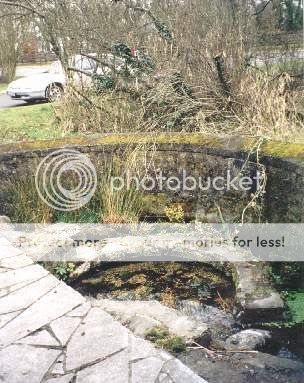 In Ireland everyone knows we have two Brigids: the ancient goddess and the christian saint. Yet there are those who prefer to focus exclusively on similarities between them, sometimes to the extreme of suggesting that they are one and the same - where St. Brighid is but some mere christian derivative of the earlier ancient goddess. This is patently not so. Just like the two traditions they represent, our two Brigids are as separate and distinct as the cities of Cork and Dublin. Saint Brigid was certainly called after the ancient goddess but she was a real flesh and blood 'mother of all Abbesses', a hugely influential bishop in the early christian church ordaining her own clergy to boot. Brigid's wells And just outside Kildare town there are, of course, two Brigid's wells. The original pagan one, very ancient and resonant with the Goddess Brigid, can be found in the car park of the Japanese Gardens. By one of those mere 'coincidences' which so often attend such places, this well has contrived to supply water to the gardens themselves. The whole structure here was recently restored as part of extensive renovation work on the car park itself. It is a truly wonderful, old, profound yet simple place. One of those places that slowly draws you into its mystery, blessing the soul with a deep inner peace and stillness. Despite this well's relatively low profile, people come from many lands to this place, especially many women - for Brigid has always been a huge archetype of the awesome power that is Woman in all her many aspects and sacredness. I have met many people here down the years. One November I met a woman from Kansas in the US. Finally after a lifetime dreaming of this place, she had come to spend a week here in peace and contemplation. And that's where I found her, beside the well, her hair tossed by the breeze, her eyes smiling in the afternoon sun. Some years ago I was fortunate to meet two great women from England who showed me plainly how mankind's attitude of exploitation, disrespect and abuse of the Land itself began at the same time as man started losing his respect for woman. I am struck sometimes by the dreadful pain and disrespect man has visited on woman for countless generations. The sheer magnitude and scale of it was nothing short of horrendous. The fortitude and inner strength that is woman and which carried her through this time is so present in Brigid. Her flame is so representative of the creative inspiration of the womb, the fire in the belly, and all that is so sacred in the feminine. And Brigid's Flame is still regularly carried from here in Kildare to various women's conferences and gatherings as far away as Australia. So Brigid continues to play Her central role in healing and inspiration down the generations The 'Christian' Brigid's well, the official one on signposts and tourism literature, is situated in a landscaped grotto at the end of a short lane way close to the first one. Christian devotion was moved to this site by local Catholic clergy in the 1950's out of concern apparently for people's safety in accessing the other well which was on the bend of a narrow busy road. From their devotional perspective at the time I suppose, one well was as good as another and so this new centre of devotion was created. Here at this site we have a Roman Catholic healing well, a different place and different energy, resonating with the spirit of Saint Brigid. Today many groups from various different traditions conduct their small ceremonies here in the gentle peace and privacy of the location. The many earth-based women's gatherings who have come here are warmly welcomed too, and their blessings have intensified the Earth Goddess energy in this place. Conversely, the countless generations of Christian devotion at the more ancient well have left their imprint in that place too. Numerous goddess sacred sites were dedicated to St. Brigid after the rise of Christianity in Ireland. Pagan ceremonies continued alongside the latter day Christian novenas and patterns as the two traditions co-existed in the people and the land. This inclusive alliance within the Irish community over the centuries of both pagan and christian tradition, characterizes clearly the Irish indigenous spirit. Indeed it is typical too of the way spiritual tradition has evolved in many other indigenous societies, including South American and African cultures. Here too, we find older pagan charms and spells now merrily including the names of latter day Christian saints. This is the natural way traditions inform and enrich each other in real life and it continues to defeat the best efforts of those with political interests on all sides who would dearly wish it otherwise. At the Brigid's Eve ceremonies in Kildare on Brigid's Eve night (31 January) the event starts round a small fire in the car park of the Japanese Gardens with a beautiful chant to the Goddess Brigid, such as the one originally composed by Daniel Maher. The event brings us on a powerful candle lit journey of contemplation with the great goddess and the christian saint and the spirit that weaves between them. We travel through the two spaces, the two wells and the pathways laid between them. The celebration of Oiche Bride in Kildare goes back to very ancient times. It is a very special gathering each year celebrating the return of spring and the power of woman ancient and modern. As Sister Mary, one of the Brigidine Sisters who tends the Flame in Kildare puts it: 'there's inspiration, peace and healing under Brigid's cloak for all traditions and peoples and all denominations'
|
|
|
|
|
|
|
|
|
|
|
|
|
|
|
|
|
|
Posted: Fri Jan 30, 2009 7:04 am
Seed Spell
Seasonally, Imbolc is linked to the appearance of the first spring flowers - snowdrops - as an early sign in Europe that winter is retreating and spring is approaching. This is the time of early seeding, and in temperate climes, farmers keep their eye on the soil to see if it is warm enough to sow crops. It is a good time for sowing other "seeds" as well ~ ideas that you wish to come to fruition and plans and projects that you have for the coming year.
Needed:
three white candles, 6-8" in length
matches or lighter
nine seeds of any variety, big enough to handle
one pen and some paper
good seeding soil or potting soil
one small garden trowel
one indoor planter
Light the candles, saying:
Triple Brigid, you are welcome
Thrice you are welcome.
Name each seed as a wish or project you hope will take root and grow in the next year. Write these wishes down, to be reviewed next Imbolc.
Place the seeds in your right hand, and cup your left hand over them, saying:
Now her breath is upon the earth
Her warmth will bring new seeds to birth
Holy Brigid, bless all that lives
Between my right hand and my left.
Plant the seeds in the soil according to the directions for the seeds you are planting.
Make sure you take care of your seedlings so that the thrive and grow. And don't read too much into it if they don't ~ not all of us are Master Gardeners. :>
|
|
|
|
|
|
|
|
|
|
|
|
|
|
|
Posted: Fri Jan 30, 2009 7:07 am
Holy Well And Sacred Flame
By Reclaiming, Expanded by Ivo Dominguez, Jr.
Holy Well And Sacred Flame
Maiden, Mother, And Crone
Bright One Be Here
Bright One Be Here
In this chant, we have an obvious reference to sacred water and fire, which does suggest the Goddess Brigit. Brigit is also thought of as a triple Goddess, because of her associations with midwifery, poetry, and the forge. This particular chant would be best used after an invocation to Brigit, requesting her presence for an Imbolc rite.
And The Weel Turns
By Damiara
And The -- Wheel Turns
Never Ending
New And Old And New Again
This chant is a reminder of the idea of “initiation” which is like a new beginning or a new start. The wheel that is referred to is the “Wheel of the Year”, the cycle of holidays celebrated by Wiccans and other Pagans. In truth, the wheel keeps turning, and endings are only an illusion, because the Earth is renewed each spring. This chant could be used as a processional chant as participants walk to the prepared ritual space. It could also be sung after the statement of intent, when the ritual’s purpose is introduced.
Way to the Well
By Starhawwk and Rose May Dance
We Will Never, Never Lose Our Way To The Well Of Her Memory
And The Power-- Of Her Living Flame
It Will Rise, It Will Rise Again.
(x2)
Like The Grasses, Through The Dark, Through The Soil,
To The Sunlight -- We Shall Rise Again.
We Are Thirsting -- For The Waters Of Life,
We Are Moving -- We Shall Live Again.
(x2)
Here we have another song that speaks of wells and fire, but it also suggests Imbolc because it refers to grass growing up through the dark soil to the sunlight. This chant would be an excellent choice to accompany a magical intent, the statement of intent, or a devotional ritual.
Brid is Come
By Lunacy, Greg Johnson and Sparky T. Rabbit
Brid is Come
Brid is Welcome,
Welcome Brid
Oh Brid Is Come
This is another chant for the Irish Goddess, Brigit. A very simple chant, this is a good choice with children and would be an excellent in ritual after the invocation. For more suggestions on chanting with children, please visit “Wiccan Parenting: Chanting With Children”. Have a Blessed Imbolc!
|
|
|
|
|
|
|
|
|
|
|
|
|
|
|
|
|
|
Posted: Fri Jan 30, 2009 7:13 am
 January 21 - February 17: January 21 - February 17: The Rowan Moon is associated with Brighid, the Celtic goddess of hearth and home. Honored on February 1, at Imbolc, Brighid is a fire goddess who offers protection to mothers and families, as well as watching over the hearthfires. This is a good time of year to perform initations (or, if you're not part of a group, do a self-dedication). Known by the Celts as Luis (pronounced loush), the Rowan is associated with astral travel, personal power, and success. A charm carved into a bit of a Rowan twig will protect the wearer from harm. The Norsemen were known to have used Rowan branches as rune staves of protection. In some countries, Rowan is planted in graveyards to prevent the dead from lingering around too long. Ash MoonFebruary 18 - March 17: In the Norse eddas, Yggdrasil, the world tree, was an Ash. The spear of Odin was made from the branch of this tree, which is also known by the Celtic name Nion, pronounced knee-un. This is one of three trees sacred to the Druids (Ash, Oak and Thorn), and this is a good month to do magic that focuses on the inner self. Associated with ocean rituals, magical potency, prophetic dreams and spiritual journeys, the Ash can be used for making magical (and mundane) tools -- these are said to be more productive than tools made from other wood. If you place Ash berries in a cradle, it protects the child from being taken away as a changeling by mischevious Fae.
|
|
|
|
|
|
|
|
|
|
|
|
|
|
|
Posted: Tue Feb 03, 2009 1:59 pm
|
wicked_faery Vice Captain
|
|
|
|
|
|
|
|
|
|
|
|
|