








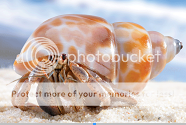
Hermit Crabs make great low maintenance pets!
They are also very entertaining animals that dig, climb, hold on to your shirt with their claws as you walk.
But they are very social creatures and require at least one or more hermit crab buddies to keep them happy.
Native To:
Hermit Crabs are native to the tropical shorelines of Southern Florida and the Bahamas to the West Indies and Venezuela.
Adult Size:
Hermit Crabs can grow from the size of a marble to up to the size of a baseball.
Life Span:
Hermit Crabs commonly live for 10 years but have been known to live for 30 years.
All You Need To Keep A Hermit Crab:
- Crabarium (old fish tank)
- Extra Fine Gravel
- Extra shells in different sizes
- Water and Food dishes (make sure the dishes are shallow enough for the crab to easily climb out of)
- Drinking Sponges
- Water Conditioner
- Temperature/Humidity Gauge
- Hermit Crab Pellet Food
Diet:
Hermit crabs are scavengers by nature and will eat just about anything, it is important to give your crab a varied diet. Commercially prepared diets will ensure that the crab is getting the essential nutrients required, added fruits and vegetables will keep your hermit crab interested. Be creative and try different nutritious foods. A bowl of calcium powder with added Vitamin D3 placed in the enclosure will ensure that your crab does not suffer from a calcium deficiency.
How To Take Care of A Hermit Crab:
Caring for your crabs includes daily watering and feeding. A commercial food from a pet store is sufficient, however you may add fresh fruits and veggies to their diet, but you should make sure not to leave un-eaten fruits or veggies in the tank for more than 24 hours. Besides drinking water, hermit crabs need to be sprinkled daily with warm water to keep them from drying out. Mist from a spray bottle filled with warm water works well. Keep the tank temperature between 70 and 85 degrees Fahrenheit. About once a month you should remove all the gravel from the crabarium, rinse it well without soap and let dry before returning it back to the crabarium; this will remove non eaten food, and waste.
Molting:
Hermit crabs need to change homes when they grow, so you will have to provide your crab with extra shells that are 1/3 bigger than it's current shell, because your crab will grow. Hermit Crabs have a hard exoskeleton that does not grow as the crab grows. The crab will shed its exoskeleton and grow a small amount very quickly, until the new exoskeleton hardens; this is called molting. Molting is the way of growing that allows the hermit crab to replace lost eyes, or appendages!
Signs Of Molting:
There is no way to tell when your hermit crab is about to start molting. You may notice that your crab will become inactive, or may bury himself for up to 2 weeks. Many hermit crab owners may fear that their crabs have died. But if you look carefully you will see a pink undergrowth. In 10 days or so your crab will be fine. It is especially important to keep misting your crabs during the molting period. Small crabs may molt every month or so, but larger crabs only molt 1 time every 18 months.
Taming Your Hermit Crab:
Taming your crab is pretty easy...hold your hand open and let it crawl; the more they are played with, the better. Hermit Crabs cannot pinch you if you pick them up by the back part of the shell. If you do happen to get pinched by a crab and he/she doesn't let go, run quickly to a tap water faucet and run a small amount of water over him/her, he/she will let go.
