|
|
|
|
|
|
|

Eloquent Conversationalist
|
 Posted: Thu Jun 26, 2008 4:59 pm Posted: Thu Jun 26, 2008 4:59 pm
 System Colonization As the New Frontier expands ever further into the Beta Quadrant, simply flying around in ships and doing missions may not be enough for every explorer in the Beta Quadrant Exploration Initiative. The Initiative has seen fit to expand upon the options of its diligent explorers and allow them to colonize new worlds and new systems, thereby expanding the territory in the New Frontier in the name of their representing Governments. In this database you will find a list of all the currently purchasable assets that the Initiative has gathered. While all of the assets are currently Federation models, other governments simply did not have the close connection to the Initiative that the Federation did, and they were therefore in an easier position to make use of their assets. Colony Classes Different colonies will have differing levels of development. In order to progress from one class to the other, a permit is required. This simple permit will allow the building of a greater number of orbital structures, and raise the colony's Population Cap. Colony Class Permits Class I Colony Permit - FreeMaximum Colonies - 1 Colony Population Cap - 25,000 Orbital Structures - Limit 2 Tactical Structures - Limit 4 Class II Colony Permit - 100,000 CreditsMaximum Colonies - 2 Colony Population Cap - 50,000 Orbital Structures - Limit 4 Tactical Structures - Limit 8 Class III Colony Permit - 200,000 CreditsMaximum Colonies - 3 Colony Population Cap - 75,000 Orbital Structures - Limit 6 Tactical Structures - Limit 12 Class IV Colony Permit - 400,000 CreditsMaximum Colonies - 4 Colony Population Cap - 100,000 Orbital Structures - Limit 8 Tactical Structures - Limit 16 Home-worlds Sometimes an Independent wants to make a colony more than just a colony. Sometimes he or she wants a place to settle down. This would be called a Home-world. Permits for Home-worlds are only available to Independent persons. Quote: Home-world Permit - 250,000 CreditsMaximum Colonies - 4 Colony Population Cap - 50,000 Orbital Structures - Limit 8 Tactical Structures - Limit 16 
|
|
|
|
|
|
|
|
|
|
|
|
|
|
|
Posted: Thu Jun 26, 2008 5:01 pm
Colony Vessels Colony Vessels are what any perspective settler needs before they can get started settling. Each person brought onboard your orbital colony or your planetary one will allow the income of one credit each week. Thus, a colony of 1,000 would earn the founder 1,000 Credits a week. Of course, colony vessels can make a full leg of a journey every two weeks, meaning that each new arrival of people happens every two weeks. Thus, the first two weeks of a colony would grant its owner 200 + 200 credits for a total of 400 over those 2 weeks. However, once the second arrival disembarked, they would be earning 400 + 400 Credits for a total of 800 Credits for those two weeks, making the total for that month 1,200 Credits. The only way to increase your colony's income is to continue bringing in more colonists, or supplement it with more facilities. Quote: 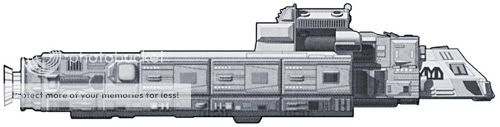 Colony Vessel I Colony Vessel ICost: 30,000 CreditsCapacity: 200 Persons System StatisticsHull: 2000 Shields: 1000 Shield Emitters: 500 Engines: 200 Sensors: 300 Warp StatisticsCruising Speed: Warp 5 Emergency Speed: Warp 6.5 (5 hours) Weapon StatisticsPhaser/Disruptor Arrays: 1 Phaser/Disruptor Types: Type I Pulse Phaser Max Volley: 1 (Fore/Aft/Dorsal/Port/Starboard) (0 Ventral) NotesThis type of Colony ship has been around for decades, which is primarily why they have been sent to the Beat Quadrant to assist in Colony-Building roles. These are older models and thus, are available in surplus. While they're far from 5-Star, they will get their colonists to their new home in good time. Quote: 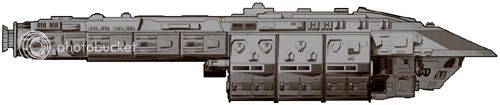 Colony Vessel II Colony Vessel IICost: 60,000 CreditsCapacity: 500 Persons System StatisticsHull: 3000 Shields: 1500 Shield Emitters: 750 Engines: 400 Sensors: 600 Warp StatisticsCruising Speed: Warp 7 Emergency Speed: Warp 8.5 (5 hours) Weapon StatisticsPhaser/Disruptor Arrays: 4 Phaser/Disruptor Types: 4 Type I Pulse Phasers Max Volley: 4 (Fore/Aft/Port/Starboard) 2 (Dorsal/Ventral) NotesThis type of Colony ship is a newer model, and can carry more passengers than its older counterpart. So, one should expect to be paying far more for this ship than its previous incarnation. it is improved in virtually all areas, however, its cost makes it effective only for those with high sums of money to spend on colonization of a world.  Quote: Colony Vessel III Cost and CapacityCost: 100,000 CreditsCapacity: 1000 Persons System StatisticsHull: 5000 Shields: 2200 Shield Emitters: 1100 Engines: 650 Sensors: 800 Warp StatisticsCruising Speed: Warp 8 Emergency Speed: Warp 9.5 (5 hours) Weapon StatisticsPhaser/Disruptor Arrays: 4 Phaser/Disruptor Types: 4 Type II Pulse Phasers Max Volley: 4 (Fore/Aft/Port/Starboard) 2 (Dorsal/Ventral) Torpedo Tubes: 4 Max Volley: 2 Fore/Aft Torpedo Types: Photon Torpedoes Torpedo Stock: 20 Photon Torpedoes NotesThis Colony ship is the top of the line for colony vessels. It is vastly improved in all areas, and is the only colony vessel to be armed with torpedoes for self defense. So, one should expect to be paying far more for this ship than any of the previous vessels, and they would be right. If you are seriously looking to colonize a planet, then this is the ship for you...if your pockets can handle the drain for purchase.
|
|
|
|
|
|
Eloquent Conversationalist
|
|
|
|
|
|
|
|
|
|
Eloquent Conversationalist
|
Posted: Thu Jun 26, 2008 5:02 pm
Habitation Stations Habitat Stations are literally homes in space. In areas where a planet is not inhabitable, there IS no planet to colonize, or additional sources of income are desired, these stations can be bought to provide a place for colonists to live, providing a state of income for the owner of the station. Each Station takes time to build even after being purchased. The expense of the Station is how long it takes to build. The first station takes a full week of OOC Time, while the third takes three weeks of OOC Time. Obviously, such large structures aren't invulnerable when being built, meaning that over the build time, they will either be at 1/3rd Stats, 2/3rds Stats, or Full Stats depending on the length of time they are at in the building. Obviously, the cheapest station is 1/3rd completed at 2 and 1/3rd days. All that is needed is to determine how long your station has been under construction, and compare it to the total days of OOC Time needed. If it fits into 1/3rd, 2/3rds, or 3/3rds of the time, you'll know how strong it is. When a Station is attacked during its construction, construction halts until the battle is over, or the station is destroyed. In this way, stations do not magically regain health points lost during battle, or get more powerful. This system adds an even greater range of tactical combat to the guild, making attacking enemy factions key to winning a fight against a heavily colonized area of space. Stations also allow for new areas to role play in, adding to the benefit of the entire RP community. Quote: 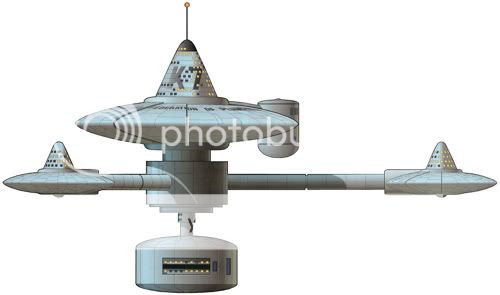 Habitat Station I Habitat Station ICost: 100,000 CreditsStarting Capacity: (At least one load from a Colony Vessel) Maximum Capacity: 8,000 Persons System StatisticsHull: 6000 Shields: 3000 Shield Emitters: 1500 Sensors: 750 Weapon StatisticsPhaser/Disruptor Arrays: 4 Phaser/Disruptor Types: 4 Type X Phasers Max Volley: 2 (Fore/Aft/Port/Starboard) 4 (Dorsal/Ventral) NotesThis habitat station is actualy one of the first types of Space Station created by the Federation in its earlier years. Stations like this were often visited by Captain James T. Kirk when he commanded the Enterprise and Enterprise - A. While the space frame is old, everything about the station has been brought up to modern standards. Armor, shielding, and even Type X Phasers allow the station to hold its own for some time against attackers. Quote: 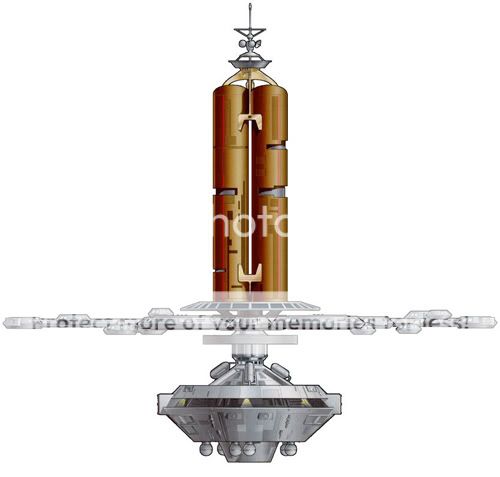 Habitat Station II Habitat Station IICost: 200,000 CreditsStarting Capacity: (At least one load from a Colony Vessel) Maximum Capacity: 16,000 Persons System StatisticsHull: 9000 Shields: 6000 Shield Emitters: 3000 Sensors: 1000 Weapon StatisticsPhaser/Disruptor Arrays: 4 Phaser/Disruptor Types: 4 Type XI Phasers Max Volley: 2 (Fore/Aft/Port/Starboard) 4 (Dorsal/Ventral) NotesIf you think this habitat stations looks like an orbital mining platform, then you're right. This is due to the availability of nodules being sent into the Beta Quadrant. Mining areas were retrofitted to become living quarters, and other areas were opened to allow for living spaces to be added. This reuse of materials allows construction to be handled relatively easily compared to other stations. Quote: 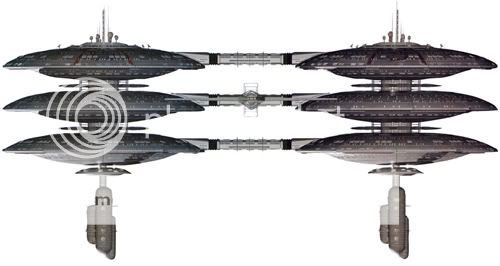 Habitat Station III Habitat Station IIICost: 300,000 CreditsStarting Capacity: (At least one load from a Colony Vessel) Maximum Capacity: 32,000 Persons System StatisticsHull: 12000 Shields: 9000 Shield Emitters: 4500 Sensors: 1250 Weapon StatisticsPhaser/Disruptor Arrays: 4 Phaser/Disruptor Types: 4 Type XII Phasers Max Volley: 2 (Fore/Aft/Port/Starboard) 4 (Dorsal/Ventral) NotesThis Habitat Station is the largest one currently available in the Beta Quadrant. While it doesn't match up to the size and power of Deep Space 12, this station is modeled after the Jupiter Station in orbit around the large gas giant in the Sol System. Unneeded parts have been removed to slash the cost of construction, but the massive station is very well defended, and comes armed with the most powerful "Starbase Phasers" one can buy.
|
|
|
|
|
|
|
|
|
|
|
|
|
|
|
Posted: Thu Jun 26, 2008 5:03 pm
Resource Transports Mining Stations require resources to be brought to them for refining, and need ways for them to be exported around the quadrant. This is where the Resource Transports come in. Modified freighters serve as the primary space frames for this role, hauling resources to the mining facilities for processing, then off to Deep Space 12 for gathering income. Of course, these tiny vessels are made targets for pirates hoping to steal from their cargo holds and cash them in for their own personal gain. This creates the need for escort missions and protection for the valuables inside the transports. These transports can also act as cargo vessels, allowing a colonized area of space to send these on cargo missions to gather income rather than their main fighting force, or send these along with the main vessel for added protection and a larger profit. Profit is decided by the worth of the resources being returned to Deep Space 12, and that is determined by the Resource Market on Deep Space 12. Just because your system may have alot of a very valuable resources for the moment, doesn't always mean it will STAY that way... This also allows trade between members for favors if they cannot pay in credits, they can pay in tons of resources instead, which can then be cashed for credits at Deep Space 12. Quote:  Resource Transport I Resource Transport ICost: 35,000 CreditsCapacity: 400 Tons of Cargo System StatisticsHull: 2000 Shields: 1000 Shield Emitters: 500 Engines: 500 Sensors: 300 Warp StatisticsCruising Speed: Warp 5 Emergency Speed: Warp 7 (4 hours) Weapon StatisticsPhaser/Disruptor Arrays: 2 Phaser/Disruptor Types: Type VI Phasers Max Volley: 2 (Fore/Aft/Port/Starboard) 1 (Dorsal/Ventral) NotesThis is the most basic transport for materials in the Federation. Having been used since the early years of even Starfleet itself, this small trading vessel has been converted to serve as a transport vessel for raw materials to be refined at a Mining Facility. While they are armed, they are not designed for combat, and are designed to transport resources to and from the mining area and the mining facilities, or the mining stations and Deep Space 12 for income gathering. Quote: 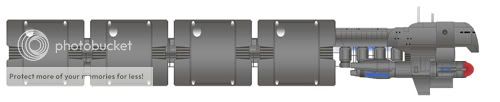 Resource Transport II Resource Transport IICost: 70,000 CreditsCapacity: 800 Tons of Cargo System StatisticsHull: 3000 Shields: 1500 Shield Emitters: 750 Engines: 400 Sensors: 600 Warp StatisticsCruising Speed: Warp 7 Emergency Speed: Warp 9 (4 hours) Weapon StatisticsPhaser/Disruptor Arrays: 4 Phaser/Disruptor Types: 4 Type VII Phasers Max Volley: 4 (Fore/Aft) 3 (Dorsal/Ventral/Port/Starboard) NotesThis is a more modern space frame than the most basic transport, however its purpose remains the same. It can fare better in a fire fight, and outrun most threats, but it is still only a transport vessel, nothing more.
|
|
|
|
|
|
Eloquent Conversationalist
|
|
|
|
|
|
|
|
|
|
Eloquent Conversationalist
|
Posted: Thu Jun 26, 2008 5:04 pm
Mining Stations
(Limit 3 Per Resource - Per System) Mining Stations serve as the hub for any and all resource gathering and processing within a system. Mining, in this case, is a general term used to describe the gathering of resources, and not necessarily the mining of a rock. Stations can gather resources using transports, or by making use of particle fountain techniques. While the first is older, it provides more resources than the particle fountain. Both can hold and store extra resources for transports to deliver later, making them a must for any colony. Quote: 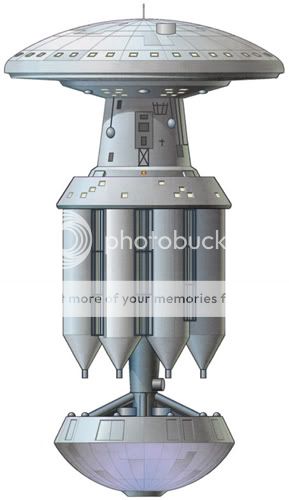 Mining Station I Mining Station ICost: 40,000 CreditsProcessing Capacity: 800 Tons of Processed Resources per OOC Week Holding Capacity: Can hold up to 500 tons in its cargo hold for future delivery. System StatisticsHull: 4000 Shields: 2000 Shield Emitters: 1000 Sensors: 1000 Weapon Statistics*Mining Stations are unarmed as there is no place for bulky weapon placements* NotesThis Mining Facility uses "Particle Fountain Technology" to target and beam chunks of ore up from a planet's surface, or beam the resources directly to the station, eliminating the need for transports to transport the materials to the Station for processing, however, the transports are still needed to ferry the goods to Deep Space 12 from the system in question. In addition, this station is also unarmed, and will therefore require some sort of outside protection such as a Station or Defensive emplacements. Luckily, high sensors allow for detection of resources, as well as enemy vessels approaching... Quote: 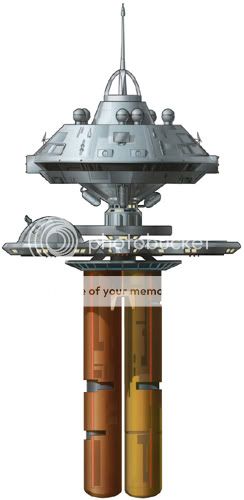 Mining Station 2 Mining Station 2Cost: 80,000 CreditsProcessing Capacity: 1600 Tons of Processed Resources per OOC week. Holding Capacity: Can store up to 1000 tons in its cargo hold for future delivery. System StatisticsHull: 8000 Shields: 4000 Shield Emitters: 2000 Sensors: 2000 Weapon Statistics*Mining Stations are unarmed as there is no room for bulky weapon placements.* NotesThis station uses traditional means to gather resources, but has a far greater capacity for production as well as holding previously processed resources if transports cannot keep up with its production. However, it is still unarmed, and requires some sort of secondary defense to protect it from harm.
|
|
|
|
|
|
|
|
|
|
|
|
|
|
|
Posted: Thu Jun 26, 2008 5:06 pm
Communication Arrays Communications Arrays allow for message posting within one's own system, as well as allowing for private communication networks as well. They also serve as a great early warning beacon for any enemy vessels or dangerous objects that may be entering your system. In addition, they also serve to boost the range of any Turrets to allow for better defense of stations and other space-borne orbital arrays. Quote: 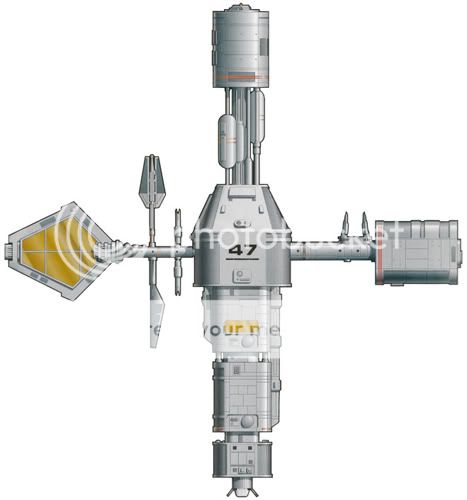 Communications Array Communications ArrayCost: 70,000 CreditsCapacity: 500 Simultaneous transmissions System StatisticsHull: 4000 Shields: 2000 Shield Emitters: 1000 Sensors: 4000 NotesThe Communications Array allows boosted transmission of communications within your system, and also boosts the effective range of any weapons platform by allowing their targeting data to link up with the communication array's sensors. This boosts the attack range of the platform by 100%. Only Torpedo and Pulse Turrets are effected by this. However, any communication system can utilize the array for boosted transmissions and increased warning of enemy ships entering the area by tying their sensors into the array's.
|
|
|
|
|
|
Eloquent Conversationalist
|
|
|
|
|
|
|
|
|
|
Eloquent Conversationalist
|
Posted: Thu Jun 26, 2008 5:16 pm
Defensive Structures Defensive systems fit into a very special category of orbital commerce. They do not usually grant large sums of credits or rewards for their existence, but excel at defending other structures from harm. There are two different types of Defensive Structures. The first are the simplest and least expensive. These are the Pulse Turrets, Phaser Turrets, and Torpedo Turrets. These unmanned Turrets can defend Habitation Stations or Mining Facilities form harm. The second are Defensive Stations, which can have light living quarters and offer some income, but their primary role is for defending areas from hostile or aggressive actions. While terribly expensive, they offer many benefits and firepower that turrets do not. Both of these will prove terribly useful for those wanting to colonize the New Frontier. Automated Turrets Quote: 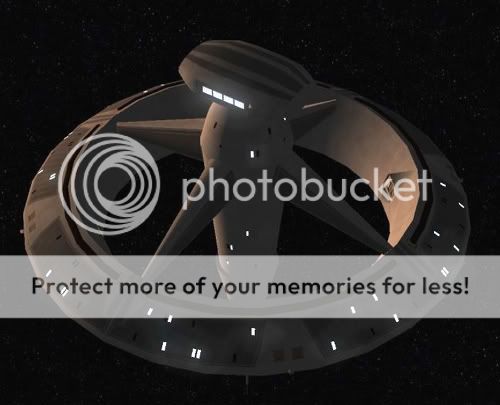 Phaser Turret Phaser TurretCost: 25,000 CreditsSystem StatisticsHull: 2000 Shields: 1000 Shield Emitters: 500 Sensors: 800 Weapon StatisticsPhaser/Disruptor Arrays: 8 Phaser/Disruptor Types: 8 Type X Phasers Max Volley: 4 (Fore/Aft/Port/Starboard) 4 (Dorsal/Ventral) NotesThis turret, outfitted with Starfleet Type X Phasers is the bottom of the barrel for turrets. Phasers are not as powerful as Pulse Phasers, however they have a larger range and can hit targets at distances that Pulse Turrets can not, making them ideal for trying to defend other structures while being out of harm's way. Quote: Pulse Turret CostCost: 35,000 CreditsSystem StatisticsHull: 2000 Shields: 1000 Shield Emitters: 500 Sensors: 700 Weapon StatisticsPhaser/Disruptor Arrays: 8 Phaser/Disruptor Types: 8 Type II Pulse Phasers Max Volley: 4 (Fore/Aft/Port/Starboard) 4 (Dorsal/Ventral) NotesWhile the Pulse Turret has less range than its Phaser-based cousin, it has quite alot of power behind it to make up for the shortened range. Of course, this range can be improved by combining the turrets with the Communications Array, which will give them a significant boost. Quote: 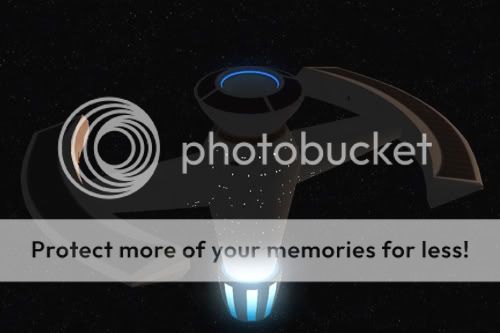 Torpedo Turret Torpedo TurretCost: 35,000 CreditsTorpedo Capacity: 80 Torpedoes System StatisticsHull: 2000 Shields: 1000 Shield Emitters: 500 Sensors: 900 Weapon StatisticsTorpedo Tubes: 8 Torpedo Types: Type VI Photon Torpedoes Max Volley: 4 (Fore/Aft/Port/Starboard) 4 (Dorsal/Ventral) NotesThe Torpedo Turret has the longest range of any of the turrets, but does less damage against shields compared to the other two, meaning that while you may HIT a target, you will likely do less damage until their shields are down. The torpedoes can be restocked by replication, however, they can only be restocked after a battle has finished as energy is needed to energize the power matrix, and this is being utilized in battle, making saving your ammo very important. Defensive Stations Each Station takes time to build even after being purchased. The expense of the Station is how long it takes to build. The first station takes a full week of OOC Time, while the third takes three weeks of OOC Time. Obviously, such large structures aren't invulnerable when being built, meaning that over the build time, they will either be at 1/3rd Stats, 2/3rds Stats, or Full Stats depending on the length of time they are at in the building. Obviously, the cheapest station is 1/3rd completed at 2 and 1/3rd days. All that is needed is to determine how long your station has been under construction, and compare it to the total days of OOC Time needed. If it fits into 1/3rd, 2/3rds, or 3/3rds of the time, you'll know how strong it is. When a Station is attacked during its construction, construction halts until the battle is over, or the station is destroyed. In this way, stations do not magically regain health points lost during battle, or get more powerful. This system adds an even greater range of tactical combat to the guild, making attacking enemy factions key to winning a fight against a heavily colonized area of space. Stations also allow for new areas to role play in, adding to the benefit of the entire RP community. Quote: 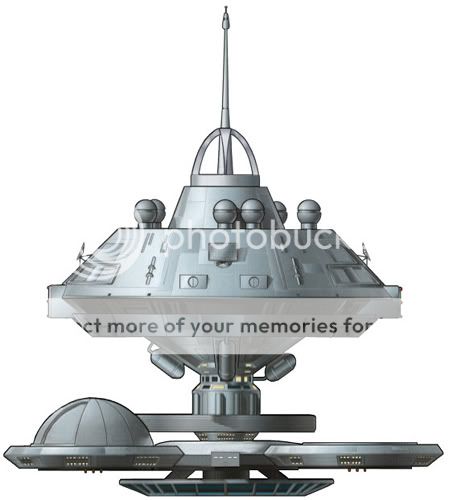 Defense Station I Defense Station ICost: 150,000 CreditsStarting Capacity: (At least one load from a Colony Vessel) Maximum Capacity: 2,000 Persons System StatisticsHull: 6000 Shields: 3000 Shield Emitters: 1500 Sensors: 1000 Weapon StatisticsPhaser/Disruptor Arrays: 8 Phaser/Disruptor Types: Type X Phasers Max Volley: 8 Fore: 4 Aft: 4 Dorsal: 4 Ventral: 4 Port/Starboard: 4 Torpedo Tubes: 8 Max Volley: (2 Fore/Aft/Port/Starboard) Torpedo Types: Type VI Photon Torpedoes Torpedo Stock: 100 Torpedoes NotesDefensive Stations haven't always been around in the Federation, and thus, these designs have been refitted from old starbase designs to account for the need of defensive outposts in colonization from potentially hostile forces. Quote: 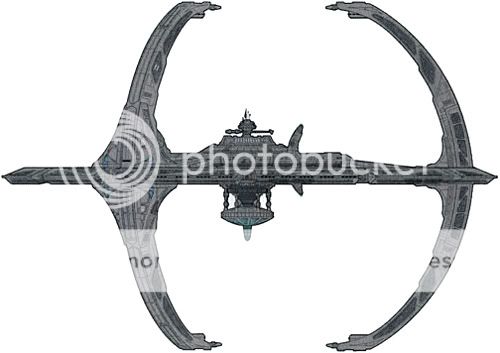 Defense Station II Defense Station IICost: 300,000 CreditsStarting Capacity: (At least one load from a Colony Vessel) Maximum Capacity: 4,000 System StatisticsHull: 9000 Shields: 6000 Shield Emitters: 3000 Sensors: 2000 Weapon StatisticsPhaser/Disruptor Arrays: Phaser/Disruptor Types: Type XI Phasers Max Volley: 10 Fore: 8 Aft: 8 Dorsal: 9 Ventral: 9 Port/Starboard: 8 Torpedo Tubes: 18 Max Volley: (6 Fore/Aft/Port/Starboard) (9 Dorsal/Ventral) Torpedo Types: Type VI Photon Torpedoes Torpedo Stock: 200 Photon Torpedoes Repair/Refit StatisticsRepair/Refit Docks: 3 (Docks allow free repairs at your own stations, but not free restocking. Members may charge repair or refit rates to any other member that wishes to use their station.) NotesIf this Defensive Station looks familiar, that is because it is very similar to the "Terok Nor Type" Cardassian Space Station. However, this defensive station is much smaller and less armed that its big, brown, Cardassian cousin. Nevertheless, it allows repairs and refits to take place on it, making it a powerful foe in combat, but also a valuable asset to any system or colony. This is likely the last real defensive station many will purchase. Quote: 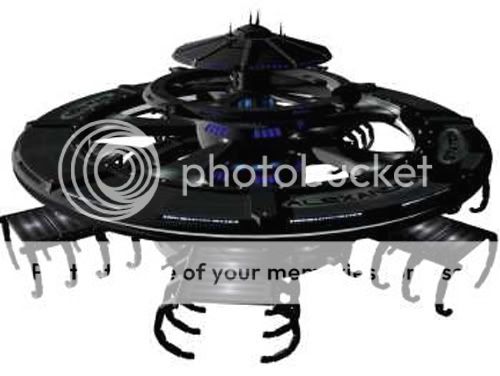 Defense Station III Defense Station IIICost: 600,000 CreditsStarting Capacity: (At least one load from a Colony Vessel) Maximum Capacity: 8,000 Persons System StatisticsHull: 12000 Shields: 9000 Shield Emitters: 4500 Sensors: 4000 Weapon StatisticsPhaser/Disruptor Arrays: Phaser/Disruptor Types: Type XII Phasers Max Volley: 14 Fore: 8 Aft: 8 Dorsal: 12 Ventral: 12 Port/Starboard: 8 Torpedo Tubes: 24 Max Volley: (6 Fore/Aft/Port/Starboard) Torpedo Types: Photon Torpedoes Torpedo Stock: 250 Photon Torpedoes Repair/Refit StatisticsRepair/Refit Docks: 7 (Docks allow free repairs at your own stations, but not free restocking. Members may charge repair or refit rates to any other member that wishes to use their station.) NotesThis is a culmination of a Federation design team set about improving upon the "Terok Nor Type" space station. While phaser power has been increased, so has the cost of the station, making this station for hefty spenders only. However, it has room to refit, resupply, and restock up to seven vessels, making it an ideal place for people to come and stop in during long deep space mission. This may also be used to create revenue as well...
|
|
|
|
|
|
|
|
|
|
|
|
|
|
|
Posted: Thu Jun 26, 2008 5:17 pm
Hangars and Fighter Squadrons Turrets and Stations are powerful assets to system defense, however, they are limited by the fact that they cannot move to intercept threats. This is where the concept of hangars and fighter squadrons come into play. Hangars can be added to structures such as Habitat Stations, Defensive Stations, or even orbiting asteroids. They can then launch squadrons of Fighters or Fighter Bombers depending on what the buyer desires most. Each hangar can support two squadrons (5 ships each) of fighter craft. Hangars also repair and restock their squadrons after battle, unless an entire squadron is otherwise destroyed. Then, a new one is needed. HangerCost and CapacityCost: 50,000 CreditsCapacity: 2 Squadrons of Fighter Craft System StatisticsHull: 3000 Shields: 2000 Shield Emitters: 1000 Sensors: 800 Quote:  Valkyrie Fighter Squadron Valkyrie Fighter SquadronCost: 65,000 CreditsCapacity: 5 Fighters System Statistics - Each VesselHull: 500 Shields: 500 Shield Emitters: 250 Engines: 600 Sensors: 300 Warp StatisticsCruising Speed: Warp 3 Emergency Speed: Warp 5 (9 hours) Weapon StatisticsPhaser/Disruptor Arrays: 2 Emitters Phaser/Disruptor Types: Type I Pulse Phasers Max Volley: 2 Fore: 2 Aft: 0 Dorsal: 0 Ventral: 0 Port/Starboard: 0 Torpedo Tubes: 2 Max Volley: 2 Fore Torpedo Types: Type I Micro Photon Torpedoes Torpedo Stock: 20 Type I Micro Photon Torpedoes NotesThe Valkyrie Class Fighter was developed after the Dominion War to allow for fast, agile space based fighters to be deployed from outposts for self defense. Quote:  Peregrine Fighter/Bomber Squadron Peregrine Fighter/Bomber SquadronCost: 75,000 CreditsCapacity: 5 Peregrine Fighter-Bombers System StatisticsHull: 700 Shields: 600 Shield Emitters: 300 Engines: 500 Sensors: 300 Warp StatisticsCruising Speed: Warp 5 Emergency Speed: Warp 6 (5 hours) Weapon StatisticsPhaser/Disruptor Arrays: 3 Emitters Phaser/Disruptor Types: 2 Type I Pulse Phasers/ 1 Type V Phaser Max Volley: 3 Fore: 2 Pulse Phasers Aft: 1 Type V Phaser Dorsal: 0 Ventral: 0 Port/Starboard: 0 Torpedo Tubes: 3 Max Volley: 2 Fore/ 1 Aft Torpedo Types: Type I Micro Photon Torpedoes Torpedo Stock: 30 Torpedoes NotesThis type of ship has been around since the Dominion War, however it was usually designed to assist a fleet. But in the new times of the Beta Quadrant Exploration Initiative, it has been refitted for hanger launch and system defense.
|
|
|
|
|
|
Eloquent Conversationalist
|
|
|
|
|
|
|
|
|
|
Eloquent Conversationalist
|
Posted: Tue Jul 29, 2008 2:52 pm
Drydock The drydock is one of the most pleasant things to have in orbit around one's system. From here, repairs and resupplying are able to take place right at home, eliminating the need for one to trek halfway across the quadrant for repairing their vessels after a major battle. While restocking costs still apply, repair costs and times are waived while the dock is used. Refits are also possible using these docks, assuming the parts have been purchased elsewhere already. In addition, these may be used to build vessels, assuming the vessels have already been purchased at Deep Space 12. This negates the need for a long trek to Deep Space 12 and back if you're focusing on your system. Members may also charge other members for use of their docks to repair ships, allowing this structure to allow for a source of income. Quote: 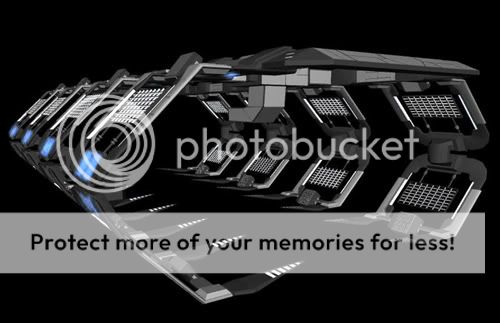 Drydock DrydockCost: 100,000 CreditsMaximum Capacity: 1 Vessel System StatisticsHull: 6000 Shields: 3000 Shield Emitters: 1500 Sensors: 750
|
|
|
|
|
|
|
|
|
|
|
|
|
|
|
|
|
|