





NAME OF LOCATION -Azurian System
DESCRIPTION -
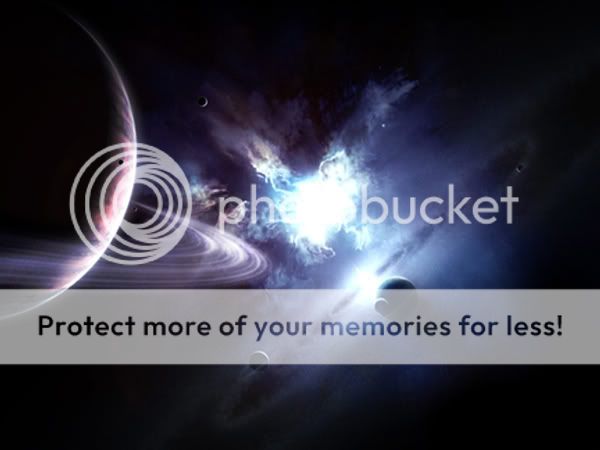
The Azurian System is a solar system of several planets orbiting a very active blue star. Out of a total of five planets, three are inhabitable, one (Azuri III) has a large moon as well. None of these worlds are inhabited. The active blue star in the center is constantly bombarding the system with energy, however, this energy does not appear to be detrimental to the system, and appears harmless to starship shields. With luck, it could even be harnessed... This system is also home to a massive, blue, nebula.
LOCATION - Located in Sector K-8
PEOPLE -
This system is uninhabited.
CLIMATE -
*See Astronomical Data*
RESOURCES -
The system, in general, lacks almost any major resources, however the energy radiating from the central star may be able to be harnessed for boosting the power of any weapon systems mounted on space-borne objects and stations. Additional resource information can be found below in the Astronomical Data.
ASTRONOMICAL DATA -
Curiously enough, the three habitable planets all orbit in almost the same orbital path. However, the three planets are also orbiting at speeds that keep their distance from one another at a constant. This prevents any threat of a planetary collision. This phenomenon is almost unheard of, and is being studied heavily by Federation Scientists.
Azuri I
The first planet is a small body. It has just barely enough gravity to hold an atmosphere, but little in the way of plant life or resources. This world is best used as an orbital colony, however, a ground based colony could be possible. Small traces of dilithium have been found on this planet, but not in major quantities.
Azuri II
The second inhabitable planet is also one of the strangest. It has a system of thin rings orbiting it. Even stranger, these rings are almost completely a mix of dilithium, iron, and carbon, along with traces of other materials. This suggests that an asteroid containing a great deal of dilithium ore may have been pulled part by the tidal forces of the star and the planet, resulting in the rings. The surface is temperate, and the atmosphere is breathable, making this area ideal for a dilithium processing facility either in orbit, or on the surface.
Azuri III
This is the largest, and last, planet in the system. This planet has been compared to Beta Cestus III, and the similarities include a vast variety of temperatures across the planet's surface, as well as a vast amount of ecosystems ranging from frigid polar regions to tropical regions at the equator. The large moon could serve as a base of sorts as well, provided the colony were created.
Azuri IV
This planet is the only gas giant of the system, and is comprised mainly of hydrogen and helium. While it has several small moons, these are mostly captured iron asteroids and have little value.
Azuri V
The final planet in the Azuri system is so tiny it can barely be classified as a planet. It is very distant from the central star, and is only a few degrees above absolute zero.
The Azuri Nebula
The nebula in the Azurian System emits radiation that prevents ships from being detected within it. This goes for any station or body within the system as well. Only after reconfiguring the sensors (3 posts) can the sensors once again work. This makes the nebula a perfect position to place defensive weaponry. The nebula stretches all the way around nearly a quarter of the outer reaches of the system. Electrical storms light up the nebula from time to time and provide a beautiful show for those watching the night sky.