|
|
|
|
|
|
|
|
|
 Posted: Sun May 18, 2008 3:44 pm Posted: Sun May 18, 2008 3:44 pm
Welcome to the Race Guide. There are many creatures in Emania and further afield - it'd be imposisble to describe them all!
However, here you can find detailed descriptions of many of the major races, and how they relate to one another.
Learn about them,their languages,society,gender roles, appearances and much more... and - most importantly- how that race's special traits affect the gameplay wink
Below is the contents, so you can find each race ^_~
Feel free to submit your own (PM dragontamer363) List:1) Humans The most common race in Emania. Quote: Racial skills Nothing specific. *high adaptability 2)Moonmaw Slave race of Emania, created and enslaved by the Drow. Quote: Racial Skills: Shield of 4 against magical attacks. Shield of 1 against physical attacks. *Infra-red/heat vision& magical traces in darkness [ ie able to see in dark to a limited extent] *Ability to see magical traces and heat in day - otherwise colour blind. *Great strength [lifting/manual work] - but this more defensive/practical than offensive *high magical resistance [Shield = 4 for magic attacks. 1 for melee attacks (as oppose dot the standard of 2 for all) ] *ability to stick/climb walls and ceilings *When faced with great danger, a moonmaw can do damage to itslef in order to use the poison in it's blood. It cuts it's own hp by 2 or 3 points and thrusts the blood into the creature's mouth or bloodstream. as a result, for teh rest of the monster's lifespan, it must roll the star dice. If star, the poison does 2 damage. BUT: *no sense of smell 3) Dal-Richs Entrepreneuristic reptile race. Quote: Racial Skills Attack bonus +2 when fighting monsters -1 to attack when fighting melee combat (plus usual 2 shielding) 4)Xen rare magical species with uncertain origins. Quote: Racial skills Shielding 2(the normal) - but 3 when against magical attacks 5) Gemini 1/2 elf 1/2 human race Quote: The Gemini get a bost when with a bow ***+3 attack, ***+3 acrucy potions restore more health 20&#xmo;re life restored Fast **+ speed and evasion 6) Drow Malevolent branch of the elvish races that enslave the Moonmaw and live in the underdark Quote: Abilities *Attack Bonus of +1 when using long range attacks * Status spells (as in paralysis,posison) have limited affect. Roll the Star dice in addition to whatever dice needed. If star, it has no effect. *Sleep speels do not work. *Can see in the dark *can sense vibrations etc 7) Dreki Mysterious, but potentially powerful, draconic race Quote: Racial Skills: Good: *Ability to turn into dragons. When they do their stats go through the roof and they can throw their weight around. However their skill and accuracy drops drastically and they are unable to do complicated magical attacks or anything of that sort. After transforming into a dragon their energy is greatly sapped and they are out of it for a while. Thus they do it rarely. *Huge endurance (can last blows but Not high defence) - add 4**** stats to health endurance. * +3 to HP *If the Dreki is using its own element (eg fire) - RE ROLL the lowest dice. Add this new score to your existing score. *great day vision *great sense of smell *able to learn status attacks quickly Bad: *Shielding goes to 0 when attacked with the element that opposes the Dreki’s element (eg water on fire). *When using healing potions roll the ‘SPECIAL CHEST’ dice. If you roll a 6 the potion has no effect. *cannot see well in darkness *After a dragon transformation, Hp goes down to 2 When in Dragon form: Shielding +3 (5) Attack Bonus of +3 to all attacks of it’s elements Attack bonus of +2 in melee attacks -But- Shielding down to 3 when attacked by long range - Dragon form can only be maintained for 4 turns maximum. After each turn roll the SPECIAL CHEST dice. If a 6 - dragon form is lost (hp goes down to 2) 8 ) Elves Graceful, skilled elvish race. Quote: ---Race additions to character sheet-- *Shield = +1 (to normal - eg if 2 --> it’s now 3) *Attack bonus of +2 when using long range attacks *Magic point-loss is halved (eg if you would normally lose 2mp, now you lose only 1) - applies to elvish clerics and elvish madges *sleep spells have no effect *good hearing & smell 9) Dwarves Stocky, short expert craftsmen Quote: Immunity to poison & sleep +2 to attack when weilding an axe or hammer sheilding +3 10) Sirens Murderous, sexy temptresses of remote places. Quote: ---Race additions to character sheet-- *good hearing *Ability to control people by singing (eg send them to sleep, confuse them.) -sleep: player misses turns until they roll a star -Confused: Player rolls 2 Star dice, if first one is star they do 1hp damage to themselves. If the second one is star they are released from the confusion. *Poison bite : can poison them. 11) Neki Part-animal, forest creatures, still being discovered. Quote: Racial Skills: (In Alphabetical Order) Cat: +** (2) speed, improved eye sight, keen smell Coyote: +*** (3) endurance, extremely loyal, keen smell, - * (1) accuracy Dog: + ** (2) endurance, extremely loyal, keen smell Fox:+ *** (3) speed, improved eye sight, keen smell, - * (1) strength Mouse: +*** (3) speed, keener smell than most, better hearing, - * (1) endurance Panther: + *** (3) speed, improved eye sight, keen smell, - * (1) shielding Rabbit: +*** (3) speed, keen smell, best hearing, - * (1) endurance Rat: +*** (3) endurance, keener smell than most, - ** (2) endurance Tiger: + *** (3) speed, improved eye sight, keen smell, - * (1) shielding Wolf: + *** (3) strength, keen smell, good eye sight, - ** (2) shielding {Surprisingly, only Neki have detracted racial points....} 12) Merpeople Private, underwater, musical race often confused with sirens Quote: *Psychic intuition : Every now and again, before their turn, a merperson can roll the STAR dice. If STAR, they predict the upcoming attack and the attack misses. This can only be done upto 3 times per game. * Psychic communication : they can communicate and talk to players a long way away *ability to breathe underwater (if fish) or hold breath for hours (if mammal) *Increased speed in water *Sleeping song : sings a song. If STAR, this sends the attacking monster to sleep. *Waking song: sings a song: if STAR this wakes a player up. *Helaing song: if STAR, this can heal a hurt player (inc the singer) by 2hp. *sonar blast: stuns enemy - it misses one turn (if STAR) 13) 14) Centaurs Quote: Racial Skills: Attack Bonus +2 (for melee combat) Attack Bonus +1 (for ranged combat) -2 Defense Against Magic Attacks Heighten senses-Sight, Smell, Touch, and Hearing Increased Speed, Endurance, and Physical Strength
|
 |
|
|
|
|
|
|
|
|
|
|
|
|
|
Posted: Tue May 20, 2008 8:51 am
Humans
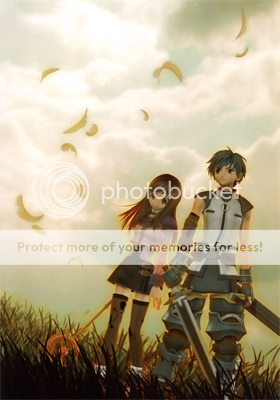
Humans (homo Sapien)
About/Origins:
Humans are the most numerous race in the world of Emania, and are in many ways the ‘base’ level form which all other races are compared.
They are renound for their versatility, seemingly able to adapt to almost any environment and learn almost any magical or physical skill (provided he/she has enough training). While they lack many ‘special racial traits’, and have often comparatively short lifepsans, they are nevertheless regarded by other races as something which demands respect.
Names/language:
The standard Human language is known as ‘Common’ in Emania, however there are many variations in human language in farer off colonies. With some training they are able to learn most vocally expressed languages without getting too tongue-tied.
Human names usually have two or three components, and it depends on which culture as to which of these components is the most important.
They usually have a first name chosen by the parents that has some old meaning. (eg Leanne = ‘downy’ or ‘wild’)
A second name is optional, but is often used to give more identification to the individual.
The Third name (aka ‘last name’ or ‘surname’) is usually the family name that is passed down through generations on the father’s side. In marriage the woman often inherits her husband’s family name, which replaces her surname.
Humans of high status also have a tendency to give each other descriptive extra names : eg King Richard ‘the lionheart’ King Henry ‘the miser’ Jonan ‘the brave’ etc
Physique:
Humans can vary in size and build. They generally have brown to black or place cream to tan or yellowish colored skin. With rare, very pale ‘albinos’ sometimes.
Hair colour is usually blondes, browns or black - ranging from thick/wirey curls all the way to straight and fine. Eye colors are traditionally mixes of browns, blues, green (or in albinos, pink) - and in some very rare cases can be dual (usually one eye blue and one green). Genrally speaking, the darker the skin colour, the darker the eye and hair colour.
Males are usually stockier and taller than females. All humans can average anything from 5’-6’+
Males are also generally physically stronger than females.
They are mammals. Females become pregnant and carry/give birth to the young.
Their senses are what is measured as a ‘base level’. Humans cannot see in the dark but for basic shapes in grayscale. Their sense of smell and taste is basic, as is their hearing and eyesight - however it has been known for humans to be able to rain up these senses over time and discipline. Humans can only ‘sense’ things on the most rudimentary, instinctual levels - usually translated into impending/immediate danger, being followed, or incoming storms. However it is hypothesized that human twins can sense each other’s presence and emotions on a deeper level - especially when the twins are identical.
Their teeth are blunt mix of herbivore and carnivore (the canines are small and fairly blunt) and the tounge inside mouth is pink. Their blood is red.
Ages:
Humans are known to be taken down by disease quite often, and the current infant mortality rate is often quite high. However with proper magical/medical attention they can overcome these.
Childhood: 1-12 years
Adolescence: 13-19 years [fertility ranges. Often from age 13/14 upwards]
Adult: 20-44
Middle Age: 45-59 [varies, as does loss of fertility]
Old: 60-80
Venerable: 80-100+
Maximum Age: the oldest recorded human of ‘normal’ class was 120. However, skiled madges and clerics have been rumored to live longer.
Personality [+ common allegiance]:
Human personalities vary greatly, as with any creature. In general humans seem to value family and close friendship greatly, and desire one-on-one romantic monogamous love. They are often highly territorial, defending their ‘personal space’ or the created space of kingdoms. Threats to territory and/or family often provokes violence.
Generally highly social, almost ‘pack’ creatures to greater or lesser degrees.
Humans can be of any allegiance, although the majority seem to place value on rules of one form or another, having a sense of ‘respectability’ and ‘personal morality’.
Children are viewed as ‘innocent’ and often passionately defended and viewed as something special, morally superior to adults.
Humans seem to prize intellect, wisdom and morality as well as strength.
Society:
Gender roles:
Humans tend to emphasise the gender roles of Males as protectors/hunter-gatherers and females as mothers and homemakers. While each gender can transgress and act differently to their gender roles, this can sometimes provoke scorn from their peers.
Men are often viewed as more intelligent than women, and more practically ‘useful’ and thus take on leadership roles. Politically, aggression and power are valued in male roles. However there is an important moral code of chivalry.
Women are both viewed as inferior in many respects when it comes to public life, but are venerated within the private sphere and are often taken to be morally superior to men, although somewhat prone to bouts of hysteria.
In the home the woman often has primary care and education of the children’s upbringing, with the father as ‘protector’ and there for physical advice.
However gender roles vary with each human culture, and each set of human individuals.
Social ranks:
Human society is generally hierarchical - although how the hierarchy is developed or expressed varies with each area/kingdom. For some it is in dictatorships or monarchies, in others it is in democratic ‘republics’. Occasional communities are almost ‘anarchic’ or ‘communally based’. However the common feature is that the most powerful/most wise/most able body of people or person rules (democratically or not) over the mass below them.
In families this hierarchy is also expressed, with either the oldest or the strongest members of the family at its head.
In many respects humans socially organize themselves as a pack. Higher positions are generally taken by males, with females often giving covert influence at the family/private level.
The exception to this rule is in more extreme societies- like the Amazons.
Work:
Humans work in all areas. Some are captured as slaves to other races, some work in agriculture, and some work in politics. Some even work as bounty hunters/ warriors-for-hire, whereas others follow completely philanthropic pursuits.
The higher up/more political jobs are usually male dominated, with the service sectors female dominated.
Love/breeding/marriage:
Humans are quite famous for their fertile capacity to breed successfully with almost any other humanoid mammal race (eg half-elves are often seen).
Humans tend to value monogamous relationships, and the notion of an idea of a ‘true love’ above al else, to be kept for a lifetime is one that is well known in Emania. But cultural variations of course occur.
Humans value marriage as a rule, often choosing to have children once in marriage and disapproving of ‘sleeping around’ and single-parent families.
As mammals, the female is impregnated, and the gestation period is 9 months.
Babies are very vulnerable and children are very vulnerable and almost completely incapable of being self-sufficient until their early or mid teens.
Relations with other species:
Humans as a rule seem to get on well with almost any benevolent species, provided that they do not threaten their territory or resources. However, they often take great dislike to other races they deem as ‘evil’ - for example humans distrust the Drow, Orcs, trolls, goblins, Bugbears, Gnolls etc etc
As a rule a human does not attack unless provoked.
Religion:
Humans have a wide variety of religions - all very different. The religions divide into three separate themes:
Monogamous: 1 god./’creator’ humans worship and are subservient to.
Polygamous: many Gods/’cretaors’ humans worship and are subservient to.
Nature Based: No defined god, but many spirtits, humans live in cohabitation to - often with deep respect.
Many human religions seem to be an extension of their notions of hierarchy, with the head God/gods as the ‘alpha males/females’ that must be obeyed and are all powerful.
Abilities/magic:
Humans are very versatile and capable of learning very powerful magic.
Weapons/Armour/Items crafted by species:
Humans are praised for their natural gift at technological development. They make many weapons and innovations. While they crafting skill is not as skilled/potent as a dwarves or elf’s, they are very practical.
~~~
Quote: Racial skillsNothing specific. *high adaptability
|
|
|
|
|
|
|
|
|
|
|
|
|
|
|
|
|
|
Posted: Tue May 20, 2008 9:15 am
The Moonmaw
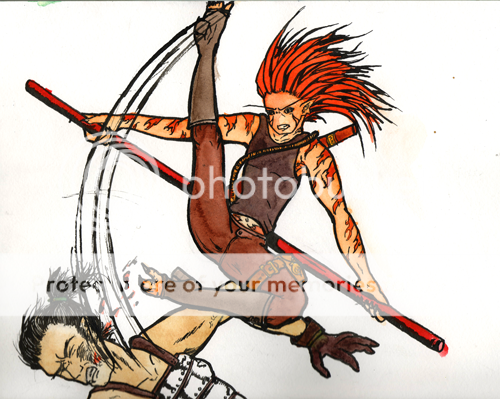 The Moonmaw - magically created slave raceAbout/Origins: The Moonmaw - magically created slave raceAbout/Origins:The Moonmaw were created after a Drow’s magical experiment went wrong. The Drow, ever happy to capitalize on another chance of utilizing slavery, created more of the creatures and bred them as slaves. The Moonmaw slave race eventually spilled over onto the surface, and can be found acting as slaves throughout the world of Emania - usually for the aristocratic classes, but also for wealthy merchants. They are not classed as humans in citizenship, but as ‘magical beasts’ - therefore they have no right to freedom, to vote (where the political system is democratic), to property or to the fate of their own children. In the kingdom that holds Ash Coast, Humanoid Slavery is illegal, but there are no laws against the slavery of ‘magical beasts’. However it is not overtly socially acceptable, so while there is an underground slave network in Moonmaw, Sirens, unicorns, orcs, goblins and such; they are not seen on the surface and kept securely locked behind aristocratic doors. The Moonmaw are very efficient slaves - famous for their strength in lifting, high magical resistance etc and subservient nature. They are ‘happy to serve’ - according to the slave owners. The slave owners often treat them as any livestock when it comes to breeding and profit. A series of poisons can be made from their thick hair spikes -and so slave owners often harvest them. In fact, the Moonmaw’s body is poisonous to eat, but it seems they are unable to extract this poison by themselves without significent injury or high amounts of pain. Names/language: Although a Moonmaw technically has no name status, they often give themselves a name [as their parents are reluctant to do it during their early childhood]. Their second name is usually the family name they belong to. The formal address of this can be quite long. So, for example, dragontamer363’s Moonmaw character is called ‘Felix’ (his first name he gave himself) ‘Zilvas’ (his second, family name). His formal name would be: Felix of Zilvas (mother’s clan) upon Nurranad (father’s family) Or, in the Moonmaw language: Felix i’d Zilvasota’gyu Nurranad’dyt. They generally speak the common language(aka Human) or the language of their slavemaster’s race (so for Felix, this would be drow). The Moonmaw language is one that only really extends to names or symbols and is highly pictorial and ephemeral in nature. It is commonly expressed through the secretive ‘invisible’ magic trace drawings they leave for one another through ‘graffiti’. Physique:The Moonmaw race can be difficult to tell apart by normal humanoids often, due to their similar facial traits, and so most tell them apart by their varying colours. However, those who have spent much time with them grow to be able to tell them apart with ease. They are of human size (much taller than their Drow masters) - averaging from 5’6’’ - 6’5’’ for males, and 5’5’’-6’ for females. They are a fairly skinny/athletically built race as a whole with fairly large feet that end in claws. They appear to favour walking on their toes most of the time (which gives them an impressive speed when sprinting) - if they wear shoes, both genders favor high-heels as a result. They have an elongated coccyx. They also have all the same basic genitals etc as humans (eg females have boobs etc etc) Their faces are human in many respects (if a little rounder and softer in nature), but are without a nose or lips. They have human sized-to slightly bigger than human sized eyes. The ‘whites’ of the eyes are black, as is the pupil. The pupil is surrounded by the Iris (as with humans) and are usually in amber or copper colours. However there have been blue and red variations before - even greens and purples, although these are rarer. Their hair is not hair, but organic, fleshy spikes/quills (somewhat like a porcupines’). They can grow quite large and are fairly stuff, often stinking out from the head before bending. The thicker ones, when cut, bleed a poisonous fluid - and it is quite painful for the Moonmaw to have them cut. However the thinner spikes don’t seem to produce pain or poison. The hair commonly matches the stripe son the Moonmaw’s body- usually in shades of red, yellow, green or blue. Their eyebrows are also thin organic spikes, and commonly extend past the head. They have pointed ears and the earlobes commonly come to a blunt point. Their fingers are fairly long and strong and the nails are clawed. Their skin is smooth and hairless, and commonly a a coppery, blue or yellow colour. The colour of the skin pales the closer it is to the stomach and inside legs/arms. They are covered in wavy stripes somewhat similar to a lionfishes’. These are usually the same colour of the hair (albeit paler or darker) - often a dirty red, blue or green. They have ‘normal’ blunt teeth like a humans. They have a long, fairly thick tongue (the tip usually reached two or three inches beyond the chin when stuck out) - this is usually blue (as is the inside of the mouth) but can be purple or reddish purple. Some of their senses are quite developed, while others are nonexistent: Their eyes are highly developed to see heat and magic traces - which proves very useful in pitch black darkness (they see heat). It’s rumored that this heat sense is so acute that a Moonmaw can actually see a creature’s circulatory system and heartbeat through their body...however since Moonmaw seem to be fairly secretive about this ability, no one knows if this is true. A Moonmaw can see old and new magical traces, and so have been used to track madges before. It has also been hypothesized by many Drow that they leave simple magical traces to each other to communicate. Naturally fear of a slave rebellion means that slave masters try to stop this. Other than the high spectrum of colour available in seeing magical traces and hat seeking, the Moonmaw are otherwise colourblind. In darkness, a Moonmaw cannot see cold objects. A Moonmaw has no sense of smell. It has a human’s level of touch and hearing. However it’s sense of taste is very highly developed. Sometimes they flick out their tounges as if to taste the air and are known for panting like a dog when physically exhausted. They are very resistant to magical attacks. They are very physically strong when it comes to lifting and defending themselves form physical blows (some liken them to ants in this way)- but this doesn’t seem to be translated to offensive attacks. In offensive attacks they are not much stronger than an athletic human. The theory is that Drow, when breeding them, magically made sure that they could not be (as they were already concerned by their ability to resist magic). Their blood seems to be poisonous to greater or lesser degrees. The Moonmaw are not edible because of this poison. Women seem to be more poisonous than men. The Moonmaw are mammals. Their innate resistance to magic and their physical strength when it comes to defense means that physical blows do not harm them much, nor does magic. However weapons that are main to cut (whips, swords etc) do harm them - often severely. The Drow generally use whips to punish them on the job. Ages: Exhaustion from overwork or forced overbreeding leads many enslaved Moonmaw to premature deaths. However these are the estimates for their ages: Childhood: 1-19 years Adolescence: 20-30 [fertile from 24 years] Adult: 30- 84 Middle Age: 85- 119 [ends fertility at 90 or so] Old: 120 - 170 Venerable: 130+ years Maximum Age: The oldest recorded Moonmaw was 259 years old Personality [+ common allegiance]: Their common allegiance is law abiding neutral-good, or chaotic neutral-good. However some bitter Moonmaw have crossed into chaotic evil. The Moonmaw are regarded as a fairly passive and gentle race, often because they are forced to adhere to their slavery. This is where the notion of being ‘happy to serve’ comes from. Having known nothing else, the Moonmaw have adapted to a live as a society of slaves. However many long for freedom, but are unable to achieve it. The Moonmaw’s society (or what they can create of a society, considering) is one of secrecy, subtle but intense pride and hidden but personally expressed emotions. Unable to gain any real pride or identity from elsewhere, they value the private sphere of the slave quarters/home very much. Here they act as themselves. They are intelligent, highly cultural (esp with regards to music and art) and emotional creatures, with their own high code of morality and respectability. They can be highly spirited at times, and almost all cherish their religion - at the very least as an expression of their culture. When working as slaves, they are often closed, silent and seemingly passive. They place great value on secrets, as it gives them some personal power. Hence why Drows and other slave masters rarely know the full extent of their abilities and underrate their intelligence. Society:Gender roles:Having to suffer continual oppression, the Moonmaw value a fairly balanced gender society. The genders are regarded as equals. However value is placed on the male’s role as protector [he is expected to sacrifice his own comfort for his family] and the female’s role as mother. When the mothers are allowed to keep their children, they are the primary upbringers, and the males act in a slightly subservient role when it come sot upbringing - the mother is regarded as right in her opinions. When the child reaches adolescence, however, the male usually steps in as primary up bringer and the roles reverse. Social ranks:As the Moonmaw are, by their slave nature, often isolated into small groups and frequently separated even after establishing a small community by being sold, how far a ‘social system’ can be discerned is dubious. However generally speaking when the Moonmaw find themselves in a group, age and experience makes one the highest ranking in the group. This can either be the one who has been with the current Slave Master the longest (thus the most experienced in the particular community), or the oldest. They also bind themselves by family ties. However these family ties are often broken when they are sold. To compensate for this, the Moonmaw often memorize their family trees, and refer to each other by family name. this way, family ties are not forgotten. The magical ‘graffiti’ that they leave unnoticed to each other, are usually artistic symbols of family lines/clans or messages trying to find each others’ families. However a family member can be adopted. Often clans merge as a great friend can be assimilated into family. The result of this system is that the Moonmaw identify themselves by extended clans of family name throughout the whole of the area - sometimes miles and miles large. Often these family members haven’t even met each other. Work:The Moonmaw are commonly slaves. They are either manual workers (due to their great strength) or personal slaves/consorts. Many are sexually exploited by their masters also, since it is impossible for a Moonmaw to bear the children of any other creature but other Moonmaw. The Moonmaw value hard work, and believe that one should put 100% effort into everything they do. Love/breeding/marriage:Moonmaw can only breed with Other Moonmaw, but are capable of having sexual relations with almost any species. Moonmaw are traditionally monogamous and heterosexual, and many slave masters encourage relationships between them (at the prospect of them breeding and thus having children to sell later at a profit). The slave masters have also been known to forcibly breed the Moonmaw like one would with livestock. When two Moonmaw get together and breed (they’re mammals) - the female get pregnant and has a gestation period of 6 months. When the baby is born, both parents rarely bond much with it - they don’t’ want to get attached to it until they are sure it won’t be sold. As such, a Moonmaw can lead a somewhat isolated and seemingly loveless early childhood. However, when it is clear that the child will not be sold [ most children are sold by the time of their 6th year at the latest], the parents suddenly switch on the affection and are quite nurturing and tender parents. For those babies/children who have been sold in early childhood, they often find the affection when they join the group of other slaves and often find themselves cared of and loved by surrogate parents. Love and courtship can be a frantic and sometimes secretive affair (at least until the slave master has allowed it). In general the courtship is mutual, although males often feel like they have a duty to impress the female. Once together, the Moonmaw rarely get married, but cohabit in a monogamous relationship for as long as possible. Separation isn’t viewed highly upon by Moonmaw society, and neither is ‘sleeping around’. However single mothers are not ostracized. Violence is not acceptable within married/cohabiting life. Relations with other species:Due to their life of slavery for many different species, the Moonmaw often either resent other species or regard them with a proud or suspicious air - preferring to keep themselves to themselves. Many react this way even to benevolent races/people because they ‘don’t understand’ them. However once you gain their trust they are often gentle, tolerant and friendly - and the Moonmaw value of family and close friendship means that friends they make are long lasting. The Moonmaw are particularly suspicious of all creates of the Underdark (where the Drow live) and this even extends to the Drow’s sworn enemies; the dwarves. They are also wary of all Elves, even though surface elves are the traditional enemies of the Underdark Drow. Needles to say, they despise Drow. Especially Drow mages and females (who are the more dominant of the Drow race, and thus often the slavemasters). The Moonmaw venerate dragons [see religion] Religion:The Moonmaw religion centers around the worship of ancient Dragons. According to the religion: There was once a time, eons ago, where Emania was populated by nothing but giant reptiles, who ravaged the land. At the head of these, looking down upon them all from their civilization were the dragons. They lived in a utopia, free form war and in caring families - immersed in magic and light.
One day a great fire struck down form the sky and the world ended as they knew it. The great lizards were killed and the dragons all but wiped out. Mourning for the lost creatures, the surviving dragons picked through the wreckage and tried to help the other creatures survive- but to no avail. However one day they found some strange small cratures - tiny little primates. Over the eons they took care od them, nurturing them. When these creatures were almost fully grown the dragons realized that they would not be the only civilization anymore - and that these creatures had the potential to rejuvenate the scarred earth. Old and weary, the original surviving dragons decided that they would retire from the world to a great city in the sky, and sleep for eons, letting the world be cared for by these creatures.
One day, after a great war, the dragons will wake and descend once more, to look over and care for the creatures ina realm of peace that will last for the rest of the ages.
Those creatures with no home or ancestry, will be taken into the dragon’s bosoms, and will return with them to the sacred city in the sky. However it should be noted, that the Moonmaw do not equate the rare but modern dragons as the same beings as the ancient dragons. They are the lesser, often ferocious offspring of them. However they do treat them with great respect (if they are benevolent). Abilities/magic:The moonmaw’s magical ability manly rests in their defense to it. However they are naturally capable of low scale charms and (with considerable training) could become powerful madges. Weapons/Armour/Items crafted by species: Due to primarily serving others there has been little Moonmaw crafting. However their talents seem to be in artistic creations and in charming other items to have small magical abilities. (eg growing bo-staffs, or swords that can magically return to the weilder if dropped.) ~~~ Quote: Racial Skills: Shield of 4 against magical attacks. Shield of 1 against physical attacks. *Infra-red/heat vision& magical traces in darkness [ ie able to see in dark to a limited extent] *Ability to see magical traces and heat in day - otherwise colour blind. *Great strength [lifting/manual work] - but this more defensive/practical than offensive *high magical resistance [Shield = -4 for magic attacks. -1 for melee attacks (as oppose dot the standard of -2 for all) ] *ability to stick/climb walls and ceilings *When faced with great danger, a moonmaw can do damage to itslef in order to use the poison in it's blood. It cuts it's own hp by 2 or 3 points and thrusts the blood into the creature's mouth or bloodstream. as a result, for teh rest of the monster's lifespan, it must roll the star dice. If star, the poison does 2 damage. BUT: *no sense of smell
|
|
|
|
|
|
|
|
|
|
|
|
|
|
|
Posted: Wed May 21, 2008 5:34 pm
Dal Richs  Dal Richs (The money and traders of the world) About/Origins: The Dl Richs are a race of money They started from a weird type of warm blooded lizzard. Not much is known about their past all but the live for money Names/language: The DAl Richs have many languages some are easy to learn while others are hard.They are belived to have sold the common laguage to the humans for a very high price. names : They have 2 names their first and last name. They are named for how they act and are treated in their lives.They receive their names from their fathers. and their last names are their mothers last name. Physique: They are fairly tall standing at 7'5 and shorter. They are strong but not as strong as trolls or other creatures. They appear to look like lizzards but dint have scales.The males are taller then the feamles and they have bulkier mussles Ages:They are known to live for a long time sometimes into the 200 years margen Child: 01-12 teen: 13-19 mature: 20-50 young adult: 51-90 adult: 90-150 old: 150-200 Personality [+ common allegiance]: Dal Richs are faily calm they are well manured and can keep their calm in chaotic situations. How ever thier allegents lie with the one with the most money Society: The Dal Richs live by a strict law that The money you make is your and can not be taken away. Their leaders are elected and Most of the time have alot of money Gender roles: Both play big roles. You will not find it uncommen to find female Dals owning their own trade caravans or cities. Work: They mainly work as traders or shop keepers thet have a knak for money. You might even find them running human cities sence they can bring in a lot of money Love/breeding/marriage: They mate for life and are very loyal to their mates Relations with other species: They are well manured and respect others religion and cultures. Religion: They belive in one provider but they also belive that money is the root of all power Abilities/magic: They have a pretty good understanding of magics and are good at useing many kinds. Weapons/Armour/Items crafted by species: They are known for having very good quality weapons. Their trade mark weapon is the Blast rifle. Their armor is good and can take alot of damage. They are well known for their diamond skin armor. The items they are most known for are money and Elixars. Quote: Racial SkillsAttack bonus +2 when fighting monsters
-1 to attack when fighting melee combat
(plus usual 2 shielding)
|
|
|
|
|
|
|
|
|
|
|
|
|
|
|
|
|
|
Posted: Thu May 22, 2008 3:49 am
Xen About/Origins: Xen are a rare species and only some can be found in the worl of Emania, Xen first came to Emania when the first Xen member came to study the world, then many started to adapt. Xentalot is the world in which they came. Xen have a very special life span, and many racial traits. Most Xen get angry easily, and usually kill anything in their way. Xen usually learn about magic at the age of five, then get better the more they train. The first spell ever taught in the world of Xentalot is Flame. Flame is basically a simple fire spell, which can grow stronger the better at magic they are. Names/language: Xen speak the language of humans, and can learn any other language very easily. Xen, in the Xentalot world means 'elf'. Most Xen species originated from elves, which explains their long pointy, ears. Xentalot means 'elven territory' in Xenalot. Xen only have two names, the first is called the 'main'. The second is, of course, the 'secondary.' The founder of Xentalot created these names, and his name was Nex Tolat. If you notice, Nex is Xen backwords. Tolat is Talot backwords. Xen is the species name, and Xen and Talot put together is the name of the world. Physique: Xen are usually a very skinny species. Most Xen are so thin, you can usually see their ribcage sticking out. To hide this in other worlds, they were thick robes. Even though Xen are dark, they were white robes. Their skin color is a dark blueish type color. When the Xen are first born, they are usually a blueish white until around the age of thirteen. Then, they start to get darker. Xen usually have either red eyes, blue eyes, or plain white eyes. Most Xen have white hair, and only some lucky Xen are born with black hair. Both male and female Xen are the same, except female can produce asexually, so the male go straight to work everyday on the world they live in while the female stay home and give birth. Half the female Xen decide not to give birth, so they don't. This is why this species is going down fast. Xen can only eat Xenite plants, so their teeth are dull. Xen also have red blood, like humans. The inside of their mouth are dark and their tounge are a blood red. Xen are around 2'1'' when they are born, and can grow up to nearly 7' tall. Ages: Once a Xen gets a disease, it's very easy to get rid of. Their immune system is automatically immune to a disease/sickness within several minutes of having it. Xen usually have defensive and healing spells, so it's easy to stay alive long. Childhood: 1-13 Adolescence: 14-100 Adult: 101-1000 Middle Age: 1001-3500 Old: 3501-4500 Venerable: 4501-9000 Maximum Age: The longest living Xen can only be 10,000 years old. At that age, they die of a heart attack instantly. Personality [+ common allegiance]: Most Xen are nice creatures, though they get angry quick. They'll be with any species and not fight or care what species, unless you get them angry. Get one angry, all of them will get angry and attack the world their enemy is in. Unless the anger was an accident, they'll destroy the world. If it was an accident, they'll start to calm down. Calming down for Xen is as easy as getting angry. Society: Gender roles: Xen are treated equally in the world of Xentalot. They do not care what gender you are, as long as you contribute to the society. in someway. Social ranks: Younger Xen members are usually counted as not that important compared to older. Xen believe that the older the member of their world, the smarter. The stronger. The better. Even though most young Xen are smart, the older usually know more magic abilities. Work: Xen work only on keeping their plants alive and keeping good shelter. Their world is so dark, only bats can live there. But Xen kill bats for clothes, usually. Each family of Xen share equally the number of plants, so the species will survive. Love/breeding/marriage: Only female Xen can reproduce. Male Xen have to take no part in this. Female Xen can reproduce asexually, so it will be easier for the Xen to make more plants. Female Xen must be at least 1,500 years of age to be able to reproduce. Relations with other species: Xen really have no relation. Since Xen get along very well, they're usually good to other species, and wouldn't harm them. Religion: All Xen worship one god, and one god only. This god is Nex. He is the founder of the world, and is said that his spirit aids all Xen on their journey and protect them wherever they go. Some Xen even sacrifice themselves to the Almighty Nex, which doesn't help. Those Xen think that they will become immortal and be able to stay with Nex. Abilities/magic: Xen are said to have the most powerful magic in the universe, maybe because they have centuries and centuries to learn it. One Xen lived to be 10,000, and on that day, he used a fireball (which is a basic technique that you first learn when you turn five. The stronger the spell, the bigger and stronger the flame.) which was nearly as big as the world. Then, he died because of age. Weapons/Armour/Items crafted by species: Xen use only Lava Wands, which are staffs with red stripes and a ruby on the top of it. The only type of armor Xen wear are white robes, white gloves, white socks, and black wooden sandals. Several wear a white mask that cover their nose and mouth, but some don't for it to be easier to talk. The only items crafted by the Xen species are the Lava Wands, as listed above. Racial Skills: Xen can heal, but poorly until they grow a certain level. (Heal about one health, only once a battle. Every level Tai increases, he can heal nearly two health more than before.) Xen can make barriers with magic, that get stronger by the experience. (Defense increases by one for each level Tai increases. At the last level, he gains one more point of defense than all before.) Xen can make fire balls, that grow stronger with more experience. (This helps see in dark, and is a basic attack. The first leveled fireball can barely help see in dark, but the stronger the fire, the better he can see in dark.) Bad thing Xen have: Xen are blind in darkness, so they cannot see without the fireball. Also, Xen cannot eat meat, so they must scavenger for a certain food only grown in Xentopia. Very few of these grow outside of the country, but Tai keeps seeds with him to grow food. This process takes one day. Quote: Racial skills
Shielding 2(the normal) - but 3 when against magical attacks
|
|
|
|
|
|
|
|
|
|
|
|
|
|
|
Posted: Wed Jun 11, 2008 2:52 pm
Gemini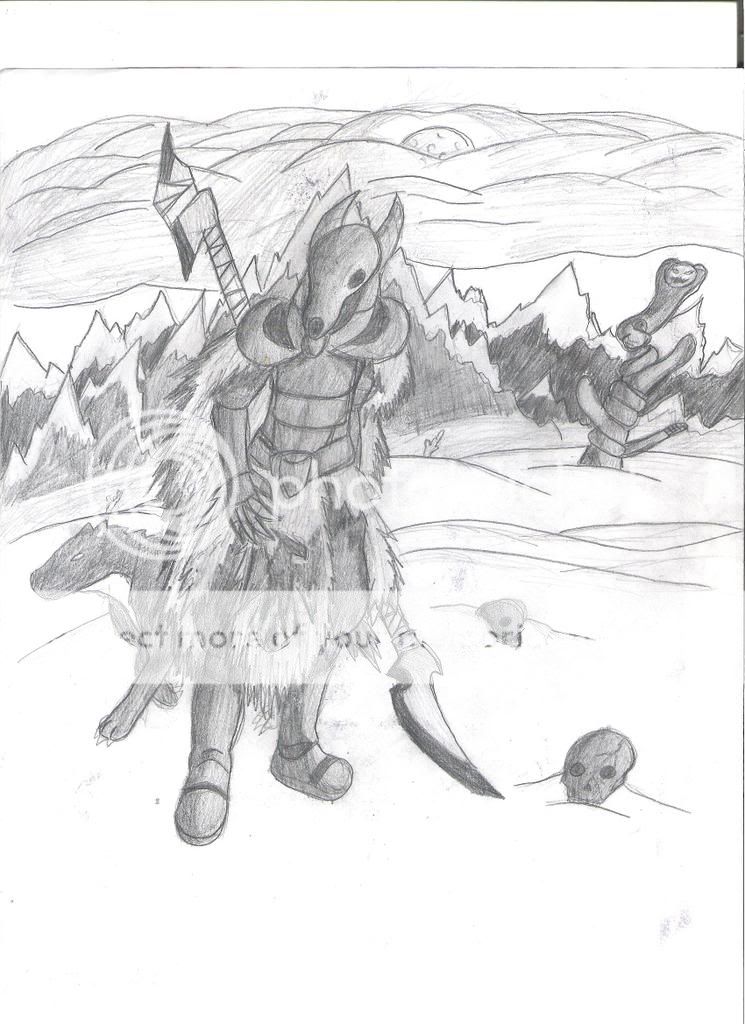 [Gemini Guard] Gemini About/Origins: The Gemini are a race of half men half Elf They origante In the wood land area and were said to start from a female Elf and a Male human warrior. After that they developed a sence of the forest and desert. language: Gemini have their own language and are said to be ablr to speak the language of the forest and animals. They also speack Common names : Gemini are named after their atributs as children They also are named from the forest Physique: They are a semi tall race the avrage is 6'10 They have tigthened mussles that make them look skinny. Males are a bit bulkier on the arms and abdomen area Ages:They live for a very long time Baby: 1-6 years Child: 7-12 Teens: 13-19 young adults: 20-80 Adults: 90-200 Old: 201-500 Eldest: 500- 1200 Personality [+ common allegiance]: They are nutral but you dont want to trespass on their lands because they are dangorus When provoked. They mainly keep to their societies abd are outcast to most of the world known as The legendary hunters that cant be seen Society: They revolve around a matriark And follow Her Rules. Weather its war or peace. Work: They mainly work as hunters or assassins. Or many work as hired hands. Love/breeding/marriage:They have only one true love Relations with other species: They mainly keep to them selves but if asked to a conversation they will talk to you. But dont wait around for them to talk to you. Religion: They belive in that the forest gives life and takes it away
Abilities/magic: They are fast and very acurate when it comes to a bow. Thats why they get a boost if they are a Hunter or archer. Not only that they specilize in what is called Green Magic Weapons/Armour/Items crafted by species: Hunter bows, posion arrows/darts, Long bows. anything that fires an arrow or a knife they probably made it. as for armor they wear scarfs and helmets that cover their noses. They wear light chain mail and brest plates. They are known for their cures of posion and other ailements Quote: The Gemini get a bost when with a bow ***+3 attack, ***+3 acrucy potions restore more health 20&#xmo;re life restored Fast **+ speed and evasion
|
|
|
|
|
|
|
|
|
|
|
|
|
|
|
|
|
|
Posted: Wed Jun 11, 2008 3:35 pm
The Drow
~They reside in the Underdark~
 The Drow The Drow
About/Origins:
The Drow are a race of Dark elves. It is rumored that they originated from surface elves, but hundreds of thousands of years ago they grew obsessed with the Cult of Lolth, the Spider-queen goddess. They retreated to live in the Underdark, and over the years their physique and personalities changed as well.
Names/language:
Drow names are usually first names (usually describing a certain attribute about themselves) and then a house name/family name.
They have their own language, similar but different to Elvish, which they often insist on speaking. However, most Drow can also speak common, and may find it beneficial to be able to speak Dwarvish and Elvish.
Physique:
Drow vary in shape, features, and hair color as greatly as humans do, though the vast majority share similar traits, which gives birth to the misconception among surface folk and others ignorant of the truth that all drow are the same.
The skin of a drow can be any shade from dark gray to polished obsidian, with the rare bone-white albino being the exception. The majority of drow have snow-white hair from birth, yellowing (if female) or graying (if male) and thinning with great age. Rare drow have naturally silver or copper-hued hair, although there are those who deliberately dye their hair silver (namely those who venerate Eilistraee, the Dark Maiden).
Most drow have red eyes. Others have green, brown, or black. Various shades of gray, even amber and rose-hued eyes are not unknown. All drow eyes tend to grow redder when they are angry or upset. Yellow eyes usually denote illness, disease, poisoning, or the presence of certain detrimental magics. Blue and purple (and all the tints thereof) are the most unusual eye colors, and usually denote human or surface-elven blood somewhere in the drow's ancestry.
Drow teeth may be black, white, or purple, and their gums, tongues, and throats pink, red, or purple.
Compared to the other Faerunian elves, drow are shorter, but they are strong for their size nonetheless. Drow females tend to be bigger and stronger than the males (average male height being 4'6", while females average around 5' tall). Taller Drow are usually a result of mixed blood. Both sexes tend to be lithe, slim, and graceful in build, features, and movements, much as other elves appear to human eyes.
Also, much as their surface elven kin, drow tend towards highly developed senses. Millennia of living in the Underdark, where one learns to find water by timing the echoes of dripping or running water, and learns to detect incoming rock shifts or collapses by listening for the natural grating and groaning sounds of unshaped rock has given the drow a superior sense of hearing. ). A drow’s long, slender fingers are highly sensitive, granting them an enhanced tactile sense. This allows them, among other things, to read subtle, Braille-like “secret signs” left by fellow drow on rocks walls, message stones, and other places.
Dark elven eyesight is also far more actue than a humans. Where the elves of the surface have excellent low-light vision, drow have adapted to seeing in conditions of total darkness. This darkvision is both a blessing and a curse, for though they can maneuver perfectly in dark environs, conditions of bright light tend to blind them temporarily, and otherwise cause discomfort and a hampering of their skills during continued exposure. There are drow who learn to endure and even overcome the effects of bright light upon their sensitive eyes, notably those who spend long periods of time on the surface, and wizards who must use light on a regular basis in order to learn and study from their spellbooks.
The drow sense of smell, however, is not particularly good. The all-pervasive smell of the rock and damp air all around, tainted by the ever-present mold and fungus spores and the scent of drow and slave bodies, is a strong background. Most drow have been exposed to strong incense and offering-burnings since infancy, which further serves to dull the olfactory sense. Genrlaly speaking at best their smell is a good as a human’s, but usually it’s worse.
A drow’s physiology also includes an innate resistance to magic, presumably from generations of exposure to the Underdark magical radiation. As with all elves, they also have a naturally highly developed resistance to enchantment spells and effects, and complete immunity to any magic-based sleep effects (the latter most likely stemming from the fact that, like other elves, the drow do not need to sleep in the sense that humans do, entering a form of relaxation and meditation known as the instead, though exceptions do occur, with dark elves more likely to truly sleep than surface elves.) Being particularly willful as a race, combined with these innate resistances to various magics has granted the drow an enhanced ability to fend off those who would try to subvert or overcome their wills through magic.
Ages:
Generally Drow have the same lifespan as most surface elves. However their back-stabbing way of life and often homicidal nature has a tendency to abruptly cut life spans short.
• Childhood: 1 - 49 years
• Adolescence: 50 - 79 years
• Adulthood: 80 - 139 years
• Middle Age: 140 - 189 years
• Old: 190 - 224 years
• Venerable: 225+ years
• Maximum Age +3d100 years
Personality [+ common allegiance]:
Drow are, on the whole, sadistic, arrogant, cruel, destructive, hedonistic, and treacherous. Their eternal game of advancement at the expense of others, which is encouraged by the spider goddess herself, has transformed the dark elves into a race of scheming backstabbers eager to increase their own stations by pulling down those ahead of them and crushing their inferiors underfoot. Drow trust no one and nothing, and most are incapable of compassion, kindness, or love (or at the very least, because of the aforementioned rampant distrust, incapable of bringing themselves to express such emotions). In a drow’s mindset, there is little room for friendship, for while they may secretly value other family members or acquaintances, their overly suspicious (paranoid, by some standards) natures taint any strong relations they may otherwise form. Many dark elves go so far as to be actively murderous and delight in the giving of pain.
While most dark elves neither honor their promises nor maintain personal loyalties once it becomes inconvenient to do so, their pride lends them a certain sense of style and an appreciation of subtlety. Drow can be courteous and urbane, even to deadly rivals. They enjoy surrounding themselves with things of beauty, giving hardly a thought to the cost. This fascination with beauty extends to the physical body as well, with drow of both sexes often displaying their physiques to degrees that other societies may find vulgar. Such is the strength of this fascination, that most drow children who exhibit physical deformities or deficiencies are slain.
The above personality traits categorize the majority of drow as evil, where outlook (alignment) is concerned. In addition, most drow tend to lean towards the chaotic end of the lawful-chaotic spectrum. In general, drow believe in doing what they want to do, when they want to do it--so long as they are capable of doing so in present company and conditions.
Of course, there are always exceptions to the rule. A rare few learn to look and grow beyond the above strictures that drow society has ingrained into the race as a whole. Some even go so far as to atone for any evils they may have committed, most often fleeing for a society that may be more nurturing or accepting of such personal “weaknesses” , or simply leaving their cities to eek out what sort of solitary existence they may. These rare drow are often still overly suspicious of other folk, but with the proper encouragement can eventually become trusted (and trusting) allies and friends, as well as stalwart champions for good.
Society:
Gender roles:
Lolth is the patron goddess of the drow, and they owe their existence in (or, to be precise, their banishment to) the Underdark to her. Given such an involvement in the origin of the dark elves, it is unsurprising that the majority of drow cities, and thus the majority of all drow, pay homage to the Spider Queen.
With her patronage comes her rigid dogma of female superiority and male inferiority. In these societies, females control almost all of the power, leaving males to pick at the scraps. Traditionally, females enter the clergy and serve Lolth as her priestesses, while males enter the military or (rarely) study wizardry. Priestesses are trained in the arts of war, and often squadrons and armies are led directly by the foul clerics of the Spider Queen, but normally they keep themselves out of harm's way and give orders to experienced male officers, some of which are kept in check by physical or magical threats or even outright magical domination.
Wizardry is the only real way a male in a Lolthian society can gain any true power. Even the most experienced male general and veteran of many conflicts might be killed for an accidental insult to a spider-priestess, but a wizard of equal status is far more valuable simply because they are rarer and more useful. Still, even the most talented male wizard is technically a social inferior to the lowest female cleric -- a fact that the male wizards resent greatly. In a world where they are doomed to servitude because of an accident of their gender, a male wizard who can transcend space and time and who must bow and scrape to female clerics who can barely muster the power to mend a scraped knee leads a frustrated existence.
There is no acceptance or idea of love in drow marriage, and as such In the home females have great physical, emotional, mental and political dominance.
The thirdborn male child is always sacrificed to Lolth, (unless an elder brother died before he is sacrificed).
Social ranks:
• Most drow societies have some sort of noble class, as social station is the most important thing in the world of the drow. In a Lolth-dominated society, the nobility consists of powerful, matriarchal Houses, with females holding all positions of power and responsibility in government, the military, and in the home.
Such Houses are led by a Matron Mother, who is most often the senior female priestess. The Matron's rule is absolute within the House, enforced by the priestesses beneath her (usually her daughters). All females of the mother's blood, in order of their age, follow in rank, although they wield no authority until they are trained and of age. The Matron's position only changes upon her death--often at the hands of her eldest daughter.
Below the daughters come the male officers of the House: the Weapons Master (leader of the fighters), (chief) House Wizard, and the Patron (current consort of the Matron Mother). These ranks may be combined, and even held by the traditional next rank down in the heirarchy: the male heirs of the House.
Male heirs are also ranked by age: Elderboy, Secondboy, Thirdboy, and so on (though the title of Thirdboy would technically fall to the fourth male born, as the third son is always sacrificed to Lolth upon birth; the one exception to this rule is if one of the elder males is killed before the third male child is born). They are not allowed to look at the faces of other drow, or speak unless spoken to or bidden. This treatment teaches them their subordinate place in drow society.
The next tier within the House heirarchy are the "war-leaders" of the House (veteran warriors, who lead House patrols, attack squads, and guards, under the command of the Weapons Master), and the House mages (under the command of the House Wizard).
Beneath these "blood" members and officials of the House rank is common warriors, its craftspeople, its servants, and its slaves. All ranks are decreed by, and can be changed at the whim of, the Matron Mother.
Unlike in human and other societies, drow nobles are significantly different than commoners, at least in terms of magical ability. For example, most drow nobles develop the ability to detect magic, levitate, or sense the nature of other beings through sheer force of will. This difference probably stems from the origins of most drow cities, which are founded by exceptional dark elf individuals or families, who then pass on their exceptional traits to their offspring, which become the noble class of the growing city. These abilities usually breed true, so commoners taken into the noble families to improve the bloodlines or expand the familiy can be parents to nobles with powers even though they themselves lack those abilities. Those rare nobles whose bloodlines are so thin as to not manifest the noble traits often carry magical tokens to make up for this lack; more common among the nobles are magic items that expand their abilities, such as in frequency, power, or versatility.
Unless wishing to be incognito, most drow nobles dress appropriately to their station, with fine clothing, superior equipment (even for dark elves, of which the lowest soldier usually has at least a masterwork weapon), and an almost-palpable aura of superiority, menace, and power. Commoners learn quickly to recognize an approaching noble and to stay out of their way when they are in a bad mood. In traditional drow society, commoners are only slightly less expendable than slaves; if given a choice of sacrificing a slave or a drow commoner to further a goal, a dark elf noble will choose the slave, but if the only way to succeed is to eliminate a drow commoner, that commoner is as good as dead.
Work:
• Like the people on the surface, most dark elves have some sort of work that keeps them busy, whether farming, crafting items, working in a shop, or other similarly mundane tasks. Most go about their work day in a similar fashion to surface folk, maintaining old feuds, engaging in gossip, and trying to support themselves and their families. Hovering above this mundane façade are the shadows of the Spider Queen's clerics, who nominally are expected to compensate merchants for their goods, but are fully within their rights to claim whatever they want in the name of the Spider Queen. Many times has a jeweler or gemsmith been reduced to poverty because his works are so greatly desired by clerics unwilling to pay; after mortgaging their homes and selling off their possessions to stay in business, these poor souls are often consigned to work in the temples or noble houses as little more than talented slaves to pay off their debts. Such cruel irony is a delicious form of humor to the spider-priestesses.
Unlike surface communities, drow cities never have a problem with unemployment or homelessness. Those drow put into such a situation quickly become victims, whether of slavery, murder sport by bored nobles, sacrifices to Lolth, or indiscriminate violence practiced against those who have no house, church, or family to protect them. Because of this grim spectre looming near all poor drow, most choose to sign on with the military forces of the city or a noble house, since they can always use more soldiers, no matter how poorly trained. After all, life as a soldier at least provides meals and shelter, and, despite the occasional risk of death in combat, it is a far safer choice than living homeless in the streets where the spider-clerics walk.
Love/breeding/marriage:
• Among the cruel and self-centered dark elves, love is practically unheard of. Long-standing mates live together for practical reasons, not romantic ones, such as complementary careers, physical attractiveness, a legacy of producing many female heirs, political influence, and so on. Families remain together only because it provides a shield against enemies from outside the family (even though intra-family rivalries can be just as deadly as outside threats). Parents see children as a means to more power and are willing to sacrifice those children (males moreso than females) if it proves the key to greater power. Children quickly lose their innocent naivety and learn the horrible truths of drow society, thereafter seeing their parents as strict tormenters who nonetheless keep the world's predators at bay until the children can fend for themselves. In the rare cases where mated drow develop some affection for each other, it is usually when the male is an excellent physical specimen, has provided excellent service, and has never caused embarrassment to the female. In these cases, the bond is more like that of a spoiled or insensitive human matron and her pampered lapdog; the male is a cherished pet that will still be put down if it misbehaves too much. Even rarer is an honest bond of love between a parent and child, which is usually only possible if the parent is somehow resistant to the pressures of drow society and passes this trait on to the child.
• Lolthian drow have a matriarchal society where inheritance of property, titles, and birthright pass from mother to daughter. Bearing children is a sign of the power of femininity and an ability that men can never have. Because of these factors, drow women normally want to have as many children as their slow elven birthrate allows. Because the females have all the control, relationships between men and women have few protocols, and it is the women who decide who their lovers are and how long the relationship lasts. The concept of courting as understood by humans and other surface races is almost unknown to the drow; in a society where males are valueless and life is worth little, having a lengthy process of becoming involved with another person is inefficient. Furthermore, the concept of a male pursuing a coy or disinterested female is an aberration, for it puts the male in a position of power and the female in a subservient role. Any male that practiced such a tactic would quickly be tortured and sacrificed to the Spider Queen for his impertinence. Instead, "courting" is the responsibility of the females, who pick their mates like selecting a good breeding animal, and the males are expected to comply. Many times the selection of a mate is the start of a deadly rivalry between different females as they fight over the choicest specimens. These males usually end up the worse for wear in the deadly games of the female, and more than once has a female "given up" on a male only to leave him skinned and dead in her rival's bedchamber.
• In a culture where females rule and males are little more than slaves, the idea of a female legally attaching herself to a single male for the rest of her life is an absurd concept. Marriage does not exist in Lolth's cities. Females take whatever consorts they wish and choose a new one when they grow bored with the old. If the dark elves could more easily fall in love, things might be different, but such concepts are ground out of the drow very early in life by the teachings of the Spider Queen.
•
Relations with other species:
The Drow are renound slavemasters, and especially keep slaves of their creation: the Moonmaw. However slaves can be prisoners of any race.
At best, the drow think of other races as merely laughable or contemptible. They hold low opinions of even their allies. They especially resent Dwarves, whom they shar eteh underdark with, primarily.
Against most other races, the only way the drow know how to act is with hatred and outright war. They have built up powerful city-states based on the notion that the path to power lies in the subjugation of lesser races and the eradication of those who pose a threat to their homes.
The true focus of drow hatred, though, is reserved for the surface elves. They act quickly and cruelly to seize any chance to bring pain, suffering, and death to other elves they encounter. Even evil-aligned surface elves that they come across are seen as enemies.
Prisoners captured in drow raids and battles are usually brought back to the cities to serve out the remainder of their lives as slaves. Orcs, goblins, hobgoblins, ogres, and other savage humanoids are common slaves. Most drow households have two to three such slaves for every drow in the house. The breeding and selling of slaves is a thriving business in drow cities, because these hapless thralls perform all menial and unskilled labor in a drow city.
Prisoners of certain merit, namely those such as surface elves (who are usually killed rather than captured) sometimes receive a special place upon the altars of deities such as Lolth. Such sacrifices are reserved only for these higher status prisoners in most cases.
Despite all this, drow do keep trade open with various other races, mostly due to the necessity of such ventures in a land like the Underdark where resources are oft times hard to come by. Drow sometimes even enter into truces and military alliegances with other races when the need arises, but these affairs are by nature temporary, as it's only a matter of time until the drow turn on their allies.
Drow on the surface, as a whole, have yet to form anything resembling a true society, for the most part living in small semi-nomadic bands or as singular outcasts and hermits. There are those who are well on their way to forming such, however, notably in areas such as Cormanthor where followers of Vhaeraun are carving themselves homes in the old elven haunts and ruins.
Religion:
While the Drow have many religions there two strongest are Lolth the spiderqueen and Elistraee the dark maiden. These goddesses oppose each other, with elistraees followers usually being benevolent surface elves.
Lolth is a cruel, capricious deity who is believed to be insane by many because she pits her own worshipers against each other. Malicious in her dealings with others and coldly viscious in a fight, she covets the power given to the deities worshiped by the surface races. She can be kind and aid those that she fancies, but she thrives on the death, destruction, and torture of anyone, including those of her own worshipers that have displeased her.
Eilistraee is the deity of good drow and those of that race who wish to be able to live on the surface in peace. A melancholy, moody deity, she is a lover of beauty and peace, but is not averse to striking back against those that would harm her followers. The evil of most drow causes a great anger to burn within her.
With the exception of Eilistraee, the dark powers of the drow pantheon are intimately involved in the lives of their followers, demanding absolute obedience and exclusive veneration in exchange for great power. Aside from the Dark Maiden, the gods of the drow pantheon care nothing for the fate of their followers except as it advances their own personal power. All but one dwell in the Abyss or other dark realms, embodying the banishment of the drow from the Lands of Light. Eilistraee seeks to redeem the fallen dark elves and lead them back to the great forests of the surface world that their ancestors forsook many millennia ago. However, the Dark Maiden is quite constrained in her actions by the power of Lolth and the other gods of the pantheon, and she acknowledges the need for individual drow to find their own path to redemption that heavy-handed interference on her part would preclude.
Abilities/magic:
Magic is an inherent part of drow life, both on a personal level, and on a societal one. Though traditionally feared for the divine magics that the priestesses of Lolth use to cow their own people and wreak havoc upon others, there is a strong presence of wizardly magic within drow society that should not be overlooked by any means.
The Drow have innate magical resistance to mind-altering spells (eg sleep).
They can very very see well in the dark (even pitch blackness) and have excellent touch
However they have bad smell and taste.
If they can
Weapons/Armour/Items crafted by species:
The drow are skilled craftsmen and able inventors, especially when it comes to practical (if brutal) items and magical influsions. Slavemasters have perfected the art of whip-daggers, an effective way of getting past the Moonmaw’s magical and physical resisistance.
Their most renound wartime invention is the Essence Injector:
Essence Injectors
These flat metal vials are generally positioned between the shoulder blades and fastened into place with a pair of leather straps that wrap around the shoulders. A thin needle runs from the vial and under the skin of the wearer, while a thinner wire runs up over a shoulder to dangle over the chest. When the wire is pulled (a free action), the contents of the injector are forced into the body. An essence injector is normally worn as a way for someone to quickly consume an emergency potion.
Their most impressive invention is the driftdisc:
Driftdisc
Drow Matrons and other prominent drow use animated, 6-foot-diameter stone disks to travel in state for important ceremonies or occasions. Every so often an eccentric drow may even use a Driftdisc as a bed. The disc can carry up to 300 pounds and may fly at a speed of 30 feet with perfect maneuverability. Unattended Driftdiscs customarily float 3 feet above a horizontal surface.
Each Driftdisc is activated by a different command word. If the device is within voice range, the command word activates it, whether the speaker is on the disc or not. The disc can then be controlled telepathically by the creature that spoke the command word. Mentally commanding the disc is a free action, and the user can do so at a range of up to 120 feet. The user retains control of the disc until he uses another command word to deactivate it. At that point, another creature could speak the activating command word and take control of the Driftdisc.
Quote: Abilities*Attack Bonus of +1 when using long range attacks
* Status spells (as in paralysis,posison) have limited affect. Roll the Star dice in addition to whatever dice needed. If star, it has no effect.
*Sleep speels do not work.*Can see in the dark *can sense vibrations etc
p.s _ i found this while browseing around deviantart. It shows how drows have no sense of humor-lol
http://rollerboyjeremy.deviantart.com/art/Drow-can-t-take-a-joke-23084729
|
|
|
|
|
|
|
|
|
|
|
|
|
|
|
Posted: Wed Jun 11, 2008 5:05 pm
The Dreki Race Sheet DrekiAbout/Origins:Little is known about the ‘Drekki’ as they are a rare breed and often keep their real race identity a closely guarded secret. It seems that they are a race of Dragons able to take humanoid form, although it has been argued as to whether they should be classed as a humanoid race or simply the draconic beasts themselves. The name ‘Dreki’ was given from old town legends of dragons turning into men. It is more a definition than a species name. The Moonmaw - a race religiously tied to stories and facts of the Ancient dragons of pre history - view the Dreki as a proper race separate form normal dragons. The Moonmaw view the Beast dragons as watered-down, inferior evolutionary ancestors of the intelligent and benevolent dragons of prehistory. However their view the Dreki as something else entirely - closer to the original dragons. They believe that this is proven by their ability to transform into humans (or the illusion of one). The Dreki are born, apprently at random, from normal Beast Dragons. Names/language: The Dreki seem to learn whatever language they encounter first in their ‘human’ form, simply out of a necessity to communicate - thus they often speak Common. Their true language is that of beasts, and as a result they can communicate with most animals. They seem to be fast learners when it come to language though. Their natural language is the beastly draconic language of intelligent dragons. Physique:In their true draconic form, they look like normal dragons, although have a tendency to be a little smaller and more graceful in build - some likening them more to horses in build than lizards. They vary in draconic species, like all dragons vary, and are the species of their draconic parents. In ‘human’ form they look genrally human, but are prone to erratic and elaborate eye colours and hair colours that mimic their original scale colours. Their nails and teeth are often tough and a little sharp and they are prone to unusal and elaborate birth marks and skin markings. However this is rarely enough to blow their cover and they often integrate with humanoid species very very well, without suspect of what they really are. However inexperienced Dreki’s unusual social habits can be a jarring indication of their essentially beastly nature, until they learn to change. Their human forms vary in size and build, but again mimic their dragon form (large hefty dragons being of large hefty human build etc). Their internal organs and physique in this form mimic a dragons’s in nature. Their blood and bones have magical properties. Their blood shimmers when cut and is a dark red. Their bones structure makes them very tough and they have incredible endurance - able to take a beating for a very long time before death. However their defense if nothing special. They are still hurt, they just keep on going regardless of injury. Their skulls are particularly strong. They have a natural affinity to the elements of their dragon form. So for a water dragon they have great potential skill with water magic. For a fire dragon, water is it’s weakness. They also have an innate skill in trickery, can learn status magic (eg sleep, paralysis) quickly, and have low level psychic ability. They are by large very intelligent and spiritual. They have a great daytime eyesight- able to see very far distances. And have excellent smell. Their hearing, touch and taste are normal. They cannot see particularly well in the dark. They are genrally carnivorous, rarely eating anything else but meat. They have no qualms with cannibalizing dead corpses. They have distinct mating seasons, meaning that for a couple of months a year a Drekli can be difficult to live with and driven to have children XD Ages: Their ages vary but are genrally draconic and thus very long • Childhood: 1 -50 • Adolescence: 50-100 years • Adulthood: 100 - 800 years • Middle Age: 800- 1300 years • Old: 1300 - 2000 years • Venerable: 2100+ years • Maximum Age +5000-8000 years - the oldest dragon or Dreki has not been recorded Personality [+ common allegiance]: Due to lack of sources over the Drekli, it is assumed that they vary in personality greatly. However they seem to wish to integrate with humanoids rather than remain with their dragon parents and have shown themselves to be naturally spiritual and very intelligent. They are often proud when it comes to fighting and will rarely ever back down form a challenge, even if it means their own death. The majority of Drekli, like dragons, are kleptomaniacs - almost obsessively collecting beautiful (and shiny) objects to store away in secret stashes. In addition, the Drekli seem prone to a personality disorder of an obsession on some kind or another - whether this is of treasure, food, sex or anything else. This can make them a little difficult to live with. Their allegiance varies widely. Society:The Drekli have no organized society to speak of, but their Dragon-upbringing often brings some common values: Gender roles:Their view of gender roles is pretty simple and traditional. Females have the key mental and short term domestic power and raise children. Males have physical and short-term domestic power and are there to mate and fight. Social ranks:Drekli, like dragons generally live alone, isolated from the rest of their kind (with the exception of mating). In mating season the female is of the highest social rank until the males have stopped fighting and a victor claims her, thus making him the highest soecial rank. Should dragons or Drekli gather, the dragon of their highest age or of the greatest fighting experience is of the highest social rank. A Drekli, like a dragon, gains prestige and respect by the more fights it has won. Thus battle scars are both values and penalized. Work:They generally don’t work, stealing or doing odd jobs for rewards instead. However many Drekli’s expensive habit of collecting treasure forces them to seek paid employment, unusually in fighting or craftsmanship. Love/breeding/marriage:The Drekli have set mating periods (usually a few months in spring) where they are overcome with the desire to seek a mate. In dragon form they seek out other dragons, in human form they seek out anything available. They seem to be able to produce halfbreeds quite easily, but unless these halfbreeds are half dragon (or made from mating with another Drekli), they cannot turn into dragons. They don’t view marriage as anything special, and often take more than one ‘husband’ or ‘wife’ if they do. However, Drekli are far more capable then their dragon counterparts to express genuine feelings of love. When they fall in true love, they believe in ‘til death do us part’. (a positive sentiment when the relationship works out. But when it doesn’t one spouse often end sup murdered). Relations with other species:The Drekli, despite being often isolated and lonely individuals when by themselves, seem to have a need to integrate with other humanoid creatures. As a result they seem to have good relations wit almost any species that accepts them - good or evil. However their love of fighting, pride in doing so, and various ‘quirks’ mean that they can put strains on these relationships. If their true identity is discovered relations often turn sour. They despise Dragon hunters. They also have a slightly odd moral code when it comes to murder sometimes which can be brutal and distasteful to some other species. Religion:Their religion seems to vary with each individual, and they keep it a closely guarded secret. However they seem to have an affinity with spiritual and physic forces. Abilities/magic:The Drekli tend to follow the element of their dragon species in magic, but are inherently good at magic, especially status-affecting magic. They are also well tuned into spiritual forces, lending them to become great necromancers or elementalists. Their physique is strong and their endurance astonishing. Weapons/Armour/Items crafted by species: n/a ---Race additions to character sheet-- Quote: Racial Skills: Good: *Ability to turn into dragons. When they do their stats go through the roof and they can throw their weight around. However their skill and accuracy drops drastically and they are unable to do complicated magical attacks or anything of that sort. After transforming into a dragon their energy is greatly sapped and they are out of it for a while. Thus they do it rarely. *Huge endurance (can last blows but Not high defence) - add 4**** stats to health endurance. * +3 to HP *If the Dreki is using its own element (eg fire) - RE ROLL the lowest dice. Add this new score to your existing score. *great day vision *great sense of smell *able to learn status attacks quickly Bad: *Shielding goes to 0 when attacked with the element that opposes the Dreki’s element (eg water on fire). *When using healing potions roll the ‘SPECIAL CHEST’ dice. If you roll a 6 the potion has no effect. *cannot see well in darkness *After a dragon transformation, Hp goes down to 2 When in Dragon form: Shielding +3 (5) Attack Bonus of +3 to all attacks of it’s elements Attack bonus of +2 in melee attacks -But- Shielding down to 3 when attacked by long range - Dragon form can only be maintained for 4 turns maximum. After each turn roll the SPECIAL CHEST dice. If a 6 - dragon form is lost (hp goes down to 2)
|
|
|
|
|
|
|
|
|
|
|
|
|
|
|
|
|
|
Posted: Wed Jul 02, 2008 6:26 am
Elves
The Elves -(aka ‘surface’ elves or ‘light’ elves)
About/Origins:
The elves are rumored to be one of the oldest races in the world and are the distant ancestors of humans - having come first. It is also rumored that they were the first race to learn language and writing, although the Moonmaw’s religion insists that it was the dragons that taught them these skills and who cared for the elves, and that the humans came from elves later.
They greatly appreciate Art - especially music and fine art and they often live cultured lives. They are famous for their expert craftwork and their skill with a bow. They’re generally good and often extremely wise due to living long lives (longer than the Drow).
They were what the Drow used to be before the two branches of the race split off and the Drow followed the goddess Lolth to descend into the Underdark. From that point on the two were mortal enemies, although the Elves seem to be more willing to co-operate with benevolent Drow than the Drow are willing to co-operate with manevolent elves. Elves still view themsleves as superior, however, and can be quite condescending and bitter towards Drow and those the Drow associate with.
Elves have been criticized as being ‘lofty’, proud and arrogant, although this is simply a perception often fuelled by jealousy. Famously the Dwarves dislike the ‘hoity-toighty’ elves, and many humans feel threatened by their ‘superiority complex’.
Names/language:
While many don’t appreciate this, the Elvish language is different to the drow language, and often very complicated and musical to the ear. They also have their own distinctive language of writing, different from the Drow written language.
They are skilled linguists and able to learn any language very quickly.
Translator: http://www.coveworld.net/eberron/aerenal_translator.html (thanks b10!)
The names are usually descriptive, either showing a particular characteristic, the lineage of an elf (eg ‘son of Endor’) or simply a nice sound. Their second name is often indicative of their ancestry and House.
Physique:
Elves vary in shape, features, and hair color as greatly as humans do, though the vast majority share similar traits, which gives birth to the misconception among surface folk and others ignorant of the truth that all Elves are the same.
In facial features and build, while taller, they are similar to the drow - although they are described as appearing all around ‘softer’ than the Drow. Genrally perceived as beautiful and graceful.
The majority of elves are as tall or taller than humans, and females are often just as tall as males. It is a misconception that all elves are blonde - while the majority are fair haired, many have brown or black hair or even red. Elves also come in many sub-breeds. While the majority are the ‘light’ elves that live anywhere in great hidden cities, there are also wood, mountain and ice elves which are different types. For example, wood elves are famous for their green hair, and the ice elves are generally smaller and almost albino in complexion.
They have none or very little facial hair, and traditionally wear their hair long and straight on both genders.
All elves have pointed ears and the majority are fair skinned and often pale (unless they have cross bred). The dominant eye colour is blue or green, occasionally in pinks and purples. Often they are a bright or vivid colour, which also betrays them as being not human.
They always of a lithe, athletic and graceful build, but are nevertheless strong. They are also described as very handsome or beautiful as a rule -almost unearthily so when viewed by humans.
After they reach a certain appearance of age (usually around their mid 30s in human comparison) they stop ageing as quickly. While it can take many many decades to age even a few years (compared to humans), it slows down further after this point. Thus, if one sees an elf that appears elderly they are very very old. Most elves die while appearing ‘young’. But, like any creature that lives for a long time, their eyes’ wisdom often betray their age.
They move gracefully and beautifully, and it is famous knowledge that elves do not sink in thick snow - indeed, they make only the faintest of footprints, leading them to be very hard to track. This grace had furthered the idea of their unearthliness and almost spiritual appearance. An elf in how he moves, speaks and acts is almost always very measured, calm, and dignified. They are proud beings, but kind ones.
Elves have highly developed senses. While their hearing and sense of touch is not half as good as the Drows’, they are nevertheless keener than a humans. Unlike the drow, they have a developed sense of smell and taste, often leading them to enjoy subtle and sweet aromas and high cuisine.
They cannot see in the dark well - but can see better than humans in low light. They have very keen eyesight in daylight.
Elves - like the Drow - do not sleep, but instead go into a meditative state known as ‘Raverie’. But the Drow are far more likely to truly sleep than the elves. This meditative sleep can almost imitate death - with greatly wounded or aged elves sometimes choosing to slip into this comatic meditation to conserve their strength for even decades. They are completely immune to any magic based sleep spells. However, they can be affected by other spells that may affect their will (eg paralysis) [whereas the drow are resistant to these out of stubbornness].
Ages:
Surface Elves have a similar, but longer lifespan than their Drow brethren, and once reaching a high age, have known to live on almost indefinitely.
• Childhood: 1 - 54 years
• Adolescence:54 - 96 years
• Adulthood: 97 - 249 years
• Middle Age: 250 - 376 years
• Old: 377 - 450 years
• Venerable: 450- 695 + years
• Maximum Age +4000 years or more
Personality [+ common allegiance]:
Eves are on the whole graceful, dignified, proud, spiritual, artistic and wise creatures who are almost always benevolent with a high moral character. They believe in freedom, equality and peace, but nevertheless make great warriors. They value love and compassion greatly, although their reserved nature can make them seem a little cold to outsiders at times. To an elf, friendship and loves lasts forever.
Their distaste of the Drow stems -partly from the grudging fact that the Drow betrayed them by following Lolth, and mainly from their moral disgust at the Drow’s evil, sadistic and backstabbing character.
In war, the elves never revert to torture, but have been known to extract answers through complicated mind games that have driven lesser beings insane as a result. Thus they can get the job done, even if they are reluctant to create misery. In war, they are brave warriors, and while as a race they seem to favor long-range weaponry, their soldiers span all skills. However, while magical, they are not quite as prone to sorcery as the Drow are. While the highest members of Drow society are madges and sorcerers, the highest members of elvish society are often physical warriors or diplomats.
The elves hold and appreciation of perfection, and thus children born with deformaties - while not physically ostracized per se, nevertheless find it hard to get a foothold in elven society. The same applies for those of ‘lesser intelligence’.
Their common allegiance is good, but in addition there is rarely ever a ‘chaotic’ elf. Elves value rules and order greatly, even when evil.
Elves have a close affinity with nature and greatly value privacy. Their cities are often stunningly beautiful pieces of craft and artwork laced with magic, but are very secluded and hard to find - usually deep in forests or mountains. This wariness for one to not breach their privacy has led to the misconception of them being cold beings unwelcoming to ‘lesser’ beings. In reality, they just take a little time to warm to newcomers, as their relations are ones built upon for centuries and unused to newcomers
Society:
Gender roles:
Generally speaking, the Elves live in a society in which the genders are equal. Both amles and females can equal retain high political positions, and women have even become famous in war. Generally, though, there is a certain sense of chivalry among male elves, that leads them to the desire to protect female elves. Similarly, the long pregnancy of female elves often puts a halt on their ambitions outside the home until the baby is born. Often the females are the ones that follow magic (typically more commonly than men), if they choose to.
Be that as it may, the equality seems to be more than humans’ is typical of.
Social ranks:
In their society, elves almost never commit crimes, as they see the long term damage of such acts. Thus, for the common elf, their internal structure is one that some would describe as Utopian - with not real police force or structure of suppressing or ‘caressing’ their population. Instead, most political and social structure is focused on the outside world and how to assist others if needed and preserve their privacy. Mutual respect and family ties keep the internal structure running smoothly for the benefit of all inside.
Generally there is a structure, though, that pervades this utopia. Society is structured upon ‘Houses’, which are extended family units and relations that can track back hundreds of thousands of years in lineage. The hierarchy of these houses is structured by two factors primarily : Age and Prestiege - thus they are somewhat shifting. Generally the oldest Houses are the most respected, but if a Houses’ members also gain prestige through wisdom, bravery and victory in war and learning, the whole house can rise up the hierarchy. The former is generally more stable than the latter.
The members of highest prestige (usually from the highest houses) sit on the council that governs the city, and similarly the highest members of this group sit on the grand council that ties many cities together.
Because the position of houses (especially in the middle and lower ranks) are so fluid and changing, elves generally do not disrespect other houses, out of wariness that they would rise in position.
A negative factor in elven life - especially with regards to foreign policy outside of their cities - is that they hate change. Thus elves are often frustratingly conservative and permanent in their decisions and outlooks.
Some critics say that when elves step in to take part in stopping human conflict, it is more out of a desire to prevent change than a desire to do good.
Work:
Elves are passionate purveyors of perfection, in all aspects of work. No matter what their job, elves value beauty and practicality in their items. (thus, even the elvish sewer systems are some f the most advanced and beautiful in Emania!)
However, no matter what their past-time
Love/breeding/marriage:
The elves, living for many a year, value the notion of monogamy - of finding a true love that one can cherish thought these long lives. To an elf, a love is a part of one’s soul, and should become this. Thus multiple wives are not encouraged, and while divorce is frowned upon as a failure, it is acceptable.
Generally speaking, Elves frown upon mixed breed marriage and lovemaking, but it seems to happen frequently (esp among elves and humans). Elves who partake in these unions are often forced by pride to move form the elven cities and into the human lands.
An elvish marriage must be approved by the father and -to a lesser degree- the members of that elf’s house. Typically, elven courtship can last decades before the union is actually achieved.
Typically elvish love is strong and compassionate, but elvish pride subdues it’s expression. Therefore, small movements and hints are the expression of love in company, and great romance is expressed in private. Thus, if the couple spend enough time together, they appear almost telepathically linked.
The death of a spouse or child is the greatest grief in a family, and is mourned for many years sometimes. Elves rarely remarry if they have experienced this ‘true’ love and marriage. A second marriage is often one that provokes controvesy.
Relations with other species:
Generally elves are private creatures, and though they will interact benevolently with almost all races (aside from the drow and ‘monsters’ like orcs/goblins etc), they often view them with a covert suspicion and eagerness to get them away from their city as soon as possible. As a group they dislike outsiders, but as individuals they are often very friendly.
The elves have always had the greatest friction with the Dwarves - due to clashing ideologies (not least their widely different physical appearances and values) - they often descend into petty arguments when made to interact.
Elves despise ‘monstrous creatures’ such as orcs, goblins, trolls and bugbears and other ‘evil monsters’ and will generally kill them on sight.
Elves and the Drow despise each other, and much bitterness exists between them. To the elves, drow are an abomination. They are each other’s greatest enemies, and on the rare occasions when an army of Drow surfaces, you can be sure that it is to attack an elvish city. However open warfare is extremely rare. Instead, the two races have seemingly entered into a ‘game’ with one another, to catch individuals of either race and hold them prisoner. The elves usually find and catch Drow spies and humiliate them in their city with mind-games and by striping their dignity and famous pride. The Drow usually catch any elf they can see and drag them into the Underdark to torture them, enslave them, or offer them as sacrifices to Lolth. Sexual relation have been heard of happening between the two races before, but often this has been fuelled by the excitement of breaking taboo rather than any feelings of ‘love’ between the two (mainly because the Drow are next to incapable of feeling love).
Elves, while private, will step out of their cities and offer assistance to other races when that race is in dire need. Often the alliance of elves have led to a decisive victory in battle. However Some critics say that when elves step in to take part in stopping human conflict, it is more out of a desire to prevent change than a desire to do good.
Finally, individual elves are commonly seen wandering the land as ‘heroes’ to do good and gain prestige. It is in this environment that the conservative, suspiciously private nature of the elves can be softened.
Religion:
There are many reigions of the elves but there are two main religions that the elves follow.
The first if the following of Tal-Allustiel - a chaotic god of good that protects the elves and pronounces the ‘doom’ (or Fate) of each highborn elf. He’s pictures as a tall, majestic, beautiful male elf. His followers believe in permanence, conservatism and the all-pervading force of fate, and especially believe in protecting the forests. The religion is organised by loose temples and priests that wear silver circlets. They are closely tied to the political organizations of the elves, and every 10 years they organize great meetings of all important elves to discuss current affairs.
The path of an elf's life is usually foretold, and this prediction invariably comes to pass. Elves believe as a race they are bound up with the fate of the planet and magic on the planet. As such, they have a role to play in the fate of the world, one over which they have no control. His mother upon his birth often pronounces an elf's Doom. If she does not, most Elven villages have a Doomsayer, who at some point in the elf's life, often upon his coming of age, will pronounce the elf's Doom. From this prediction, the elf is given a Doom Name that he keeps private. Elves hold that the later an Elve’s Doom is pronounced, the more important and often the more tragic his path will be. The pronouncement of a Doom is usually cryptic and difficult, but offers some guidance to the elf, who generally seeks to fulfill his Doom, rather than avoid it. This decision is a result of the ages-old teaching of the elves that if one flees his Doom, it will undoubtedly find him all the sooner. A dog being tied to a cart can either walk willingly behind it or be dragged. Either way, they teach, the final destination is the same.
The Elhil teach that Doom is counter to the life of humans, which is free. While humans do not embody magic and are not intrinsically tied to the fate of the world, they are unfettered and may choose their own life and their own path; many elves envy the "young race" because of this, calling it the "free Doom." Many critics state, however, that the elves have constructed their Doom philosophy and chose to be bound by it. If they wanted, they could be as free as humans.
Because an elf's Doom is often sad or tragic, many unparalleled poems have been written about it.
Upon receiving their doom, they are given a secret ‘Doom name’.
The second religion (or rather philosophy) is the Elhil teachings. It’s the viewpoint of the small but significant minority of the elves. The belief is that there is one amoral force in the universe that encompasses all morals and varieties together in a ‘great sphere’ of existence. Different facets of power are taken by different beings of different moralities, and it is trhough not appreciating the interconnectedness of all these different facets that war is created. They believe that is races hate each other, it is only because that race is hating a part of themselves - and thus grow angry because of the shame of recognizing this part of themselves. Thus, this is why the Elves hate the Drows so much, and visa-vera.
Thus, those elves that follow Elhil tend to be a little more tolerant of other races and change than the Tal-Allustiel elves. Especially with regards to the Drow.
The Tal-Allustiel is the dominant religion.
Abilities/magic:
Eves are often very spiritual, magic intrinsically supports all parts of elvish life. However this is not translated into elves becoming madges quite as much as it is with the drow. Elves are primarily warriors and archers, but those who do become madges are often extremely skilled and powerful.
Weapons/Armour/Items crafted by species:
The elves are magnificently skilled crafters, often creating stunningly beautiful and powerful weapons. Their types of technology are far too numerous to mention here.
Unlike the drow, who are happy to make a decorative item that has little to no practical utility, the elves value utility above ascetic beauty - another reason why there weapons are so coveted by most races.
They are especially good metal workers, clothiers, painters, poets, sculptors, and builders. An artifact made by Elven craftsmen is usually recognizable instantly, because it likely has a delicate and unique shape, intricate detailing, and superb functionality.
Quote: ---Race additions to character sheet-- *Shield = +1 (to normal - eg if 2 --> it’s now 3)
*Attack bonus of +2 when using long range attacks
*Magic point-loss is halved (eg if you would normally lose 2mp, now you lose only 1) - applies to elvish clerics and elvish madges*sleep spells have no effect *good hearing & smell
|
|
|
|
|
|
|
|
|
|
|
|
|
|
|
Posted: Wed Jul 02, 2008 1:06 pm
Dwarves Race Sheet The Dwarves (aka 'Dwarvenkind')About/Origins:Not much is known about there origins, like their language. According to dwarven mythology, They were created by the God of Earth, out of stone. Because of this, dwarves have the custom of being buried in stone, when death has taken their life. This has also lead to the belief as to why they are so skilled in bulding and forging. Their architcture is marveled and famed by even the elves, and their forging skills are to be reckoned with them as well. Names/language:The language of the dwwarves is mysterious and widely unknown. Though the Dwarves do indeed have a language, they rarely speak it, even amongst themselves, let alone around others. They speak the common language, rather, but they have been known to speak in their own tongue in battle, but it is merely a rumor. Their names are almost always in the common language, not wanting to reveal their "true" name. They do always have their Dwarvish roots, however, with hard consenants and the look and sound of droning, for lack of a better word. First names usually describe a major factor in personality, while the last name usually directs as to which clan they are in, after coming of age. Physique:The Dwarves are a short race, about 1/2 - 3/4 the height of the average human. However, they are by far more stonger and any of the races in brute strength, but can be somewhat slow due to their bulk. For this reason, they are great to have in combat. Both genders have beards, though in some areas, it is rumored there are no Dwarf women. Their thick fingers are surprisingly nimble, allowing them their skill in crafting. Ages:A Dwarfs lifespan is similar to a humans, however, they live much longer. They do not reach an old, old age, like Elves or Drow, though. • Childhood: 1-13 • Adolescence: 14-20 • Adulthood: 21- 40 • Middle Age: 41- 64 • Old: 65-89 • Venerable: 90+ Maximum Age +300 Personality [+ common allegiance]: Dwarves tend to be straightforward folk, telling things how they are. Sometimes they can be somewhatrude, from the reciever's point of view. This may be because of how Dwarves tend to be a very proud race of people. However, in most cases when there is a favorable guest, they will be very courteous, and almost always in good humor. The are a rather kind folk, overall, but they have their weaknesses. One such weakness is their love for gold, silver, gemstones, and anything else precious and pricy. In this case, they will tend to be rude, even to guests, but they hold their tempers very well. Society:Gender roles:- The males tend to do most of the work. Females tend to stay home and do all the housework, taking the most care of their children, if at all they have any. The father, if he has a child, will teach the child, if male, the roles of the male. If a female, the child will stay home and her mother will teach her. - Males, as said before, tend to do most of the work. This includes hunting, farming(unlikely), crafting weaponry, armor and tools, politics, combat(defending, fighting, etc.), mining, etc. - Females do all the at-home work. Cooking, cleaning, healing, farming(rarely), and other such tasks are assigned to the female. Social ranks:- Each dwarf is in his or her own Clan, with a symbol representing each. Generally, each clan is grouped together in one large population, making up a small city or large town.Of each of these clans, a clan cheif is apointed; out of popularity, respect, and/or bravery in combat. From these, the clan cheifs apoint a king to rule. This is based off the same, but the king tends to have more intelligence and wisdom, as well as more muscle. - Social status is determined by respect and trade. Work:See gender roles. Love/breeding/marriage:- Love for a Dwarf is a cherished part of his or her life. There are, in fact, few females Dwarves, and even fewer children. Thus, when a male Dwarf and a female Dwarf marry, they do so for life. This make take years for the Dwarf female to choose a mate. - The male, when trying to attract a mate, will either boast about accomplishments often when around the female, or stay silent, but "show off." Once in a while, a male Dwarf will actually confess his love, though not directly. This way tends to work better. - For the female, she is given the task of choosing which male to mate with, if a choice occurs. Determining can be difficult. This is why it can take a long time. Normally, the female Dwarf will "date" between two or three she thinks would be a good husband. -Children are a cherished part of the Dwarf society. A family with a child is often held in high respect, regardless of trade. Because there are so few, the children are defended fiercely from any that might cause them harm, even amongst each other, but this is rare. Relations with other species:Dwarves are at ease with almost all of the races, with the exceptions of the Drow, Dreki, and Elves However, If an Elf or Dreki of high regard enters any of their cities, they are welcomed like any other. The Drow are, to the Dwarves, scum of the earth. Religion:Not much is known about the Dwarf religion. It has no real name, known as the Dwarf Faith. Having several gods, they build many temples to honor them all. Each clan tends to have one main god, but they honor them all, regardless. Dwarves believe in a life after death, and they can only go to the afterlife after they have been buried in stone. Abilities/magic:Dwarf women tend to be great healers and clerics. The males aften are skilled in the use of Earth magic. typically, however, they rely on an axe or hammer to do the job. Dwarfs, because they are so strong of body and mind, are immune to most poisons, sleep magic, and psychic magic. Weapons/Armour/Items crafted by species: - All types of weapons, preferabbly axes and hammers - Most often chain and plate mail, experty crafted for mobility and protection together - All types of accessories, usually charmed for extra boost to strength, edurance, etc. ---Race additions to character sheet-- Quote: Immunity to poison & sleep +2 to attack when weilding an axe or hammer sheilding +3
|
|
|
|
|
|
|
|
|
|
|
|
|
|
|
|
|
|
Posted: Wed Jul 09, 2008 11:06 am
The Sirens
The Sirens (aka Nagas)
Images: A naga women in the more ‘guman’ top half form
About/Origins:
Sirens are famous in most cultures as seductive, beautiful and demon-like creatures. Often confused with Mermaids -who are blamed for many siren attacks, or dismissed as the fantasies of those who traverse remote areas, their origins and existence are shrouded in mystery and taboo.
However they do exist, albeit in seclusion. Part of the reason for the disagreements and mystery as to their existence is because they are, naturally, brilliant at disguise and ruthless in execution. Their bodies are able to shape-shift to a limited degree. They can maintain a human form (the most common form). Outside of this from their shifting is more limited - only able to do limited things like change skin and hair colour and ‘grow’ fins etc on their tails to mimic mermaids.
Sirens can be found in any remote landscape, but are most commonly found on islands surrounded by the sea, or deep in deserts.
They can summon up and make music even without instruments and are famous for their stunningly beautiful and often deceptive singing voices. These voices are deadly, for they can manipulate the minds of those who hear them, often luring them to their deaths as a result.
They are also regarded as harlots and whores, because they prey on men, primarily - both sexually and literally. They are seen as ‘cannibals’ because they kill and eat whatever men (or women) they lure.
Full, original sirens are only ever female. If they breed with a male of another species, their children will usually be full sirens (a magical ‘glitch’ of DNA so to speak). However, male sirens born as a result of this are possible, although rare. Males are usually killed at birth.
Names/language:
Siren names work generally much like human names. However in addition to this ‘physical’ name, Sirens have a ‘musical’ name - a specific set of notes or sounds like a whale’s call that is designed to travel great distances. This is untranslatable, and designed by the mother from an early age.
Their language is also like this - the surface language is Common (or the language of the creatures they ensnare), but underneath it is punctuated with music and whale-like sounds that express deeper emotions and can carry greater distances.
Their accent is usually a mimic of whoever their prey is. Thus those by the sea often speak quite like common sailors.
Physique:
In their true form, sirens are what those in the desert areas call ‘Nagas’. They’re often sexy and beautiful, curvaceous women on top on their torso, and a snake where the legs would be. The snake body is made of often smooth scales, and the colour of the tail usually tints the colour of the skin of the ‘human’ part. The hair often matches the tail colour or the eye colour, although not always. Their snake bodies are often patterned, and the patterns often carry up onto the ‘human’ part also, especially across the arms and stomach. However this is not always the case. Since nagas forms are often changeable, some choose to have a more ‘human’ top half in order to better lure men.
Their height varies depending on their tail length, of course. Usually they carry themselves upright, very much like as a snake does when it raises its head. However to gain speed they lowered themselves so they are slightly off the ground, as if swimming. In their naga form they moves like a snake slithers. They are very good swimmers, using this movement as a sea-snake or eel does, or - should their grow fake fins to mimic a mermaid- they swim like a mermaid. They can be anything form 10- 25 feet long.
While Sirens do not eat their prey whole (usually reverting to human methods to kill them), they can unhinge their jaws to swallow/eat large things, or latch onto an enemy to bite them.
Sirens’ teeth change into long fangs when angered or about to attack/eat. This, coupled with an unhinged jaw can make for a fearsome appearance. Normally, they only have sharp fanged canine (smaller, but still noticeable even I human form). These canines are actually poisonous, but the siren herself decides when the poison is squirted out. The poison causes paralysis and -if left untreated- eventual death, as it stops the lungs working. The Siren’s blood acts as an antidote.
Sirens are omnivores - they need fruits and such for nutrition - but survive primarily on fresh, uncooked meat. They get this meat by luring and killing humans or whatever race they can find. They culturally prefer to eat ‘intelligent meat’ - and believe that they would lower themselves to hunt ‘stupid’ animals like cattle etc.
Sirens have very good haring and seem to thrive on Music. It is rumored that should a siren be starved of music, she would wither and die like a plant without water. They also seem to be very tied to a specific location, so that if a siren’s clan has lived beside the sea, to leave the seaside would actually cause physical illness for an individual siren. The same is said of those sirens that live in the deserts or the mountains - to leave that type of environment could harm them. However, with treatment, it is probably possible for a siren to overcome this homesickness illness.
Sirens are primarily female, with 98% of sirens born being female, and the 2% of males often being killed off at birth. They are mammals and sirens carry the baby for one year before it is born.
Siren women are very strong - surpassing the average human male in strength easily.
Siren children and adolescents mature quickly, and there are no taboos in siren society about a young adolescent’s sexual conduct.
Ages:
Sirens can live to be very old when they manage it (often if they are magically talented). However most live to be a little older than humans. The most important difference is that sirens don’t age past about age 30 - 35 in appearance.
• Childhood: 1 - 10 years
• Adolescence:11 - 15 years
• Adulthood: 15 - 55 years
• Middle Age: 55 - 70 years
• Old: 70- 130 years
• Venerable: 130- 170 + years
• Maximum Age 1000+ years or more (if magically v talented)
Personality [+ common allegiance]:
Society:
Gender roles:
Sirens live in what would be described as an Amazonian society. Women are dominant and males are almost intolerable, only used for breeding and pleasure, and treated like slaves due to the belief that they are intellectually and physically inferior.
The ability for a woman to become pregnant is sacred to siren society, often because they do not allow themselves to become pregnant (using herbs etc). Once a siren is pregnant, for the year that she is pregnant she is treated almost like a princess, and well looked after. The baby, if female, is similarly cared for during its infancy.
Biologically, Sirens that are born have a 98% chance of being born female. Males are seen as inferior and usually killed at birth.
Social ranks:
Sirens live in a matriarchal society. The most skilled and powerful siren in the group is taken as the alpha female, and she and her direct family (ie her daughters) have special privileges. She makes all the decisions and gets choice of best males/prey.
Most sirens live in small clans made up of family members. (eg a group of sisters and their children). Outsiders are disliked.
Their prey can be lulled into thing they are going to be waited on as an alpha male in these clans, only to be eventually killed and eaten after he had exhausted his usefulness.
Work:
Sirens generally see themselves as too good for work, and instead lounge around doing only what they need to survive and make themselves comfortable, or to make artistic things for their own enjoyment.
If a siren for some reason leaves her clan and society and decides to work masquerading as a human, they are usually drawn to prostitution.
They excel as musicians.
Love/breeding/marriage:
Sirens generally don’t believe much in romantic love - they think it a foolish construction of humans’ that is to be exploited in order to manipulate them. They value more maternal love. To break this love is a great taboo and crime, bringing disgrace to a clan.
Sirens are highly sexual beings and usually take advantage of those males their lure to satisfy their lust before they kill them. Every now and again they decide to keep a ship’s crew or group of males for a month or so in the clan in order to breed with them. They always kill them once successful though. Their attitude to sex is a selfish, manipulative and deceptive one, often the subject of many jokes.
Relations with other species:
Sirens generally prey on and exploit other races for sex and food, and view themselves as superior. However, it’s nothing personal.
Religion:
Sirens have no real religion and could be described as atheists. They view religion as foolishness that’s to be exploited. However it’s not so much that they don’t believe in God/s, just that they don’t care.
Abilities/magic:
While they can be described as magical creatures due to their singing and ability to shapeshift to a limited degree, they are not prone to become madges. Those who are powerful at magic are usually only powerful at mind control, psychic intuition, telekenisis and - if the most powerful- the ability to tell the future as an oracle. This ofte comes with a longer life.
Weapons/Armour/Items crafted by species:
Having no need for them, Siren’s don’t create craft items, generally. They do make artistic items, but don’t’ relay share them.
Hwoever, many musical instruments have been created because of siren influence (if the witnesses survived)
Quote: ---Race additions to character sheet-- *good hearing *Ability to control people by singing (eg send them to sleep, confuse them.) -sleep: player misses turns until they roll a star -Confused: Player rolls 2 Star dice, if first one is star they do 1hp damage to themselves. If the second one is star they are released from the confusion. *Poison bite : can poison them.
|
|
|
|
|
|
|
|
|
|
|
|
|
|
|
Posted: Tue Jul 15, 2008 7:19 pm
Neki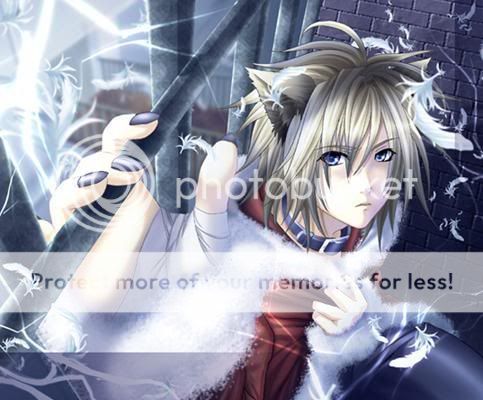 The Neki: Half-Mamal/Half-Human Race. (Singular; Neko)About/Origins: The Neki: Half-Mamal/Half-Human Race. (Singular; Neko)About/Origins: Recently, it was discovered that within Emania's forests lived a new breed; the Neki (plural). They were discovered by the Gemini, and are found to speak Common, as well as the native and fully universal language of Animakin (Animal-Speak). Neki have begun, ever-so-slowly, to emerge from their forest homes and walk among the rest of Emania's population. It is expected, though not fully proven, that Lucifer and her daughter Lyna might have known about the Neki's existence--neither were available at the time of this scientific report for questioning. The most common breeds of Neki include, Wolf, Dog, Tiger, Cat, Fox, Mouse, Bat, Panther, Coyote, Rat and Rabbit. Dependibility, strength, speed, endurance, loyalty and alliance often depend on the breed of Neki in question. Names/Language: Neki have no need of names, or had no need of names, though they have adopted such upon entrance of Emanian culture. Some do not fully understand name status (mostly Mice and Dogs), and thus choose such names as "Fielder" and "Cavette", in honor of their old homes. Others (such as Cats and Wolves) have given themselves more practical names, like "Kilay" (Animakin for "Birdsong") or "Dosfolana" (Animakin for "Dark Heart"). Animakin can be tricky for beginners, so if you have questions, fell free to PM Wizard Kittie. Physique: Neki outer structure resembles that of a human; there is no "fur" persay, only skin.  They do carry the characteristics of the animal they resemble, however; Cats, Dogs, Foxes, Wolves, Panthers, Tigers, and Coyotes have the teeth, ears, tails, paws, and claws of their origin animal. Mice, Rats, and Rabbits have paws, ears and tails; Bats ears, wings, and claws. Senses are often enhanced to animal-grade (specifics below). Age, surprisingly enough, follows human charts...and then some! Childhood: 1-13 years (here, balance of animal/non-animal is made painfully known; Neki see the last 3 years in this cycle as the "Becoming"; children mortality rates higher than any other) Adolescence: 14-18 years Adulthood: 19-47 years (Senses often highten here, due to horomonal balance) Middle Age: 48-58 years Elder: 58-93 years (Strength, speed, and endurance begin to fail, and rake back into normal human status; senses remain high) Venerable: 93-130+ years (Neki can live up to 3 years longer than humans, if kept active; reason unknown, though believed to be chemical ratio) Society:Gender Roles: Unlike their human cousins, Neki seek perfect balance within their own society. It is often found that the female of the species are deadlier, though insofar results are inconclusive. Social Ranks: Social ranking within Neki society is hard to place; while they strive for balance, it is known they worship Artemis, goddess of the Moon and the Hunt, and often take the word of their preist/ess very seriously. Advice is taken from those who have reached Elder and Vernerable ages. Work: Neki are flexible to work status, mostly depending on breed; a Tiger could do the work of a farmer, but prefers to work as a bounty hunter or warrior. Love/Breeding/Marriage: Perhaps one of the most controversial topics of the Neki; this is actually personal and not at all related to breed. Some entertain the human notion of "one true love", while others prefer "mate for reproduction alone". There are, of course, those who lie in the middle. Inter-Species Relations: Neki, having hidden in the forests for so many years, have had very little outside contact; they do, however, favor Elves and Gemini, for their kindness, and Humans, for their kinsmanship. It has been theorized (though not fully tested) that they may have some instintive aversion to Moonmaw, Orcs, trolls, goblins, Bugbears, Gnolls, etc., but not relations to Drow (none could be found for testing). Abilities/Magic: Neki are adaptable to all forms of magic, hunting, and swordmanship. Archery is not advisable, nor are guns; hunters often make the Neki edgey and tense. ~~~ Racial Skills:(In Alphabetical Order) Cat: +** (2) speed, improved eye sight, keen smell Coyote: +*** (3) endurance, extremely loyal, keen smell, - * (1) accuracy Dog: + ** (2) endurance, extremely loyal, keen smell Fox:+ *** (3) speed, improved eye sight, keen smell, - * (1) strength Mouse: +*** (3) speed, keener smell than most, better hearing, - * (1) endurance Panther: + *** (3) speed, improved eye sight, keen smell, - * (1) shielding Rabbit: +*** (3) speed, keen smell, best hearing, - * (1) endurance Rat: +*** (3) endurance, keener smell than most, - ** (2) endurance Tiger: + *** (3) speed, improved eye sight, keen smell, - * (1) shielding Wolf: + *** (3) strength, keen smell, good eye sight, - ** (2) shielding {Surprisingly, only Neki have detracted racial points....}
|
|
|
|
|
|
|
|
|
|
|
|
|
|
|
|
|
|
Posted: Wed Jul 16, 2008 7:24 am
Merpeople (sometimes mistakenly called ‘sirens’)
Links: http://vashs-angel.deviantart.com/art/Merman-41041424
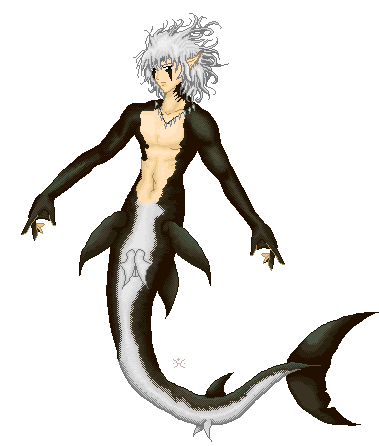 About/Origins: About/Origins:
Merpeople are underwater intelligent and often musical creatures that live in the oceans and -occasionally- lakes of the world. They are most famously confused with Sirens due to the Sirens’ deception - and thus blamed for the Siren’s practice of luring sailors to their death. A Merperson (or as they’re more commonly called a ‘mermaid’) is seen as a omen of terrible bad luck by sailors as a result. While naturally curious, merpeople are generally not malevolent, and any drowning of sailors have been purely accidental: usually the result of an eager merperson not realizing their new companion cannot breathe underwater.
Merpeople come in two types: Fish and Mammals. Both coexist, but their physiologies enforce boundaries of practicality between them.
Generally merpeople are often very curious, but politically are strictly conservative - shunning the surface world and preserving their own privacy. Only the mammalian merpeople - who are forced to a live of travel by their inability to breathe underwater - trade with humans.
Names/language:
Merpeople’s language works completely differently to surface creature’s language, for the simple fact that it’s conducted underwater. The language works on two levels - physical and mental. Being highly physchic creatures, merpeople communicate mentally with each other much like any languages does. However these psychic messages are only successful over long distances when carried on sound-waves. Thus they are re-enforced by whale-like notes of whines and clicks, that can carry for miles underwater.
These clicks and moans also serve a practical purpose. The former can act as sonar for when visibility is low. The latter, if cried loud enough, can alert other merpeople to danger and can physically stun the shoals of fish they prey on.
The psychic nature of their communication means that merpeople can successfully communicate with any creature, regardless of its language. To the recipient’s mind, it is as if they are speaking to them in their own language.
Physique:
There are two types of Merpeople - fish and mammal. Both and physically quite different.
However it is generally known that merpeople are a blend of a type of marine creature, and a human. While some species are unique, most seem to visibly and physically mimic the particular fish species that they originate from (eg a lionfish mermaid). This has led people to suppose that the merpeople’s origins were originally human - and that the first merperson was probably a cursed human.
At any rate, they share these similarities:
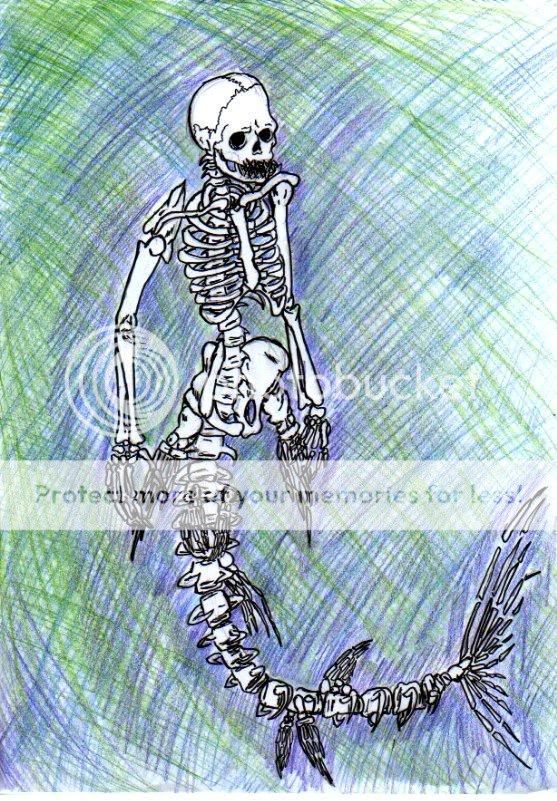 They are human in torso and ‘fish’ from the waist down. However this is fully integrated in their physiology. Often they have the main tail fins, and two lesser fins at their waist stemming off from their pelvis. [ see skeleton]. How ‘human’ their upper torso is depends entirely on the species of merperson. Indeed, there are even jellyfish merpeople and deep sea fish merpeople that bear very little resemblance to humans at all. They are human in torso and ‘fish’ from the waist down. However this is fully integrated in their physiology. Often they have the main tail fins, and two lesser fins at their waist stemming off from their pelvis. [ see skeleton]. How ‘human’ their upper torso is depends entirely on the species of merperson. Indeed, there are even jellyfish merpeople and deep sea fish merpeople that bear very little resemblance to humans at all.
Their fingers are webbed and often clawed (so they can better catch fish). This webbing can even extend form their arms to their waist - it depends on the type. Ofte they have fins on their arms also. They often have fanned/webbed ears.
With the exception of shark-people and some fast moving merpeople, the tail fins are arranged like a mammal’s - horizontally, rather than vertically.
They have special eyesight: the lense is adjustable allowing them to see ‘fish eye ‘ style underwater, and then adjust for surface sight. However this adjustment can take a few moments to happen.
All are very psychic and all can create sonar and whale-like noises for communication.
All are capable of diving incredible depths, regardless of the pressure. And most can swim quiet quickly, and are able to leap out of the water at impressive heights.
They’re singing is supported by phsychic links, and is very pleasant - likened to Siremn song without the danger behind it. However sirens are better than them, genrally.
All, when assisted by skilled magic, are able to take on human form (with legs!) for a limited amount fo time. Often this is almost permanent - and once changed they can switch back and forth. However, they turn into their merperson form when a lot of water touches them (torrential rain, baths, showers, etc)
They hunt and eat the fish in the sea raw, also supplemented by many different grown vegetation. However sharkpeople are purely carnivorous.
‘Fish’ Merpeople
‘Fish’ Merpeople are the most common. They are like fish in that they can breathe underwater using gills. The average merperson has two sets of breathing apparatus: one - their gills, for use underwater; and two - their lungs, for use above the surface. They can switch at will, although it can take a few moments for the change to happen.
They give birth in a similar way to mammals - conception is done internally via the male and female mating, and the foetus grows inside the female’s womb. However this is taken part inside an egg (inside the womb). After about 6 months the egg is born, and the parents care for the egg until the baby inside is ready to hatch. This enables for a greater interaction and bonding between parents and baby - as it can intereact more than in the womb. (giving birth to the egg is also physically easier on the mother than birthing live young). Fish-merbabies often hatch a few weeks after - the whole process rarely taking more than 7 months to complete. The baby is able to swim form hatching, but is very dependant on the parents.
The only exception to this way of breeding are the shark-species of merpeople. These are pregnant internally with the egg for only a few months (2 or 3) - but the pregnancy is very draining for the mother. They then give birth to the egg in a ‘shark’s purse’. This ‘purse’ is then secured somewhere safe, (often shielded with some low-level magic), and left for a total of about 4 or 5 months. The baby, once hatched, is completely self-sufficient, never knowing it’s parents. Many ‘shark purses’ are attacked or devoured by predetors, if they are able to get through the shield. This method of ‘caring’ for their young, among other things, has led other merpeople to brand the sharkpeople as ‘barbaric’ and ‘uncivilised’.
’Mammal’ Merpeople
Mammal perpeople give birth lie any mammal. The mother is typically pregnant for 10 months. Once born, the baby can swim instantly and is quite capable.
Mammalian Merpeople do not have gills, and instead have enlarged lungs. They are unable to breathe underwater, therefore, and are forced to return to the surface four or five times a day at the very least. Because the typical Mer-cities are a mile or so underwater at least - very deep- the practicality of living has forced mammalian merpeople to become nomadic - and not be able to reside permanently in cities. Therefore they have developed as travelling merchants and storytellers, collecting in groups and often visiting each city in turn for a couple of weeks before moving off again.
Mammal merpeople tend to be the giants of the merpeople world. Reaching anything from the usual human-style height to the equivalent of a bugbear or an orc in torso size or even larger.
Their fashion style tend sot be tribal and thrown together form all the bits and pieces they collect over their time.
Ages:
Merpeople age similarly to humans.
• Childhood: 1 - 12 years
• Adolescence:12 - 18 years
• Adulthood: 18 - 50 years
• Middle Age: 50 - 70 years
• Old: 70- 90 years
• Venerable: 90- 100 + years
• Maximum Age 160+ years or more
Personality [+ common allegiance]:
Society:
Gender roles:
Merpeople live in fairly equal society, although males are more inclined to be accepted for political jobs, and property is handed out primarily through the male line.
Social ranks:
The society a merperson lives in is often dependant of its species or types.
Most ‘fish’ mermaids live in monarchies that take form as large cities often miles deep underwater and anchored to the ground. It is ruled by a king or queen (usually kings), and their inner parliament. They tend to be democracies, but the king’s will is the final decision and taken seriously. Genrally these governments are conservative, suspicious of outsiders, traditional and based on the power of old families.
Those of older families are at the top of society. Mermpeople are often socially ranked by the prestiege of tehri families, their own shows of skill in intellect or strength, and their occupation. Those at the top are often politicians or merchants, and those at the bottom are often poor or foreign to the city/outsiders.
The lowest rank of merperson society is the race of Sharkpeople. Due to their predatory and carnivorous nature; rumors of cannibalism; their ‘heartless’ way of breeding and lack of care over young; their tendancy to actively prey on surface sailors; and their natural decision to be outsiders of the city..mershaks are regarded with suspicion and contempt.
As outsiders (due to their practical inability to reside in the cities), the nomadic, mammalian merpeople could be regarded as socially low too. Technically they are, although in actuality they are greately respected and depended upon during their short stay in cities. When a tribe and mammal perpeople enter a city to trade, a vast market system is hurriedly set up, and it’s like a carnival or a holiday - with the merpeople flocking to see and purchse their wares. Thus - while not entirely trusted- mammal merpeople are greatly embraced in fish merpeople cities until they leave again.
Work:
Like humans, merpeople are obliged to get a ob in order to support their families and the community. Those without a job are looked down upon. Common jobs involve hunters, politicians, guards/warriors, shopkeepers, judges, lawyers, child&egg-minders, teachers, vegetation farmers, undertakers etc etc
Sharkpeople rarely ever have a job and prefer to wander the ocean at their leisure, hunting for food and keeping little possesions. (Another reason why they are considered beastlike and socially intolerable)
Mammal merpeople are usually nomadic tradesmen, gathering items form the surface and travelling from city to city to sell them. They are often the only way that merpeople can get rare and interesting items from the surface, and so are greatly valued.
Love/breeding/marriage:
(see physiology for breeding).
Merpeople have several ‘mating seasons’ in a year - usually a session of a couple of weeks at a time that are divided as a national holiday, where the population is hormonally active and courtship and mating take place. They court very like humans - often with gifts, kind words and displays of masculinity by the males. It is common for merpeople to take more than one wife or husband, but the romantic goal is only one ‘true love’ to share the rest of one’s life with.
While a merperson can have one ‘true love’, it is also common for a female to breed with several males during the breeding season (and thus for a male to breed with many females). This however is only acceptable in the designated breeding season, and any ‘affairs’ outside of that are very much frowned upon. Nevertheless, it is common for a family to consist of several children that are not the husband’s. This, to the merpeople, is not a problem. Upon marrying his wife, he marries all her subsequent children into the family, and thus raises them as his own, regardless of their biological lineage.
Indeed, merpeople seem to view this method as a positive way of keeping diversity.
Relations with other species:
Politically, merpeople are conservative, sometimes paranoid and suspicious of outsiders. They are isolated in their lifestyles -and each city is its own unit. However individual merpeople seem to have a natural personal curiosity about the surface world however, and they seem to lap up any items that the mammalian merpeople bring to trade form the surface.
However, it is rare for merpeople to actually swim to the surface to explore for themselves.
Mamalian merpeople are more open, and frequently converse with humans or investigate human/surface people’s wreckages of ships and such for things to sell.
Religion:
Religion is diverse, and varies from city to city. Most, however, seem to worship Posiden - the god of the sea.
Abilities/magic:
Merpeople are innately magical, but precious few actually learn or use this magic. Skilled madges and witches exist -usually female. They either reside as personal servants to the king, or live on the outskirts of the towns. Frequently socially high merpeople seek their services. Although they seem to be cloaked in some secrecy and taboo. Perhaps they are viewed as a kind of outsider also.
Weapons/Armour/Items crafted by species:
Being genrally quite territorial, merpeople often end up warring with each other between cities. Thus they have developed many long range and hand-to-hand weapons specifically created for underwater use.
---Race additions to character sheet--
*Psychic intuition : Every now and again, before their turn, a merperson can roll the STAR dice. If STAR, they predict the upcoming attack and the attack misses. This can only be done upto 3 times per game.
* Psychic communication : they can communicate and talk to players a long way away
*ability to breathe underwater (if fish) or hold breath for hours (if mammal)
*Increased speed in water
*Sleeping song : sings a song. If STAR, this sends the attacking monster to sleep.
*Waking song: sings a song: if STAR this wakes a player up.
*Helaing song: if STAR, this can heal a hurt player (inc the singer) by 2hp.
*sonar blast: stuns enemy - it misses one turn (if STAR)
|
|
|
|
|
|
|
|
|
|
|
|
|
|
|
Posted: Thu Jul 17, 2008 12:11 pm
Ma' Yensas 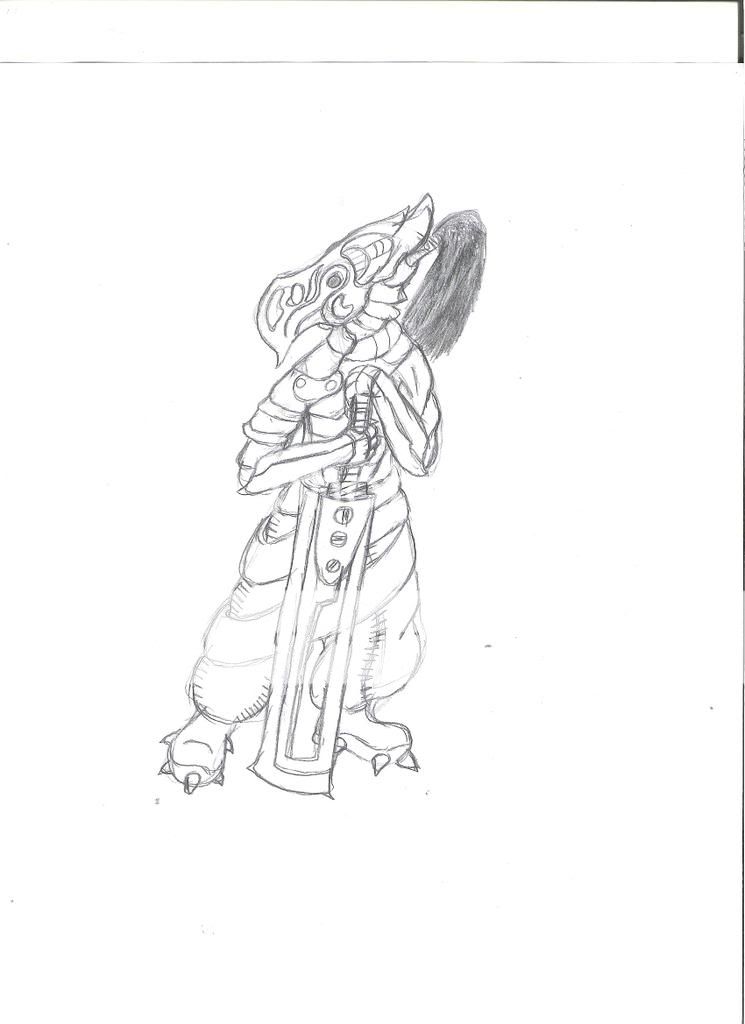 Ma' Yensa warrior Name: Ma' Yensas About/Origins:The Ma' Yensas are from the moutains they are said to be human. but they have evolved to be suerior in strength and speed. Names/language:They name them selves and follow their parents last name Physique: They are very muscular and tall they avrage at 7'8ft they apear to be blue in color due to where they live it is actualy a skin dye. Ages: child: 1-15 Young: 15-30 adult 30-80 old: 80-200 Personality [+ common allegiance]:They are calm and keep to them selves they all ways have some thing to say to people who think they are all powerful Society: It is mainly a female run society with the matriark in comand. She always protected by the elite guard. ~ Gender roles: the men play a big role in warfare only most are warriors. the females run almost evrey other job. ~ Social ranks: The greatist warriors are at the top the weakest and the avrage warriors are treated the same ~ Work: The men maily work in the army or as black smiths and bakers. The wemon run evrey thing else ~ Love/breeding/marriage:They love only one but have been known to marry anthor female to bost their clan size ~ Relations with other species: They have been at war with many races and have won due to their superior strength and speed. ~ Religion:They worship Emotio the one and only god Abilities/magic: They are superior in strength to all other speices their speed is seconed to the Gemini. magic dosent work to well on them Weapons/Armour/Items crafted by species: They are known to make the best weapons in the world their armor is few but strong. The most popular item they make is reserved to their race only their mask witch are large and heavy. Racial skills:Quote: * Superior strength * Superior speed * freeze/posion/and many other magic do not work on them. *2+ defence against weapons
|
|
|
|
|
|
|
|
|
|
|
|
|
|
|
|
|
|
Posted: Tue Feb 10, 2009 3:14 am
[by moon_maiden]
Centaurs
About/Origins: Centaurs are a noble, proud, and honorable but elusive race that prefer to keep to themselves. However in times of war and strife they will lend aid to their allies. They are also knowledgable when it comes to nature and the stars. If you wish to seek them out its best to search in forest areas.
Adults from any race should never ask for a ride upon their back-they consider this an insult. However when it comes to young child they tend to be more soft-hearted about the request. Only if the situation calls for it will a centaur allow an adult upon it's back.
Names/language: Centaur names often have nature based meanings. Centaurs also seem to have a set of 'body langauge' but can also speak common tongue.
Physique: Centaurs have a head, arms, and chest whuich are those of a human and the rest of its body, including four legs, hindquarters, and a tail is like that of a horse. Their horse halves range in the colors of browns, tans, greys, blonds, black and white and come in a variety of patterns. In height they stand as tall as most elves if not taller.
Ages:
Childhood: 1-19 years
Adolescence: 20-30
Adult: 21- 84
Middle Age: 85- 149
Old: 150 - 200
Society:
Social ranks- Centaurs live in herds led by an alpha male. The alpha can be challenged for leadership by other males in the group. Whichever male won had the challenge had the right to exile the defeated. These exiled males were the cause of the rumors about the centaurians being savage drunks who kidnap and rape young maidens.
Gender roles- Females (aka "Centaurettes" or "Kentaurides") are only slightly weaker then the males. They tend to stay behind during times of war to defend their home or if they're with child while the men are away. During those times the leadership role falls to the alpha's mate.
Love/breeding/marriage- Courtship occurs in the spring-once a pair has mated they are together for life. It will take about 10 months until the female gives birth.
Work- Along with being skilled warriors, centaurs are also seekers of knowledge, hunters, and enjoy growing plants.
Relations with other species- Like the elves they tend to lead more private lives, but are quicker to lend assisstance when needed. They are most friendly towards the 'good' races of Enamia-especially the dwarves and elves. Respect them and they'll show theirs in return. Those they have deemed worthy of their trust are presented with a lovely carved horn which can be used to call upon them for aid. Thus far only the elves and dwarves have been given such gifts.
Religion- Nature based
Abilities/magic: Centaurs do use magic (although in rare cases a few have been able to use earth/nature based magic). Like the elves they are primarily warriors and archers.
Weapons/Armour/Items crafted by species:
Males tend to use be in close combat with hooves, swords, axes, shields, and spears while females tend to be in ranged combat with bows and arrows.
They do have the skills to make their own armor and weapons. However tend to favor armor crafted by the dwarves and are admirers of elven work as well.
Skilled in medicine and poison creation. Also have a talent in wood carving, music, and agriculture.
Quote: Racial Skills: Attack Bonus +2 (for melee combat) Attack Bonus +1 (for ranged combat) -2 Defense Against Magic Attacks Heighten senses-Sight, Smell, Touch, and Hearing Increased Speed, Endurance, and Physical Strength
|
|
|
|
|
|
|
|
|
|
|
|
|
|
|
|
|
|