|
|
|
|
|
|
|
|
|
 Posted: Sun Jul 31, 2005 12:34 pm Posted: Sun Jul 31, 2005 12:34 pm
Well I thought maybe an interview thread with our favorite horror directors and actors would be fun.
The interviewer will be colored blue.
I'll make a directory within here soon.
|
 |
|
|
|
|
|
|
|
|
|
|
|
|
|
Posted: Sun Jul 31, 2005 12:36 pm
Robert Englund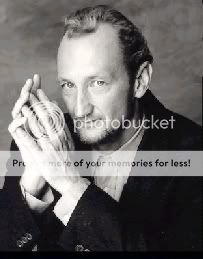 As much as I love Freddy, I've always been partial to your 1989 version of PHANTOM OF THE OPERA. What differentiates your Phantom from the others? As much as I love Freddy, I've always been partial to your 1989 version of PHANTOM OF THE OPERA. What differentiates your Phantom from the others? The first thing that should be said is what people tend to forget, because of the great success of the Andrew Lloyd Weber/Michael Crawford association, and that is that PHANTOM OF THE OPERA is a great old horror show. It's not all singing-all dancing. As much as I enjoyed the Broadway show and am looking forward to seeing Joel Schumacher's film, this source material was written by Gaston Leroux, who was quite possibly the Stephen King of his generation. I might be mistaken, but I believe at one point, Leroux's novella was the most widely translated book in the world outside of the Bible. So, at some point after the turn of the century, in the time of "Penny Dreadful" horror novellas, PHANTOM OF THE OPERA, the book, before Lon Chaney's movie, was absolutely an international success. So it was one of those first best sellers made into a movie. Then you have the Lon Chaney version, and many others including Claude Rains, Herbert Lom. It's a role that really attracts actors. Now, what attracted me to the role of Eric, the Phantom, was a couple of things. One was I had full quality control over the make-up with Kevin Yegher, who's obviously one of the make-up geniuses along with d**k Smith, Steve Johnson, Rick Baker and Stan Winston. I had Kevin, and he had free reign from our producers to create the look. The other thing that attracted me was the director, Dwight Little. Both Dwight and I are of another generation than you. Whereas you and your generation had that sort of latent hard-on for the great early slasher films in the late 70's and the wonderful cult drive-in classics of slightly earlier fare, whether its TOOLBOX MURDERS or HONEYMOON KILLERS, my generation sat through the drive-ins and saw these saturated color, lush Hammer films from England, with Christopher Lee and Peter Cushing and Herbert Lom. And they also, considering what was going on in film back then, were probably some of the most sexual films being made at the time. What Dwight Little and I wanted to do was kind of recreate that saturated, dark, lush Hammer film quality that he and I remembered as youngsters sitting in the drive-in movies with our learner's permits in the back seats. You know, we'd be there making out with a girl, realizing that although we were halfway to second base, we'd rather watch the movie (laughs)! I thought I was the only one more interested in the movie than the back seat at the Drive-in!Trust me, Tim. You weren't. I loved Hammer horror. And we wanted to recreate that with PHANTOM. So we had a lot of fun with styles. There's this whole Fellini/60's flashback sequence with dwarves' I guess little people is the politically correct term! And we also had the film peppered with terrific English actors. The Diva is played by Stephanie Lawrence who is the original EVITA. Bill Nighy, who's now come to such fame and is having such a great renaissance,. He just starred in LOVE ACTUALLY and SHAUN OF THE DEAD. So we really had some nice creds going for us. And we shot the film on the standing sets for the Cannon remake of THREE PENNY OPERA starring the late, great Raul Julia and Roger Daltry from The Who. So, it was just this great, fun adventure. And our idea, our concept, along with the Hammer film themes, to really give it a sort of underpinning off that "Brit Slick" horror, was to set it in "Jack the Ripper" London as opposed to Paris. So instead of it being the Opera in Paris, it was the Opera in London. That was our take on it. And I'm actually rather proud of it. Strangely enough, along with V and NIGHTMARE ON ELM STREET, I get more response and feedback to PHANTOM than just about anything else I've done. There's a huge contingent of Goth girls who really related to the kind of overblown romantic quality of the film. And also, the sort of danger element with the girl. Christine. That obsessed love. It made money when it came out. It wasn't a huge hit, but it's done very well on video. It does have a certain life to it. It's interesting. It sort of filled in a niche. And I think that the younger generation that caught on to it didn't really see the Hammer connection. I think they just responded innately to that. They kind of knew they were seeing something that was a bit retro, and a bit flashback, and they were intrigued. It's certainly the only "splatter" version of PHANTOM ever done. You're right, PHANTOM is a horror story, but over the years, it became watered down. Especially the 1942 Claude Rains version which positioned the Phantom's story second to the Christine/Raoul romance.Claude Rains made him a violinist, and he played him a lot older. Now, the Phantom should be sympathetic, but I think you also need to do a bit of that "Grand Guignol" theatrical horror of its time. You have to understand that Paris of the time of Gaston Leroux was the Paris of "Grand Guignol". And there's a much more parallel to the London of Jack the Ripper with that Paris of Grand Guignol that there is to this sympathetic approach, making it ALL about the classical music. I also will be honest with you, Tim. There was a great sequel that's never been made which was called THE PHANTOM IN MANHATTAN. A lot of elements from that script have been borrowed subsequently. I've seen sequences that reminded me of that script as far back as Guillermo Del Toro's MIMIC. More recently in BLADE 2. Okay. I know you're dying to tell me. What was it about?Well, the sequel took place in the buried train graveyards beneath the "Belle 'oque" superstructure of the original subways that the sand hogs built many, many layers below the current subways of New York. I don't know if you're familiar with the urban legend of the "mole people". You'll see it occasionally on LAW AND ORDER or a NEW YORK CSI, but there are people that live beneath the warming grates and the subway vents of New York. There's entire little societies down there. And in the sequel, they have me, the Phantom, having come from Europe and living down there, and composing down there in an old robber baron's train car. And he's served by all these homeless kids. Think "Fagin" in OLIVER TWIST. So, my children will go up and work this surface, and I would stay below, and occasionally foray into the Metropolitan Opera in Manhattan. And once, while I'm going up, I hear a voice in the subway. Where the street performer's play on the subway platform, I hear this voice. And, here's the hitch, it's a blind girl. The new Christine is blind. She's Italian. Her name is Christina. Her father, think Gepetto in PINOCHHIO, even though it's contemporary, we make him a new Italian immigrant to Am erica, perhaps Siciliano, and he accompanies her on violin, which is echoes of Claude Rains. Her voice is the perfect instrument for the opera I'm working on. Plus she's blind, she doesn't know what I look like. She just hears my soothing voice. So I school her and coach her. Well, she still has to play on the subways to make ends meet. Her father is killed by skinheads. I avenge her father. There you go. There you get your splatter quotient there. And then, at a decadent opera party that uses the subway trains for an opening night gala, they pull her station and they hear her singing. They discover her. She's brought into the professional world of opera, and so my opera will never be made. Also, concurrently, they discover a physician who can correct her sight with laser surgery, so now she can see again. So now the third act is, Will the Phantom kill her? Will he kill the surgeon who restored her sight? Will he thwart her debut at the New York City Opera? Or, as it turns out, you see me sitting there in my box seat, with my face sewn together, and I listen to her perform, and thats enough for me. And the last image is me walking down 5th Avenue in the snow with my footprints trailing. And I lift a manhole cover and go back underneath. Wow. Can I see that movie now, please? Exactly! And that's what attracted me to do the film! I had a contract for a two picture deal! And that was going to be the backside. That's why the Phantom that we did ended contemporarily in New York. So that we could bridge that. And yeah, it was a great script. Better than the first one. Phenomenal script. It had violence and sex and all of this wonderful Chaplinesque quality with the blind girl and her father. Just unfortunate that we never got that made. Such a shame. But that was the original attraction to both me and Dwight Little, the director. This little tiny homage to Hammer films. And that's the way people should look at it. Now you said you had approval over the make-up. I remember,at the time, the talk was Robert "Freddy Krueger" Englund doing another masked performance. And then the film came out, and it was so cool, because, for the most part, you could actually see your face. One of the problems was that on the poster, they air brushed the Phantom make-up so that it resembled the Freddy Krueger make-up, which it doesn't look like at all. The conception behind the make-up that Kevin Yegher and I came up with, is, you know those little tourist trap gift shop busts of Beethoven? There's actually tee shirts of this image sold in the back of Rolling Stone magazine. They used to wear those a lot in the late 60's, early 70's. That was the hip thing to wear. So we designed the make-up off of that. As if I idolized Ludwig. Old "Ludwig Van", as Malcolm McDowell in CLOCKWORK ORANGE would say (laughs). And so, that was the concept with the hair brushed off my face. I mean, I was out there poaching bodies, like Jack the Ripper, because I needed their musculature, I needed their skin and flesh, to create this Beethoven visage that I would cover my own deformity with so that I could attend the Opera. So that I could pass on the streets. That was always a very brilliant concept. Never done before or since. Yeah, I thought it was kind of a great, macabre concept. Make-up over make-up. So the idea was I would look a little strange, but a little handsome and romantic. If you remember back to the late 80's, there was still a remnant. The Goth generation had crossed over from Adam Ant and the New Romantics. In music and fashion, we tend to forget about the New Romantics who came after Glam and Punk. There was Glam. There was Punk. And then New Romantics. Of course. Duran Duran. I was there! Still have the photos. Well, we sort of brought a little bit of that New Romantic, Edwardian feel to our film. We wanted that look. Plus the look of Beethoven, young Beethoven. And yet, my Phantom was also very strange looking. You know, you did see the stitches. And as the day wore on, the stitches would begin to separate. The pallor would begin to yellow and jaundice. Kevin Yegher actually had this remarkable continuity chart that we followed. So when jaundice set in, it was time for me to go out and do a fresh kill and replace the skin. Which was great story wise, because it gave the Phantom motivation to kill. Yes. That is why he had to kill. Because he couldn't pass in society if he looked the way he really looked. He had to come out of his subterranean lair. Don't think we'll be seeing any of that in the new musical version (laughs)! No, but the musical version does capture something quite wonderful. I mean, aside from the great gimmick of that half-mask that Lloyd Weber and the designers came up with, the play really allows for the Phantom to exploit his sexuality. But the film, because of the music, because it's such a lush score, it does accomplish that great romantic thing that it needs. Romanticism means a lot of things. Just like melodrama means a lot of things. A lot of people consider the original FRANKENSTEIN a melodrama, not a horror film. You know, you have to play melodrama. Melodrama has to be played larger than life. It has to be true, but it has to be true in its exaggeration. Like Opera. And that's what's so great about PHANTOM OF THE OPERA. You can go over the top, because the music supports that. Just like you can act big in LORD OF THE RINGS, because the scenery and the CGI and what surrounds you in the frame is larger than life. What do you think it is about the character of the Phantom, which started out as a Penny Dreadful paperback and now is a major movie musical, that continues to capture the imagination of audiences? I think the great thing about Eric. I mean, for anybody who's a music fan, whether its rock and roll or classical music, or even Opera, for that matter, I think the idea of his obsession with the music. And trying to get this perfect score, this perfect song. I think that's really the initial attraction. I think it's also just this great meeting of time and place that enters our imagination. I mean, opera capes and chandeliers and masked balls. All of that stuff really enters the imagination like the great sequences of ROMEO AND JULIET or WAR AND PEACE, or even GONE WITH THE WIND for that matter. It's just on of those great romantic tales that sticks with us. And it's a great date movie. It's got something for everybody. Boys and girls both like it. What always attracted me the most about PHANTOM was the idea of this well dressed, attractive gentlemen, but a masked gentleman, with his identity hidden under this slick, glossy veneer. He could be an angel. He could be a Devil. Or, he could be both. Which is so very Freudian. I mean, we all have that fantasy. The idea of the mask. Seeing all, but unseen yourself. You know, there's a great story. Apparently, Truman Capote, who wrote IN COLD BLOOD among many others, had a great masked ball in 1967 at the Plaza in New York. And legend has it that it's the greatest party in the history of Am erica (laughs). Unbelievably famous people in government and celebrity and in social standing and in Hollywood and Broadway got together, and people did things they would never consider doing. People stepped across gender lines and sexuality lines. People who would never have thought of doing it back then in the late 60's. The mask allowed them to do it. And there are stories and gossip and rumors about that party at the Plaza Hotel. And about pairings between just extraordinary people whom you would never imagine connecting otherwise. In the closet. Out of the closet. Under the stairs. In the elevator. Wherever. And it was all done because of the freedom of the mask. I'm sure drugs were involved, too (laughs). With the exception of a confederate flag eye patch, you're pretty much unencumbered make-up wise in 2001 MANIACS. Was that strange for you? Well, you know, what was so fun with 2001 MANIACS was that there was this nice, natural arc in the script, this nice rhythm with the dialogue of my character, Mayor Buckman. There was a certain physicality to Buckman as well, but he was more of a language character. And also, because of its origins, the Herschell Gordon Lewis cult classic, 2001 MANIACS always began as something birthed from pop culture. It's always has been a little bit trashy, but definitely on purpose. That distillation of pop culture by pop culture. So, I kept throwing out my source imagery to you, this kind of Colonel Sanders from Hell idea, that Tennessee Williams big daddy character, even a little DUKES OF HAZARD in terms of cartoonish choices, and combining all of those angles together. So when you have those kind of sources, when you're able to act that kind of language, you really have to jump in there and commit, and that does really liberate you. Not in the same way that a mask or make-up does, but it still liberates you. Ironically, perhaps the more shielded you are, whether it's a literal mask or the mask of a character you are portraying, the truer you might be able to be to your authentic self. That's actually something I discussed with Paul Stanley, the idea of hiding behind a persona. And Paul did it twice, with KISS and with Phantom. And he will probably tell you, as an actor, as a performer, the mask is very liberating. Even though you're dealing with the vanity of sitting in front of a mirror everyday putting on all that make-up, once its on, it's not you any longer, so you're never dealing with your own physiology. Your thinning hairline, a blemish you got from eating too much chocolate off the craft service table, your good side, your bad side. You're not dealing with any of that. You're completely free of that and its very freeing for a performer. But, yes, Tim, the mask does really open doors for people in their own imaginations. On a lot of levels. Even on a revenge level. On a purely revenge motif, which probably feeds the male adolescent fascination with horror and serial killers, or even Ebots, in Gameboy now. To be that anonymous avenger of your own art or your own dreams or whatever it is you really believe in, deep down the depth of your soul.
|
|
|
|
|
|
|
|
|
|
|
|
|
|
|
|
|
|
Posted: Sun Jul 31, 2005 12:51 pm
George Romero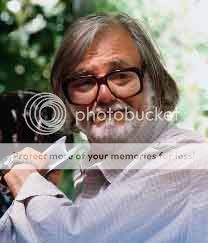 I gotta tell you, George, I was at the press screening the other night with Greg Nicotero, and man, I haven’t felt that kind of glee at a horror flick since, I gotta be honest with you, since maybe DAWN OF THE DEAD. I’ve always said, you know, I grew up watching the black and white Universal horror movies when I was eight, nine, ten, and then at thirteen, DAWN came along and it was like a Goregasm. That was when my adolescence set in and suddenly my world went from black and white to color. George: Man! Geez, that’s a great word! Goregasm. Can I use it? Absolutely. George: All right. I’ll credit you. DAWN OF THE DEAD was a goregasm for us horror fans, but it also had that undercurrent of social commentary of consumerism and conformity. What social issues were in your head while writing LAND OF THE DEAD? George: I started something with NIGHT OF THE LIVING DEAD that I couldn’t possibly have foreseen. Since then, what I’ve tried to do is reflect on the socio-political climate of the different eras. The stories are similar, but they are set in different decades. It’s an unusual conceit, but I like being able to make the film current, politically speaking, even though the story is continuous. With LAND, I actually had to change the political issues. When I initially finished the first draft of the script, it was before 9/11, actually just a few days before, and after that, everybody just wanted to make soft, fuzzy friendly, movies, and it was impossible to get a deal on this. So I waited, and then about a year later, I guess it was right before the invasion of Iraq, everybody was worried, “Are they gonna hit us again?”, so I went for that. There’s nothing in the film that clobbers you over the head, but the idea of the high rise tower being the financial center and the idea of the administration trying to convince people that everyone’s okay. Little ideas like, you know, being protected by water, that if we’re surrounded by water they can’t get us. Just the image of these big, armored vehicles going through towns and mowing people down, well, in this case they’re zombies, but then, you know, wondering why they don’t like us? So there are a lot of those allusions. They’re not up front. The kids don’t have to worry about that, they can just take the ride. What percent of the audience do you think gets those allusions? George: I don’t track that kind of thing. It’s pretty hard to say. But my suspicion would be that most of the people in a bar in Pittsburgh would be, “Whaddya mean? Whaddya talkin’ about?” I know that people that write about film and people that think a bit get it. The one sort of ‘on the nose’ thing is when Dennis Hopper says, “We don’t negotiate with terrorists”. That’s it right there. That line a great response the other night. I think there was a lot of people, myself included, that put the face of Bush on Hopper’s character, and was quite gleeful when he finally got his. George: You know, I think probably if you even showed the film at the White House they wouldn’t get it. They might be a little upset that we burned money (laughs). What’s it like directing all those zombies? George: You can’t tell zombies how to move. If I did, I’d get 100 people moving and groaning in same way. I basically say, “Okay, you’re dead, you’re stiff.” And I ask them to use their imaginations. Then I end up with some amazing interpretations. Some are a bit over the top, but the variety is great for the cameras. So what differentiates a George Romero zombie from any other zombie? George: I guess the number one differentiation everyone talks about, or at least asks me about is, “Do your zombies run?” And no, they don’t. I figure if they take off running their ankles would probably snap. My line about this has been that my zombies would probably take out library cards before they’d join a health club. (laughs) I find it more threatening, you know, I grew up on FRANKENSTEIN and THE MUMMY and all that, and I just find it more threatening when there’s these big, lumbering things inexorably coming at you and you’ve got to find the way to stop them. You’ve got to find the Achilles’ heel. The argument is, “Well, you can just run away from them if they’re walking”, and I’ve actually used that. In the mall I’ve had guys run right through them, you know, but then all of a sudden, you get trapped in a situation and you’re in trouble. I just prefer to keep it that way. If I had to answer that I would say George Romero zombies have true character. George: Well, yes, and in this one there are several zombies that are lead players, actually. I try to do that as much as possible, even with wardrobe. I know in the DAWN remake it was just a gang of zombies in clothes from the Gap. And I try to give them personality, you know, ball players and nuns. I would also say your zombies have incredible pathos. George: Obviously, that’s the idea. You’re supposed to feel for these particular zombies, like when they push through into the city and you see all these other helpless zombies hanging with targets painted on them… I’m trying to do that. I’m trying to make the zombies more and more sympathetic while the humans are sort of disintegrating as we go. LAND is set in a devastated world. There’s no electricity except for places inside the city where people are trying to live normal lives. That is their terror… it goes back to the idea of ignoring terrorism and other societal problems outside your own door. They think, ‘If we ignore it, it’ll be okay” That’s the core of what the movie is about. The protagonists are the ones that have to go out into the dark side of the world. Do you foresee a world of the dead where the humans literally have become the bad guys, say, like Vincent Price’s character in LAST MAN ON EARTH where in a world of vampires, the vampire hunter is the evil one? George: Maybe. Maybe. I don’t know, man. I hope not. I don’t think I really want to go there. That gets a little too PLANET OF THE APES for me. One of the occurring themes in your films is the notion that things are not going to get better. Normalcy will not be restored. George: Well, my problem with most traditional horror films is that you upset the apple cart only to restore it again. That’s sort of the standard formula. In the end, everything’s going to be okay. We’re back to normal. Well, who wants to be back to normal? My films are not at all traditional horror films, slashers or anything. I just think of them as stories, basically- people stories underneath it all. The early horror films were about a crisis that could possibly destroy the world; it was all about restoring order. The real horror in my films is that order is never going to be restored. And that’s one of the things that I’ve tried to do with the LIVING DEAD series particularly. It bothers me when I can’t. I did a movie called MONKEY SHINES and the hero sort of got healed in the end which disturbed the hell out of me. The studio insisted on it. Now, on the other had, these guys at Universal have been fabulous. No bullshit. There are a couple of execs here who are real fans of this genre and ‘get it’, and man, it’s the best experience I’ve had. Good for you, man. It’s nice to have that. It must be nice to have a little bit more money, too. You’ve got to do some of your most epic zombie kills yet. George: It was cool, but we weren’t rich, man. The DAWN remake had, I don’t know. We had twenty million, and I think the DAWN remake was thirty two, thirty three. So, we weren’t rich, and the scope of the film is huge. We had forty days for the whole thing, they had forty days just for second unit. And it was grueling. Sub zero temperatures some nights, and it was all at night. All outdoors. But, man, everybody just came to play. Everybody put 120% into it. I Everybody wants to be a zombie in a George Romero movie! I know you had Edgar Wright and Simon Pegg from SHAUN OF THE DEAD in there. George: Yeah, we got those guys in there, and Savini’s in there. Yep. He got a big cheer at the screening. George: Tom’s the man. So this year we fanboys had the two George’s, Lucas and Romero, returning to their most famous stories. We got a final chapter in the STAR WARS legacy and another chapter in the LIVING DEAD series. Is LAND OF THE DEAD the end of your saga? Or a new beginning? George: I don’t think it’s either. I like to say it’s the fourth of ten. I won’t be alive that long… But I don’t know. If the movie does well, there will be a sequel and we’ll have to do it quickly. In that case, I would make it almost Part Two of this movie. If that doesn’t happen, I think I’ll wait for some sort of political change, or sociological change and try and do another one then! Well, maybe you can create that political situation just so you could have fodder for your next zombie film! George: There you go. That’s a premise for you. Maybe I’ll just phone in a bomb scare to the White House! We’re going on 40 years since NIGHT OF THE LIVING DEAD. You really are the guy who initiated what I consider modern horror. Being that guy, how would you say the landscape of horror films 2005 differs most from horror films 1967? George: I’ve always considered myself this guy who happens to be a filmmaker who lives in Pittsburgh. I’m grateful that there is ongoing interest in what I do. I guess, to my fans, I’m sort of a Pancho Villa kind of figure, always just under the radar. stuff has had an extraordinary shelf life and I can’t explain why. Partly, I guess, because I am this rogue guy, but also because some people find what I do interesting- there’s something there, something underneath it all. And I think that back in 1967, there were a lot more innovative things going on back then. There were a lot of cats working at the time like Tobe and Wes, Sean Cunnigham… There were just a lot of people doing some really hard a** stuff. But I don’t see a lot of stuff now that has any real equal depth. I don’t see too much of that now. It’s either big Hollywood special effects or things like THE RING or THE GRUDGE. A bunch of Japanese knock-offs that scare you for the sake of scaring you with some very thin premise such as, “You watch this video you’re gonna die.” I mean, who believes that? But people are willing to go and get scared by it, so what do I know?
|
|
|
|
|
|
|
|
|
|
|
|
|
|
|
Posted: Sun Jul 31, 2005 8:15 pm
Tobe Hooper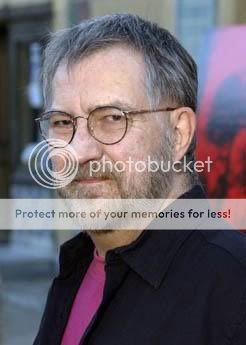 TIM: You’re on a roll, Tobe. FUNHOUSE is out on DVD. October will see TOOLBOX MUDERS out in theaters. And in three weeks, you begin filming your next one, MORTUARY! You’re baaaaack!!! TOBE: Gee, where have I heard that before. But, thanks, man. I got lost in television there for years, which was great, however, because the tight shooting schedules made me concentrate on what was really the valuable part of the story I was telling, and to go straight for that, quite important to focus on when you’re doing independent horror with only 21 days of shooting. And you know, there’s a lot of money in television, so…(laughs) TIM: Basically, now you can afford to do low budget horror movies for very little pay! TOBE: Yeah, but I’m getting to make those movies my way. When you have a lot of money to make your movie, you usually don’t have a lot of creative control. But when the money isn’t really there, you are compensated in knowing, for sure, that it will be your vision up there on the screen. TIM: So what’s your vision for MORTUARY? TOBE: It’s about this beat up old mortuary that gets moved into by a guy going thru a midlife crisis who goes into a new business, kind of on a lark, a place that is so ******** up and run down that he doesn’t know what he’s doing. Once he gets there, he hopes he’ll be able to get some business from the mental institution and the old folks home. And he certainly does. But it’s very weird and very scary and not quite what you think. It’s almost as if Larry Clark was doing a horror film. Kind of like BULLY. Except there will be redeeming characters. TIM: So it’s BULLY with remorse! TOBE: Remorse and redemption. It’s gonna be cool. Jace Anderson and Adam Gierasch wrote it, the guys who wrote TOOLBOX. In fact, I just took them out to the location today and now we’re having a writing session because that damn place tells you what to do. Originally, it was set back east and was very gothic. This is gothic, but it’s new gothic. Instead of kids sitting around on some New England porch with the birds chirping, our kids will be sitting around with trains and chemical plants.. TIM: Are you building the mortuary? TOBE: No, man, you wouldn’t believe these old buildings that the location guys found. Man, you’ve never seen anything like it. It was built in the early 1800’s. One of the houses will serve as the exterior, and then there is a house a couple of hundred yards behind it that will serve for the interiors, because it has this ratty façade, but inside it’s the PSYCHO house, you know, staircases that lead off into nowhere, a rotting graveyard out back. Man, parapsychologists once set oscilloscopes up there and just left them. They left motion sensor, too. TIM: Wait, there were real parapsychologists there? TOBE: Yeah, man. They were doing experiments because the big house is apparently profoundly haunted. For real. So I’m only gonna be using that one as the entrance and exit. I’m not going inside. TIM: That reminds of the supposedly haunted abandoned pier in Salt Lake City that the producers of CARNIVAL OF SOULS drove by and decided to write a movie around. Though low budget often dictates a confined inclusive location, I think some of the most effective horror movies actually derive their impact from their sense of place. The location itself becomes a character. TOBE: Now that you mention it, it’s interesting just how much that is a factor in my films. I guess that’s something deliberate in my choice making process, from CHAINSAW to even SALEM’S LOT. I mean, the Marsten house, that was a Steven King invention, but I was completely drawn to it. I think it stems from my love for David Lean movies, because Lean’s main character was always the place. In DR. ZHIVAGO, it was Russia during the winter. In LAWRENCE OF ARABIA, the desert. Mrs. Havershim’s house in GREAT EXPECTATIONS. I’ve also always felt strong about what’s called ‘pathetic fallacy’, where nature aligns with the theme. For instance, the thunder storm during the planning of Caesar’s murder in the Shakespearean JULIUS CAESAR. TIM: Or the storm in POLTERGEIST. TOBE: Right, it’s the elements collaborating with what’s going on. TIM: There’s a lot of that in FUNHOUSE. I really like that film. TOBE: It was a really good time during the history of my making films, and then it was kind of colored. It wasn’t reported to be as successful at the box office as I had hoped it would be, and that’s the way things are measured for the immediate gratification. But then, later, as things do when they’re seen by more people and become appreciated for what they are, it really clicked with fans. It’s definitely in the top four or five of my favorite films that I made, and I am so happy it’s coming out on DVD. I must say, I didn’t get a call from Universal to supervise this one. I even had 8mm magnetic sync sound behind-the-scenes footage they could have had, but, I’m sure they did a great job. TIM: Now that DVD extras are such a huge selling point, are you more aware while making your films of creating extras? TOBE: Oh, definitely. Absolutely. On TOOLBOX MURDERS, there’s extensive behind the scenes, two camera stuff, too, Tim. You can see me watching the monitor and the camera dollying in, my reaction. And it really shows you how a movie is made, rather than those one camera EPK things, which are really more promo pieces than a film study piece. Also, there is another movie that I produced that was a two camera behind the scenes piece, but that also has a story built into it. It’s a feature of its own, a stand alone, 85 minute film with the backdrop of the making of TOOLBOX. TIM: That’s never been done before. Two movies for the price of one. Wow. Your financiers had to love that. This will be on the DVD? TOBE: No, it’s called TOOLBOX MURDERS: THE WAY IT WAS, and it’s something that won’t come out for a while, after TOOLBOX is seen. This is really meant for IFC, or for festivals. TIM: I remember when THE FUNHOUSE came out in 1981; so many horror movies of that time were just rip-off slasher flicks. Guys with knives. FUNHOUSE really set itself apart for me because it actually had a good old fashioned monster. TOBE: That’s how it was sold to me and the reason I decided to do it. They came to me and said, you know, there’s this true anomaly, a creature, he wears a mask so he can’t be seen, and because this was a Universal picture, I could use the likeness of Frankenstein for that mask, so that really appealed to me. TIM: How symbolic that the creature wore a Frankenstein mask, one of the first and greatest movie monsters, and was also simply billed in the credits as “The Monster”, just like Karloff. TOBE: It is very much like Frankenstein like in that there’s this sympathy for this beast, this deformity. Especially his demise at the end, trapped in the grinder just like Frankenstein in the windmill. TIM: And, yet, that character is also very similar to Leatherface. Both hide behind a mask, and both are basically overgrown kids who don’t really know that killing is bad because they both were brought up that way. TOBE: Exactly. In FUNHOUSE, there is some really great dysfunctional family stuff. The Monster’s father, played by Kevin Conway, is this warped, carnival character who really cares about his son and helps hide the boy’s little problem with killing. I remember this one scene where Kevin is in the sideshow tent, talking to his son, and he remorses with the boy, this sobbing creature who’s back is to us, facing the wall, and Kevin wanted to change his line to “These are freaks of God and not man”, and I said, “Yeah, man, go for it”. And then Kevin points out this little embryonic two headed, half cow creature and he says, “You’re little brother, Tad, trapped over there in the sideshow... I don’t want that for you. God knows I don’t want that for you. We’ll just dump Madame Zena’s body and we’ll blame it on the goddamn locals. That’s what we’ll do.” TIM: In FUNHOUSE, as in FREAKS, it’s the misfits who are the so-called monsters, and yet, especially in FREAKS, the “normal” human beings are actually the truly evil characters. TOBE: Exactly. TIM: That’s the underlying theme of SHE FREAK, a film I’m doing that pays homage to both FREAKS and FUNHOUSE. The idea that one may be a freak on the exterior, but that doesn’t necessarily make one a monster on the inside. That doesn’t make one evil. I think being evil is a choice. TOBE: Right now I’m working on a project that explores the thing that we call “evil”. It’s so easy to call a physical monster “evil”. For me,”monster” and “evil” fall into the same category. I wish there was a scientific word for it. But only human beings seem to have that in them. That isn’t a part of the animal world. Monstrous and evil ides seem to be contained to human beings. So, yeah, I don’t know what that is. But I think there’s this balance of the dark side and light side that we carry with us just as there is day and night, and its all a part of nature, and one side can tip over and be predominant and cause all of these evil deeds, even linked to terrorism. I mean, that’s certainly a monstrous act. But, yeah when it comes down to it, maybe it is a choice. Maybe it’s environmental, or maybe it’s something else. I really don’t know. TIM: Did FREAKS influence FUNHOUSE? TOBE: Oh, yeah. Well, God, that’s a film I saw on TV in black and white when I was a kid and it literally freaked me out! The guy with no legs that stood on the end of the bedpost like a crow? Man. And then what they did to Olga at the end, mutating her…All of that stuff. I gotta say, too, one of my favorite films when I was a little boy was NIGHTMARE ALLEY, and so I always wanted to do a carnival movie, because it was so dark, so unknown. Clowns were always just… You just knew they weren’t quite right, hiding under this grotesque imitation of happiness and joy. Just something very weird. You know, it’s a different society in the carnival. And so while making FUNHOUSE, I had my own carnival. It was amazing. Yet in a strange way, that’s what the movie business is, an extension of that carnival world. A movie will go thru a town, set up and shoot, and when it leaves, it will take a couple of people with it, maybe leave a couple behind. TIM: So who are the filmmakers? Are we the freaks? TOBE: I think we’re the barkers. The ringmasters. The actors are the attractions. But nonetheless, we don’t belong anyplace else. We don’t fit into what they call normal society. We just don’t fit that mold. We’re misfits. So, yeah… Maybe we are the freaks.
|
|
|
|
|
|
|
|
|
|
|
|
|
|
|
|
|
|
Posted: Mon Aug 01, 2005 7:32 am
[ Message temporarily off-line ]
|
|
|
|
|
|
|
|
|
|
|
|
|
|
|
Posted: Mon Aug 01, 2005 7:37 am
[ Message temporarily off-line ]
|
|
|
|
|
|
|
|
|
|
|
|
|
|
|
|
|
|
|



 Reply
Reply
