|
|
|
|
|
|
|

luna-the-wolf-dog Captain
|
 Posted: Sun Aug 17, 2008 5:38 pm Posted: Sun Aug 17, 2008 5:38 pm
Selket
(Serqet, Serket)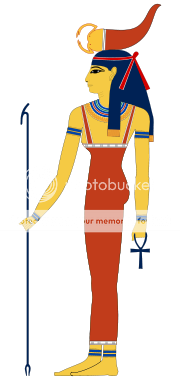 A scorpion-goddess, shown as a beautiful woman with a scorpion poised on her head; her creature struck death to the wicked, but she was also petitioned to save the lives of innocent people stung by scorpions; she was also viewed as a helper of women in childbirth. She is depicted as binding up demons that would otherwise threaten Ra, and she sent seven of her scorpions to protect Isis from Set. She was the protectress of Qebehsenuf, the son of Horus who guarded the intestines of the deceased. She was made famous by her statue from Tutankhamen's tomb, which was part of the collection which toured America in the 1970's.
|
|
|
|
|
|
|
|
|
|
|
|
|
|
|
Posted: Sun Aug 17, 2008 5:39 pm
Serapis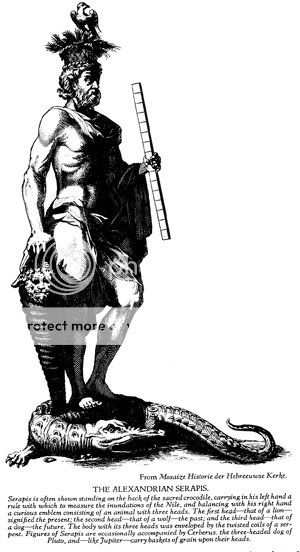 A Ptolemaic period god, devised by the Greeks from Osiris and Apis. Supposedly the consort of Isis, god of the afterlife and fertility. Also physician and helper of distressed worshippers. Never obtained much following from the native Egyptian population. His cult center was Alexandria.
|
|
|
|
|
|
luna-the-wolf-dog Captain
|
|
|
|
|
|
|
|
|
|
luna-the-wolf-dog Captain
|
Posted: Sun Aug 17, 2008 5:41 pm
Set
(Seth) In earliest times, Set was the patron deity of Lower (Northern) Egypt, and represented the fierce storms of the desert whom the Lower Egyptians sought to appease. However, when Upper Egypt conquered Lower Egypt and ushered in the First Dynasty, Set became known as the evil enemy of Horus (Upper Egypt's dynastic god). Set was the brother of Osiris, Isis, and Nephthys, and husband of the latter; according to some versions of the myths he is also father of Anubis. Set is best known for murdering his brother and attempting to kill his nephew Horus; Horus, however, managed to survive and grew up to avenge his father's death by establishing his rule over all Egypt, castrating Set, and casting him out into the lonely desert for all time. In the 19th Dynasty there began a resurgence of respect for Set, and he was seen as a great god once more, the god who benevolently restrained the forces of the desert and protected Egypt from foreigners.
|
|
|
|
|
|
|
|
|
|
|
|
|
|
|
Posted: Sun Aug 17, 2008 5:42 pm
Shu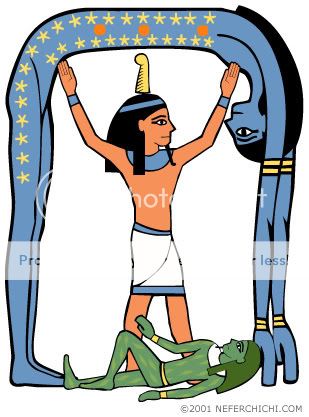 The god of the atmosphere and of dry winds, son of Ra, brother and husband of Tefnut, father of Geb and Nut. Represented in hieroglyphs by an ostrich feather (similar to Maat's), which he is usually shown wearing on his head. He is generally shown standing on the recumbent Geb, holding aloft his daughter Nut, separating the two. The name "Shu" is probably related to the root shu meaning "dry, empty." Shu also seems to be a personification of the sun's light. Shu and Tefnut were also said to be but two halves of one soul, perhaps the earliest recorded example of "soulmates."
|
|
|
|
|
|
luna-the-wolf-dog Captain
|
|
|
|
|
|
|
|
|
|
luna-the-wolf-dog Captain
|
Posted: Sun Aug 17, 2008 5:44 pm
Sobek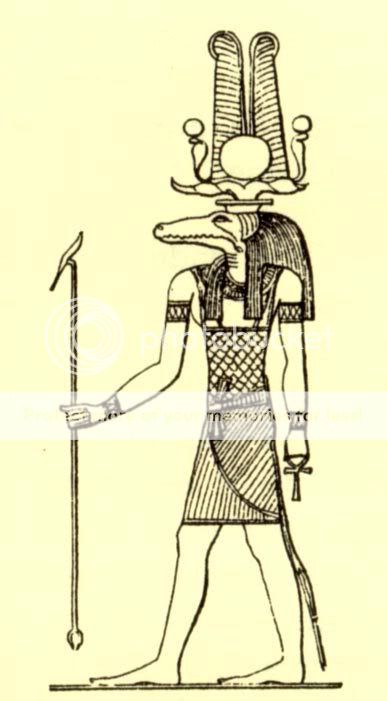 The crocodile-god, worshipped at the city of Arsinoe, called Crocodilopolis by the Greeks. Sobek was worshipped to appease him and his animals. According to some evidence, Sobek was considered a fourfold deity who represented the four elemental gods (Ra of fire, Shu of air, Geb of earth, and Osiris of water). In the Book of the Dead, Sobek assists in the birth of Horus; he fetches Isis andNephthys to protect the deceased; and he aids in the destruction of Set.
|
|
|
|
|
|
|
|
|
|
|
|
|
|
|
Posted: Sun Aug 17, 2008 5:45 pm
Tefnut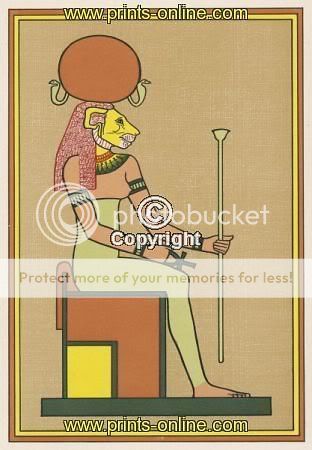 The goddess of moisture and clouds, daughter of Ra, sister and wife of Shu, mother of Geb and Nut. Depicted as a woman with the head of a lioness, which was her sacred animal. The name "Tefnut" probably derives from the root teftef, signifying "to spit, to moisten" and the root nu meaning "waters, sky."
|
|
|
|
|
|
luna-the-wolf-dog Captain
|
|
|
|
|
|
|
|
|
|
luna-the-wolf-dog Captain
|
Posted: Sun Aug 17, 2008 5:49 pm
Thoth
(Tahuti)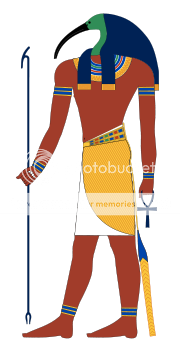 The god of wisdom, Thoth was said to be self-created at the beginning of time, along with his consort Maat (truth), or perhaps created by Ra. At Hermopolis it was said that from Thoth were produced eight children, of which the most important was Amen, "the hidden one", who was worshiped in Thebes as the Lord of the Universe. The name "Thoth" is the Greek corruption of the original Egyptian Tahuti. Thoth was depicted as a man with the head of an ibis bird, and carried a pen and scrolls upon which he recorded all things. He was shown as attendant in almost all major scenes involving the gods, but especially at the judgement of the deceased. He served as the messenger of the gods, and was thus equated by the Greeks with Hermes. Thoth served in Osirian myths as the vizier (chief advisor and minister) of Osiris. He, like Khons, is a god of the moon, and is also the god of time, magic, and writing. He was considered the inventor of the hieroglyphs.
|
|
|
|
|
|
|
|
|
|
|
|
|
|
|
Posted: Sun Aug 17, 2008 5:59 pm
Thoueris
(Ta-urt)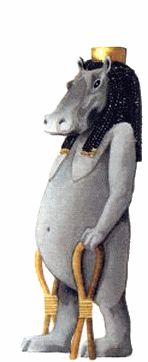 A hippopotamus goddess, responsible for fertility and protecting women in childbirth. Partner of Bes.
|
|
|
|
|
|
luna-the-wolf-dog Captain
|
|
|
|
|
|
|
|
|
|
|
|
|