|
|
|
|
|
|
|
|
|
 Posted: Tue Oct 16, 2007 9:58 pm Posted: Tue Oct 16, 2007 9:58 pm
Amen:
(Amon, Amun, Ammon, Amoun) Amen's name means "The Hidden One." Amen was the patron deity of the city of Thebes from earliest times, and was viewed (along with his consort Amenet) as a primordial creation-deity by the priests of Hermopolis. His sacred animals were the goose and the ram. Up to the Middle Kingdom Amen was merely a local god in Thebes; but when the Thebans had established their sovereignty in Egypt, Amen became a prominent deity, and by Dynasty XVIII was termed the King of the Gods. His famous temple, Karnak, is the largest religious structure ever built by man. According to Budge, Amen by Dynasty XIX-XX was thought of as "an invisible creative power which was the source of all life in heaven, and on the earth, and in the great deep, and in the Underworld, and which made itself manifest under the form of Ra." Additionally, Amen appears to have been the protector of any pious devotee in need. Amen was self-created, according to later traditions; according to the older Theban traditions, Amen was created by Thoth as one of the eight primordial deities of creation (Amen, Amenet, Heq, Heqet, Nun, Naunet, Kau, Kauket). During the New Kingdom, Amen's consort was Mut, "Mother," who seems to have been the Egyptian equivalent of the "Great Mother" archetype. The two thus formed a pair reminiscent of the God and Goddess of other traditions such as Wicca. Their child was the moon god Khons.
|
 |
|
|
|
|
|
|
|
|
|
|
|
|
|
Posted: Sun Oct 21, 2007 11:15 am
Amen-Ra:
(Amon-Re)  A composite deity, devised by the priests of Amen as an attempt to link New Kingdom (Dyn. XVIII-XXI) worship of Amen with the older solar cult of the god Ra. In a union of this sort, the deities are said to indwell one another - so we have the power represented by Amen manifesting through the person of Ra (or vice versa). This sort of relationship is common among Egyptian gods, particularly among cosmic or national deities. It is an example of how the Egyptian gods are viewed, as Morenz puts it, of having "personality but not individuality."
|
|
|
|
|
|
luna-the-wolf-dog Captain
|
|
|
|
|
|
|
|
|
|
luna-the-wolf-dog Captain
|
Posted: Sun Oct 21, 2007 11:18 am
Amset:
(Imsety, Mestha; Golden Dawn, Ameshet) 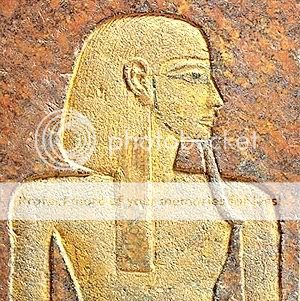 One of the Four Sons of Horus, Amset was represented as a mummified man. He was the protector of the liver of the deceased, and was protected by the goddess Isis.
|
|
|
|
|
|
|
|
|
|
|
|
|
|
|
Posted: Sun Oct 21, 2007 11:19 am
Anubis:
(Anpu; Golden Dawn, Ano-Oobist)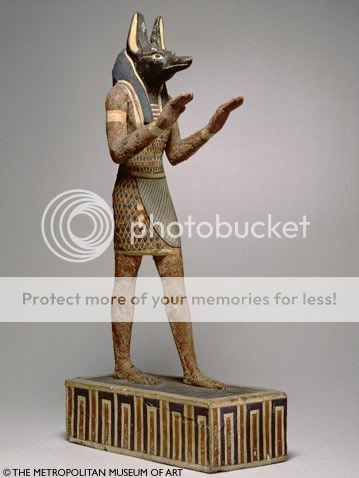 Anubis (Greek, from Egyptian Anpu) was the son of Nephthys: by some traditions, the father was Set; by others, Osiris. (And by still other traditions his mother was Isis.) Anubis was depicted as a jackal, or as a jackal-headed man; in primitive times he was probably simply the jackal god. Owing perhaps to the jackal's tendency to prowl around tombs, he became associated with the dead, and by the Old Kingdom, Anubis was worshipped as the inventor of embalming, who had embalmed the dead Osiris, thus helping preserve him in order to live again. His task became to glorify and preserve all the dead. Anubis was also worshipped under the form Upuaut ("Opener of the Ways"), sometimes with a rabbit's head, who conducted the souls of the dead to their judgement, and who monitored the Scales of Truth to protect the dead from the second death in the underworld.
|
|
|
|
|
|
luna-the-wolf-dog Captain
|
|
|
|
|
|
|
|
|
|
luna-the-wolf-dog Captain
|
Posted: Sun Oct 21, 2007 11:20 am
Anuket: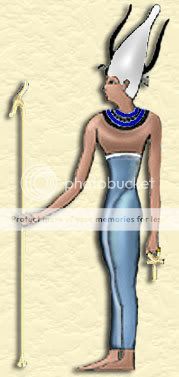 In Upper Egypt, around Elephantine, Anuket was worshipped as the companion (generally the daughter) of Khnum and Sati. Her sacred animal was the gazelle. She was believed to be the dispenser of cool water, and wore a feathered crown on her human head.
|
|
|
|
|
|
|
|
|
|
|
|
|
|
|
Posted: Sun Oct 21, 2007 11:21 am
Apis: 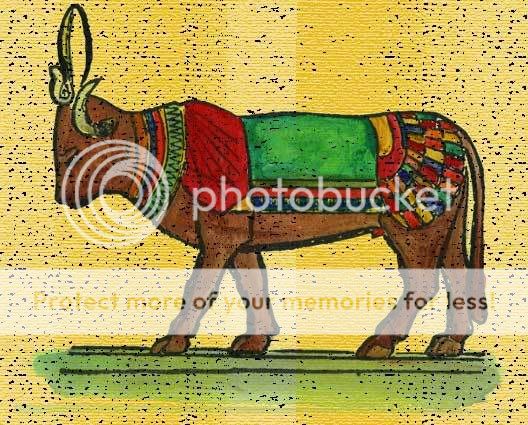 An early deity, probably the best known Egyptian deity represented only as an animal, and never as a human with an animal's head. Apis was most closely linked with Ptah, and his cult center was Memphis. He was primarily a deity of fertility. He was represented as a bull crowned with the solar disk and uraeus-serpent. A sacred Apis bull was kept in Memphis, and there is a great mass burial of Apis bulls, the Serapeum, located there.
|
|
|
|
|
|
luna-the-wolf-dog Captain
|
|
|
|
|
|
|
|
|
|
luna-the-wolf-dog Captain
|
Posted: Sun Oct 21, 2007 11:22 am
Aten:
(Aton) 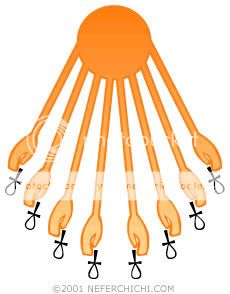 The sun itself, recognized first in the Middle Kingdom, and later becoming an aspect of the sun god. In the reign of Amenhotep IV during Dynasty XVIII, Aten was depicted as a disk with rays, each ray terminating in a human hand and bestowing symbols of "life" upon those below. Aten was declared the only true deity during this period, but the worship of Amen and the other deities was restored by Amenhotep IV's successor Tutankhamen. Morenz believes the name "Aten" was pronounced something like "Yati" during the height of its cult.
|
|
|
|
|
|
|
|
|
|
|
|
|
|
|
Posted: Sun Oct 21, 2007 10:45 pm
Atum: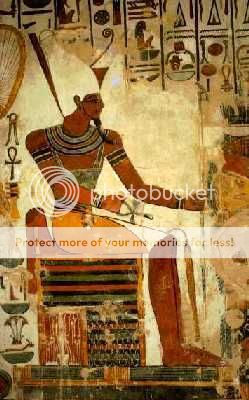 A primordial creator god, worshipped as the head of the Heliopolitan family of gods. Father of Shu and Tefnut, and in later times believed to be one with the sun god Ra.
|
|
|
|
|
|
luna-the-wolf-dog Captain
|
|
|
|
|
|
|
|
|
|
luna-the-wolf-dog Captain
|
Posted: Sun Oct 21, 2007 10:46 pm
Bast: (Bastet) 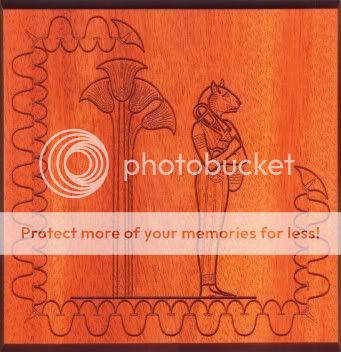 A cat-goddess, worshiped in the Delta city of Bubastis. A protectress of cats and those who cared for cats. As a result, an important deity in the home (since cats were prized pets) and also important in the iconography (since the serpents which attack the sun god were usually represented in papyri as being killed by cats). She was viewed as the beneficient side of the lioness-goddess Sekhmet.
|
|
|
|
|
|
|
|
|
|
|
|
|
|
|
Posted: Sun Oct 21, 2007 10:47 pm
Bes: 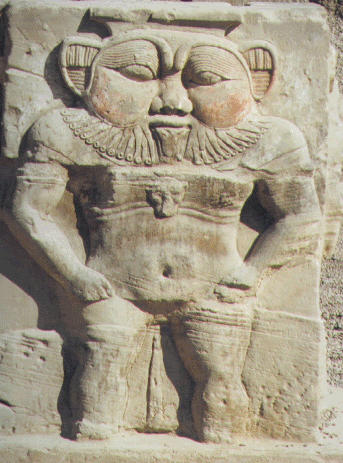 A deity of either African or Semitic origin; came to Egypt by Dynasty XII. Depicted as a bearded, savage-looking yet comical dwarf, shown full-face in images (highly unusual by Egyptian artistic conventions). Revered as a deity of household pleasures such as music, good food, and relaxation. Also a protector and entertainer of children.
|
|
|
|
|
|
luna-the-wolf-dog Captain
|
|
|
|
|
|
|
|
|
|
luna-the-wolf-dog Captain
|
Posted: Sun Oct 21, 2007 10:47 pm
Duamutef:
(Tuamutef; Golden Dawn, Thmoomathph)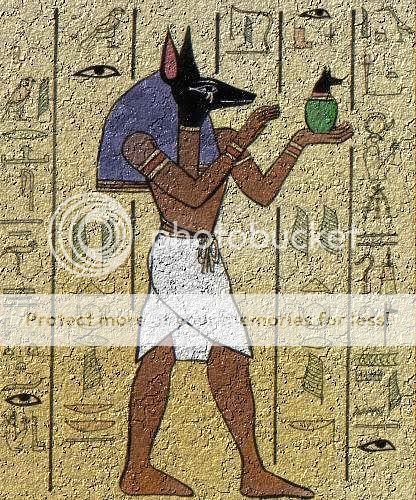 One of the Four Sons of Horus, Duamutef was represented as a mummified man with the head of a jackal. He was the protector of the stomach of the deceased, and was protected by the goddess Neith.
|
|
|
|
|
|
|
|
|
|
|
|
|
|
|
Posted: Sun Oct 21, 2007 10:48 pm
Edjo: 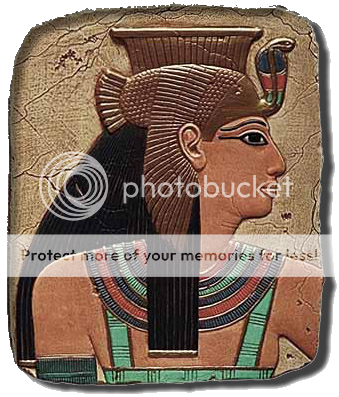 A serpent goddess of the Delta, a symbol and protrectress of Lower Egypt, the counterpart of Nekhbet in Upper Egypt, worn as part of the king's crown.
|
|
|
|
|
|
luna-the-wolf-dog Captain
|
|
|
|
|
|
|
|
|
|
luna-the-wolf-dog Captain
|
Posted: Sun Oct 21, 2007 10:49 pm
Four Sons of Horus: 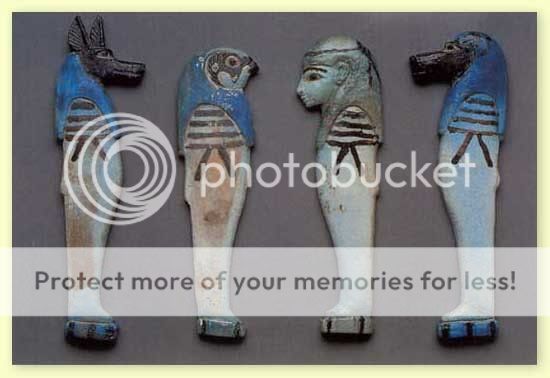 The four sons of Horus were the protectors of the parts of the body of Osiris, and from this, became the protectors of the body of the deceased. They were: Amset, Hapi, Duamutef, and Qebhsenuef. They were protected in turn by the goddesses Isis, Nephthys, Neith, and Selket. See also Amset, Duamutef, Hapi, Qebehsenuf.
|
|
|
|
|
|
|
|
|
|
|
|
|
|
|
Posted: Sun Oct 21, 2007 10:50 pm
Geb:
(Seb) 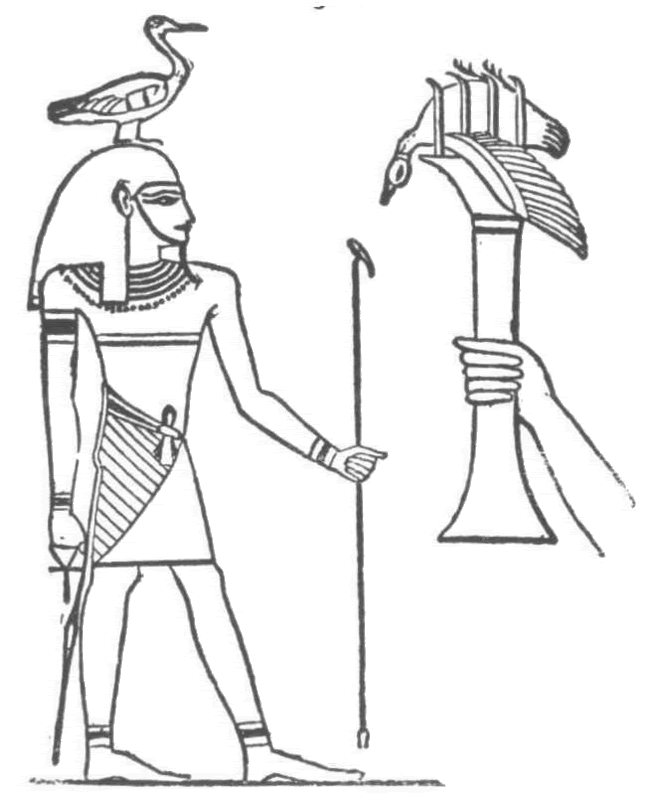 The god of the earth, son of Shu and Tefnut, brother and husband of Nut, and father of Osiris, Set, Isis, and Nephthys. Sacred animal and symbol was the goose. He is generally represented as a man with green or black skin - the color of living things, and the color of the fertile Nile mud, respectively. It was said that Geb would hold imprisoned the souls of the wicked, that they might not ascend to heaven. Note Geb is masculine, contrasting with many other traditions of Earth being female.
|
|
|
|
|
|
luna-the-wolf-dog Captain
|
|
|
|
|
|
|
|
|
|
luna-the-wolf-dog Captain
|
Posted: Sun Oct 21, 2007 10:51 pm
Hapi:
(Golden Dawn, Ahephi)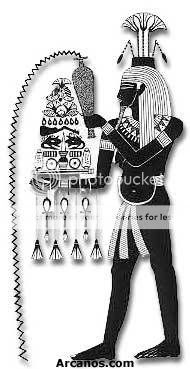 One of the Four Sons of Horus, Hapi was represented as a mummified man with the head of a baboon. He was the protector of the lungs of the deceased, and was protected by the goddess Nephthys. The name Hapi, spelled with different hieroglyphs, in most but not all cases, is also the name of the god who was the personification of the River Nile, depicted as a corpulent man (fat signifying abundance) with a crown of lilies (Upper Nile) or papyrus plants (Lower Nile).
|
|
|
|
|
|
|
|
|
|
|
|
|
|
|
|
|
|