Welcome to Gaia! ::


This is the Private Lab of Dr. Melony Williams and Ishikawa Ruriko. Please do not post without Ishikawa Ruriko's permission.

<center> User Image - Blocked by "Display Image" Settings. Click to show. </center>

Scientist Bio:

Name: Dr. Melony Williams
Gender: Female
Age: 27
Field of Study: Aquatic Research
Data on Experiment: Dr. Williams is a kind soul, working to find a way for humans to breathe underwater - with no tanks.

Events

11-14-04: Dr. Williams arrived in her lab, pleased with the setup of tanks that had been carried out. She was also assigned her assistant, Ishikawa Ruriko.
Updates

-Dr. Williams is assigned her new assistant, Ishikawa Ruriko.
-First experiment performed, ARO is complete.
-Small difficulties with ARO, Fixed, ARO is able to swim but has yet to show much amphibious behavior.
Notes/Things to Take Note of.

None as of Yet
Experimentation Log

Experiment 1, Date: 12-17-04

Myself and my assistant Ishikawa Ruriko went to work on our first experiment. We drugged a lab rat removed its skin. It took a while to keep the blood in it, as it did bleed alot, so we had to move quickly. I had to work carefully when taking of the flesh, and worked on carefully severring the tissue and nerves.
It was succesful!
Earlier, we had done the same procedure of an amphibious frog of about the same size. Then, I had put the frog to sleep, after removing it's hole resperatory system.
After studeing the dead frog's repseratory system, besides the flesh, I was able to rebuild the mouse's just near identicly.
The mouse has lost quite a bit of blood, time to work on the flesh..
We had to continuasly put blood into the mouse for a while, but soon implanted a device to make the blood curculate a certain way, so blood loss was very minimum.
Matched up the nerves of the Flesh which was frequently getting special electric currents through them, as to stop it from rotting or dieing. And then, it was soon up. I also added growth harmones into the flesh and mouse itself, aswell as implanted hairs into the mouse, although I doubt they'll grow, their for appearence.
The skin turned grey and purple after being put on the mouse, I doubt it is serious.
My assistant added some antibiodics and more bllood into the mouse for me, so things should work fine. I expect the mouse to be fully functionul in a few days.. I have Nicknamwed the mouse "ARO", for "Amphibious Resperatory Operation", I think it is suiting.
Once the Mouse is up and about, and I am sure it is well, I will start to exstract fluids.
Total Time Spent on experiment: Around 56 hours, straight.
I need coffee.
Theories/Information

Oxygen can pass through the membranous skin, thereby entering directly into the blood. When a frog submerges beneath the water, all its respiration takes place through the skin. Oxygen is obtained directly from the water.

This is the way in which a frog obtains oxygen from underwater, in turn, the ability to breath underwater while still having lungs. There are some other notes on Frog Resparatory system, aswell as how its whole body functions, as to get a better understanding of an Amphibioun's body, to further our understanding on the differences between a frog and a man, which will further the ability to change how a human's system may be so they may use the internal system of an amphibioun so they may breath underwater.

General Body Features

As in other higher vertebrates, the frog body may be divided into a head, a short neck, and a trunk (see Vertebrates). The flat head contains the brain, mouth, eyes, ears, and nose. A short, almost rigid neck permits only limited head movement. The stubby trunk forms walls for a single body cavity, the coelom.

Man's internal organs are housed in one of three distinct hollow cavities--the chest, the abdomen, and the pelvis. The human chest is separated from the abdomen by a powerful muscular partition, the diaphragm (see Diaphragm). There is no such partition in the frog's coelom. All the frog's internal organs--including the heart, the lungs, and all organs of digestion--are held in this single hollow space.

The Skeleton and Muscles

The frog's body is supported and protected by a bony framework called the skeleton (see Skeleton).

The skull is flat, except for an expanded area that encases the small brain. Only nine vertebrae make up the frog's backbone, or vertebral column. The human backbone has 24 vertebrae. The frog has no ribs.

The frog does not have a tail. Only a spikelike bone, the urostyle, remains as evidence that primitive frogs probably had tails. The urostyle, or "tail pillar," is a downward extension of the vertebral column.

The shoulders and front legs of the frog are somewhat similar to man's shoulders and arms. The frog has one "forearm" bone, the radio-ulna. Man has two forearm bones, the radius and the ulna. Both frog and man have one "upper arm" bone, the humerus.

The hind legs of the frog are highly specialized for leaping. The single "shinbone" is the tibiofibula. Man has two lower leg bones, the tibia and the fibula. In man and in the frog, the femur is the single upper leg (thigh) bone. A third division of the frog's leg consists of two elongated anklebones, or tarsals. These are the astragalus and the calcaneus. The astragalus corresponds to the human talus. The calcaneus in the human skeleton is the heel bone.

As in other vertebrates, the frog skeleton is moved by muscles (see Muscles). Skeleton-moving muscles are made of skeletal, or "striated," muscle. Internal organs contain smooth muscle tissue.

The Circulatory System

The frog heart is the only organ contained within the coelom which has its own protective covering. This is the pericardium (see Heart). There are two upper chambers of the heart, the right atrium and the left atrium. The frog heart, however, has only one lower chamber, a single ventricle. In man, the lower heart chamber is divided into two compartments, the right ventricle and the left ventricle.

Oxygen-laden blood and oxygen-poor blood containing waste gases are present together in the frog ventricle at all times. The oxygen-laden and oxygen-poor bloods, however, do not mix. Such mixing is prevented by a unique arrangement of the frog's heart. Instead of "perching" on top of the ventricle, the right atrium dips downward into the ventricle. This causes oxygen-poor blood entering the right atrium to pass all the way down to the bottom of the ventricle.

Meanwhile, oxygen-laden blood is received by the left atrium and enters the same single ventricle. The pool of oxygen-poor blood at the bottom of the ventricle holds up the oxygen-laden blood and prevents it from sinking to the bottom. When the oxygen-poor blood flows from the ventricle into vessels leading to the lungs, the oxygen-laden blood tries to "follow" it. The lung vessels, however, are filled with oxygen-poor blood, blocking the oxygen-laden blood and forcing oxygen-laden blood to detour into the arteries. These carry the oxygen-laden blood to the tissues.

Frog blood has both a solid and a liquid portion. The liquid plasma carries solid elements such as red blood cells and white blood cells. (See also Blood.)

The Skin and Respiratory System

The frog is covered by a soft, thin, moist skin composed of two layers, an outer epidermis and an inner dermis (see Skin). The skin does not merely protect the frog but helps in respiration (see Respiratory System).

An extensive network of blood vessels runs throughout the frog's skin. Oxygen can pass through the membranous skin, thereby entering directly into the blood. When a frog submerges beneath the water, all its respiration takes place through the skin. Oxygen is obtained directly from the water.

The frog does not breathe through its skin alone. Adult frogs have paired, simple, saclike lungs. As in man, air enters the body through two nostrils, passes through the windpipe, and is received by the lungs (see Lungs). The mechanism of breathing, however, is different in the frog from that in man. In humans breathing is aided by the ribs, the diaphragm, and the chest muscles. The frog has no ribs or diaphragm, and its chest muscles are not involved in breathing.

A frog may breathe by simply opening its mouth and letting air flow into the windpipe. However, it may also breathe with its mouth closed. The floor of the mouth is lowered, causing the frog's throat to "puff out." When the nostrils open, air enters the enlarged mouth. Then, with nostrils closed, the air in the mouth is forced into the lungs by contraction of the floor of the mouth.

The Digestive and Excretory Systems

The frog's mouth is where digestion begins. It is equipped with feeble, practically useless teeth. These are present only in the upper jaw. The frog's tongue is highly specialized. Normally, the tip of its tongue is folded backward toward the throat. From this position the frog can flick it out rapidly to grasp any passing prey. To better hold this prey, the tongue is sticky. (See also Tongue.)

Food passes from the frog's mouth into the stomach by way of the esophagus. From the stomach, the food moves into the small intestine, where most of the digestion occurs. Large digestive glands, the liver and the pancreas, are attached to the digestive system by ducts. A gall bladder is also present (see Digestive System).

Liquid wastes from the kidneys travel by way of the ureters to the urinary bladder. Solid wastes from the large intestine pass into the cloaca. Both liquid and solid waste material leave the body by way of the cloaca and the cloacal vent.

The Nervous System and Sense Organs

The frog has a highly developed nervous system. It consists of a brain, a spinal cord, and nerves. (See also Brain and Spinal Cord; Nervous System.)

The important parts of the frog brain correspond to comparable parts in the human brain. The medulla regulates automatic functions such as digestion and respiration. Body posture and muscular co-ordination are controlled by the cerebellum. The cerebrum is very small in the frog. By comparison the human cerebrum is very large. In man the cerebrum is involved in many important life processes.

Only 10 cranial nerves originate in the frog's brain. Man has 12. Similarly, the frog has only 10 pairs of spinal nerves. Man has 30 pairs.

Two simple holes make up the nostrils for the frog. There are complex valves but no long nasal passages as there are in man (see Nose). The frog's sense of smell is registered by olfactory lobes. These make up the forward portion of the brain.

The eye is crude. Its fixed lens cannot change its focus. Poorly developed eyelids do not move. To close its eye, the frog draws the organ into its socket (see Eye). A third eyelid, or nictitating membrane, may be drawn over the pulled-in eyeball.

There is no external ear (see Ear). Both eardrums, or tympanic membranes, are exposed. There is only one bone in the frog's middle ear. The human middle ear contains three bones (ossicles). As in man, semicircular canals help to maintain body balance.
Profiles

Dr. Williams

Name: Melony Williams
Nickname: Sting
Field of Study: Equatics Reaserch
Age: 27
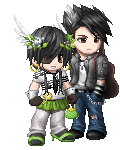
Appearence: See image posted above.
Persona/Assignment: Dr. Williams is a kind soul, working to find a way for humans to breathe underwater - with no tanks.


Ishikawa Ruriko

Name: Ishikawa Ruriko
Nickname(s): Ishi, Ruri
Assistant to: Dr. Williams
Age: 23
Appearence: You know.
Persona/Assignment: If you care enough to know her persona, you already know it, She is assigned to assist Dr. Williams in her studies.
Coleagues/Friends

None as of yet..
Tape Recorder
(Specialy made for Conversations.)

First Conversation with the Recorder, 11-22-04

Ruriko: Ooh, What's this?

Melony: What's what? .. Oh, the tape recorder..

Ruriko: Well Duh.. Why do you have a tape recorder?

Melony: Uhh.. Well, you know with ARO? Well, I sometimes use it to record conversations and even stuff during experiments and those sort of things..

Ruriko: OH! So- I was wanting to ask you something..-

Melony: The tape recorder's still on, lets go ahead and turn it off-


End of Recording..
Additional Extension tape recording found.. Playing.


Ruriko: ...

Melony: You're messing with it again?

Ruriko: Oh, Ya. I wanted to ask you something else, and I wanted to record it to...

Melony: Okay..

Ruriko: Sorry about so many questions.

Melony: Don't worry.. Umm... What did you want to ask?

Ruriko: Well, I was wondering about ARO.. Wont you have to do the same operation to every mammal that you change?

Melony: Not exactly.. I plan to extract internal fluids from ARO, and then make a chemical with it.. umm.. That's all I am at liberty to say without worry right now, as even I am a bit unsure..

Ruriko: Really? Okay, umm.. i'll just go ahead and turn the recorder off th--

End Recording
Part One, The Meeting.. November 15, 3004

Ruriko had been extadic about her new job, her new job as a scientist assistant. She was glad, although it wasn't some big giant job. When she had entered the lab, which was on the 2nd floor of the Oscorp building, she wasn't suprised by its appearence. It was cleansly and consisted mainly of the colors white and blue. It had the noise of animals, The chirps of small frogs and lizards that would sometimes bob out of a few of the tanks that didn't consist of only water. There was a regular metal desk that was painted white to matc the room, and the clear tanks that went along the walls were motionless except for a few water animals here and there in some.

She then heard the voice, who she had pressumed was that of Dr. Williams. It was soft, and calm,
"Hello? You must be.."
Dr. Williams the looked through a few papers tha were pinned to a clipboard that she held.
"Ishikawa Ruriko, right? Nice to meet you."
Ruriko was supried, this woman was a rather calm, happy, sweet woman,, which she wasn't used to Ruriko gave a slow nod. And Dr. Williams simply smiled.

"Well, there isn't much I am doing now, just setting up and taking some notes.. But, you can help with the models and diagrams in the boxes.. They're near the the tank with the African Clawed Frogs."
And So, Ruriko went to work..
Part Two, The view, the coffee, the horror.. November 18, 2004

Ruriko once again entered the Lab She looked tired. She hadn't been up the whole 56 hours that Williams had, but she'd been up for most. And had only had a few hours of sleep and a couple cups of coffee since, yet, it hadn't worked.
She was suprised to see Williams hard at work, watching the mouse which was in a small tank. It whad a platform that dipped into the lower, watery depths of the tank. The mouse, lay nearly dead, or so seeming on the platform. Only moving every once in a while.

"Is it dieing?"
Ruriko asked curiously, and Williams looked to her,
"No, He is just recovering.. It's almost feeding time, I'll let you handle that though, I don't have an assistant for nothing."
She gave a soft grin, then turned to her desk. She opened a drawer and pulled out a small vile.
"He is unable to digest properly, so you'll have to inject the fluid from this bottle in to him."
Ruriko looked suprise.
"How?!"
"Simple, carefully put him on a tray, take him out, and inject him through his heart. Peircing his chest plate woin't kill him, although there is alreeady a previous made hole which you will see, although small."
Melony looked to Aro, Who looked like a grey skinned mouse that was shiny, and had little hair, which was white.
"Erk, Okay."
Ruriko sighed.
Part 3, The Progress.. November 21, 2004

Ruriko entered the lab a bit late, yet Melony's smile didn't waver, although it seemed it never did. She looked at Melony as a bead of sweat rolled down her forehead. Melony was watching her. She grinned uneasily.
"Hello, Dr. Williams."

Melony then spoke.
"ARO is able to swim, Look-"
SHe pointed to the tank where ARO was keppt. ARO was much thinner then he was days ago, although there was a new incisioun where the inner thermal device had newly been implanted. Aro's skin was bleach white, as where the few hairs that speckled his shiny body. He was by the water, on his feet, seeming alot less dead then the days before. And, within a moment, he slowly crept into the somewhat shallow waters.

"Uhh.. That's great."
Ruriko said through a smile.
Part 4, A bit Moronic, November 28, 2004

Ruriko entered the lab, and gave a small yawn as she did so. The night before she was up all night, and so was a bit tired. She saw Melony, sitting at her desk with a cloth rapped aound her index finger.

"What happened?"
Ruriko asked with a furrowed brow, and Melony looked to her.
"I was sorting the cutting utensils when I cut myself, only a little cut, Nothing of worry."
Melony assured, standing up and throwing the cloth in the trashcan, and as she did so blood was visible on it. Shr replaced the clothes erea with a band-aid to cover the wound, and both went back to work.
Part 5, Nooo! January 04, 2005

Ruriko and Dr. Williams had been heavy at work through the months. Their experiment, ARO was alive and well, but getting regular inhancements and things of the such. Williams had even abstracted some fluids, although, there wasn't quite enough to really do anything. And so, Ruriko once again returned to her work as an assistant, to find Dr. Williams prodding ARO. She would have thought she had him under, but there were other signs that would say not.

She approached the docter slowly, placing her bag on the desk.
"What are you doing?"
She asked, peering over the woman, who continued to work.
"Taking DNA samples."
Williams said, but any attempt that she could have made to talk more was interupted by Ruriko's speach.
"Why?"
"Because, ARO is incapable of supplying me with enough fluids to do anything useful. So, I plan to create another, larger ARO, that is more.. current in advancement."
"Oh, I see.. Then what'll you do with ARO?"
"ARO is really no longer needed, and would be a nuisence to keep. So we'll probably just have to get rid of him."
"Get rid of him?"
"Yes.."
"Okay..?"
Part 6, Exhaustion?! March 07, 2005

-putting together-

Quick Reply

Submit
Manage Your Items
Other Stuff
Get GCash
Offers
Get Items
More Items
Where Everyone Hangs Out
Other Community Areas
Virtual Spaces
Fun Stuff
Gaia's Games
Mini-Games
Play with GCash
Play with Platinum